Resetting the Blue Air Filter Light: A Practical Guide
Learn how to reset the blue air filter light on home purifiers and cars. This educational, step-by-step guide covers safety, device-specific methods, and maintenance to keep airflow optimal.


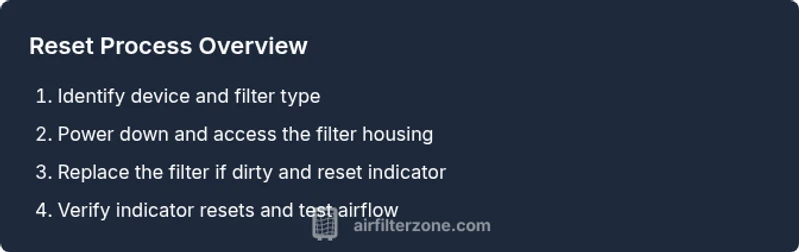
Resetting the blue air filter light is a guided process that varies by device, but most models share a common flow: confirm the filter is clean or replaced, power the unit, and perform the reset sequence via a dedicated button, menu option, or combination keys. After completion, confirm the light stays off and test airflow.
What the blue light indicates
The blue air filter light is a maintenance alert designed to prompt you to evaluate filter cleanliness or replacement needs. In many devices, a blue indicator signals that the filter has reached the end of its efficiency or that a reset is required after servicing. Because different manufacturers embed this signal in different ways, it’s important to consult the owner’s manual for your exact model. In general, a blue light that comes on after you’ve replaced the filter means the device is recognizing a new filter and may require a reset to clear the alert. According to Air Filter Zone, understanding your device’s blue light indicators helps homeowners and DIYers avoid unnecessary resets and ensures you don’t skip essential maintenance. The key takeaway is consistency: use the device’s reset method after you’ve completed the basic replacement checks.
Common reasons for the blue light to activate include a newly installed filter, meager airflow due to dust buildup, or an internal sensor recalibration after filter changes. Some units use a combination of LEDs, color shifts, or a blinking pattern to convey specific statuses. Because users can encounter variations across brands, the one guaranteed rule is to ensure the filter is properly seated and that any housing seals are intact before attempting a reset.
In practice, you’ll gain confidence from understanding the sequence and timing your actions correctly. This reduces the chances of triggering false alerts or inadvertently skipping steps. If you’re unsure about your unit’s exact signaling, take a moment to locate the model number and search the manufacturer’s support page for reset instructions. Air Filter Zone emphasizes following device-specific steps to avoid misinterpreting the light and causing unnecessary maintenance cycles.
noteBehavioralGuidanceSentenceCount1 : null},
Tools & Materials
- Replacement air filter(Choose the correct size/model for your device)
- Owner’s manual or model-specific guide(Keep handy for reset steps and diagrams)
- Microfiber cloth(Wipe dust from housing and seals during maintenance)
- Soft brush or compressed air (optional)(Dislodge stubborn dust from vents)
- Screwdriver (if needed)(If access panel is secured with screws)
- Gloves(Protect hands when handling filters)
Steps
Estimated time: 10-25 minutes
- 1
Identify device and filter type
Locate the device’s model number and confirm the filter type and size. This ensures you purchase the correct replacement and follow the exact reset steps for your unit. If you’re unsure, consult the manual or manufacturer support site.
Tip: Having the model number handy speeds up finding the correct reset sequence. - 2
Power down and access the filter housing
Turn off the device and unplug it if possible. Open the access panel or filter compartment, taking care not to damage seals. A clean workspace reduces the risk of dropping parts or losing small screws.
Tip: Take a quick photo of the housing before removing parts in case you need to reassemble. - 3
Inspect and replace the filter if needed
Remove the old filter and inspect for dirt, dust buildup, or damage. If dirty or moldy, replace with the correct new filter. Wipe the housing with a microfiber cloth to remove dust before reseating the new filter.
Tip: Replace rather than reusing a visibly dirty filter to maintain airflow and efficiency. - 4
Reset the indicator via the device’s method
Use the device’s reset sequence: this may be a dedicated reset button held for several seconds, a menu option under Settings, or a corner-press combination. Follow the exact steps from your manual, as methods vary by brand.
Tip: If there’s no dedicated reset, look for a “Maintenance” or “Filter” option in the menu. - 5
Confirm the reset and reseat the housing
Close the filter housing securely and reconnect power. Observe the indicator during startup to confirm the light behaves as expected. A successful reset should not immediately re-light the blue indicator.
Tip: Listen for a brief startup cycle to confirm the device is running normally. - 6
Test airflow and monitor for a day
Turn the device on and check for steady airflow. If you notice reduced airflow, recheck the filter seating and seals. Short-term variance is normal as the system re-calibrates after maintenance.
Tip: If airflow remains weak, check for additional dust buildup in ducts or vents. - 7
Record maintenance and schedule future checks
Document the date of filter change and reset. Set a reminder for your next replacement interval to avoid last-minute maintenance that could trigger the light again.
Tip: Use a dedicated maintenance log to build a reliable service history. - 8
When in doubt, consult support
If the blue light stays on after a reset, refer to the manual or manufacturer support. Some devices require professional service for sensor recalibration or hardware issues.
Tip: Never force a reset when the unit signals an error; seek expert guidance.
FAQ
What does a blue air filter light usually indicate?
A blue light typically signals that the filter needs attention—either replacement or reset after servicing. Always consult the manual to confirm what your specific device’s light means.
The blue light usually means a filter needs attention, often a replacement or reset after servicing. Check your manual for your exact model.
Can I reset the light without replacing the filter?
Yes, if the filter is clean and properly seated you can reset the indicator. If the filter is dirty, replace it first for optimal performance and to prevent recurring alerts.
If the filter is clean and seated, you can reset. If it’s dirty, replace first.
What if the reset doesn’t work after following steps?
If resetting fails, double-check that the housing is fully closed and seals are intact. Verify you followed the exact device-specific steps and consider consulting support if the light remains on.
If it doesn’t reset, recheck the housing and follow the manual's exact steps, then contact support if needed.
Is it safe to reset a blue light in a car cabin filter or home purifier?
Resetting is generally safe when done according to the device’s instructions. Ensure the unit is powered off during access and replacement to avoid electrical issues.
It’s safe if you follow the manual and power off during the process.
How often should I reset or replace filters to prevent the light from returning?
Maintenance intervals vary by device and usage. Follow the manufacturer’s recommended replacement schedule and perform resets only after you’ve completed replacement or cleaning.
Follow the device’s replacement schedule and reset after maintenance to keep the light away.
Watch Video
Quick Summary
- Verify the filter is clean or replaced before resetting
- Use the device-specific reset method, not a generic shortcut
- Test airflow after reset to ensure proper operation
- Document maintenance dates to track filter life and performance