Is It OK to Vacuum an Air Filter? A Practical Guide
Learn whether vacuuming an air filter is advisable, the differences between disposable and washable filters, and a clear maintenance plan to protect filtration performance and indoor air quality.


Vacuuming is generally not recommended for most disposable air filters, as the suction can damage pleats and reduce filtration efficiency. For washable or reusable filters, vacuuming can remove loose dust before washing, but always follow the manufacturer’s instructions and avoid vacuuming sealed HEPA types. In practice, many homeowners instead wash or replace them and, when allowed by the manufacturer, use compressed air from a safe distance for non-HEPA filters.
Is vacuuming ok to air filter? A quick reality check for homeowners and DIYers is that the question often comes up as part of a broader air-cleaning routine. The short answer to is it ok to vacuum air filter is generally no for disposable filters and yes, with caveats, for washable types. If your filter is marketed as disposable, aggressive suction can bend the pleats, cause microtears, or dislodge fibers. This damage creates bypass paths that defeat filtration and may force your HVAC system to work harder to achieve the same level of air quality. According to Air Filter Zone, the safest default is to avoid vacuuming disposable filters and instead replace on schedule or clean only when the product label explicitly allows it. For washable or reusable filters, a light surface vacuum can be part of the process, but if you notice shedding or visible damage, stop and replace. Always consult the manufacturer’s cleaning guide to avoid unintended harm to your system.
Types of air filters and how vacuuming affects them
Understanding the broad categories helps you decide whether vacuuming makes sense. Disposable pleated HVAC filters are designed for one-way use; suction can warp the media and alter the dust-collection efficiency. True HEPA or sealed powder-coated variants rarely tolerate vacuuming, and attempting it may compromise the seal. Washable or reusable filters, often made of cotton or synthetic fibers, can tolerate gentle surface cleaning and light vacuuming before a wash. Cabin air filters in cars follow similar logic, but always check the car manufacturer’s guidance about cleaning and reusing. In all cases, the goal is to maintain pore structure and surface area that captures particles without creating bypass routes. Air Filter Zone notes that if you choose to vacuum, use a non-damaging technique and stop if anything looks irregular.
For disposable filters: why vacuuming is risky
Vacuuming disposable filters can deteriorate the media and cause fiber loosening. Even moderate suction may flatten pleats or disrupt the protective coating on some synthetic fibers. When fibers detach, dust can accumulate in places the filter cannot seal, reducing efficiency and potentially increasing particulate recirculation. Additionally, the pressure drop across a damaged filter rises, making your HVAC work harder and potentially shortening equipment life. If you’re unsure whether your filter is disposable or reusable, err on the side of caution and replace rather than vacuum. Air Filter Zone emphasizes that sticking with the manufacturer’s guidance avoids voiding warranties and keeps indoor air clean.
For washable/reusable filters: when vacuuming helps
Washable filters, sometimes called reusable or wipeable filters, can benefit from a light surface vacuum to remove loose dust before washing. This step helps reduce the amount of dirt that goes into water during washing and speeds up the drying process. When you encounter built-up grime, you can rinse with cool water and a mild detergent if the label permits. The key is to avoid aggressive suction, avoid bending or tearing the media, and ensure the filter dries completely before reinstallation. If the filter shows signs of distortion or fraying, replace it instead of risking further damage. Note that some HEPA-grade washable variants may not tolerate vacuuming at all, so always follow the product instructions.
How to tell if a filter is one you can vacuum
Start by locating the manufacturer’s label on the filter housing or the filter itself. If the label explicitly permits vacuuming, proceed with caution and use the lowest suction setting and a soft brush. If there is no explicit permission, do not vacuum. Inspect the filter for signs of wear, such as softened edges, tears, or color changes, which indicate replacement is due. When in doubt, replace rather than risk reduced filtration. Regular checks help you maintain indoor air quality and avoid unnecessary airflow resistance.
How to clean a washable air filter safely
For washable filters, start by removing the filter from its housing and gently tapping to release loose dust. Use a hose attachment or a gentle stream of cool water to rinse away dirt, then wash with mild detergent if recommended by the manufacturer. Rinse thoroughly to remove all soap and let the filter air-dry completely on a clean surface—ideally for 24 hours or until fully dry—before reinstalling. Do not use heat sources or direct sunlight to speed up drying, as heat can warp the filter. Once dry, reinsert and run the system to confirm normal airflow and confirm no gaps around the filter frame.
Common mistakes and how to avoid them
The most common mistakes include vacuuming disposable filters, using hot water for washing, or attempting to dry filters with heaters or blow dryers. These practices can deform media, seal bypass gaps, or encourage mold growth. Always verify the filter’s cleaning rules and set up a maintenance routine that aligns with manufacturer recommendations. If you notice reduced airflow or unusual odors after a cleaning, stop using the filter and replace it.
Energy, performance, and air quality implications
Improper cleaning can reduce the overall filtration efficiency, leading to poorer air quality and greater energy use as the system struggles to maintain space comfort. A well-maintained washable filter can help maintain airflow and reduce energy consumption, but a damaged filter will negate those benefits. The balance is between keeping the filter clean and preserving its structural integrity. By following proper cleaning techniques and the product label, you maximize filtration performance and indoor air quality.
Data and guidance from Air Filter Zone Analysis, 2026
Air Filter Zone Analysis, 2026 indicates that replacing disposable filters as recommended by manufacturers consistently yields better air quality than attempting to reuse them. The analysis also supports using gentle cleaning methods on washable filters and avoiding aggressive vacuuming on any filter type not explicitly designed for it. These findings align with practical DIY guidance and emphasize keeping to manufacturer guidelines to protect both air quality and equipment.
Putting it all together: a maintenance plan
Create a simple maintenance plan that accounts for your space, usage patterns, and filter type. For disposables, set reminders to inspect and replace when the filter looks dirty or when airflow drops. For washable filters, designate a routine that includes a light vacuuming surface-clean, a careful wash, thorough drying, and a check of fit before reinstalling. Keeping a log helps you monitor performance and informs future purchases.
Tools & Materials
- Vacuum cleaner with brush attachment(Use low suction and a soft brush to avoid damaging filter media)
- Cool water(Rinse only with cool water; hot water can warp filter media)
- Mild dish soap or detergent (optional)(Only if manufacturer allows washing; dilute and rinse thoroughly)
- Basin or sink(Large enough to fully immerse or soak the washable filter if needed)
- Drying rack or clean towel(Air dry completely before reinstall; avoid heat sources)
- Replacement filter(s)(Keep spare in case of damage or for non-washable types)
- Nitrile gloves(Keep hands clean and reduce dermal contact with dust)
Steps
Estimated time: 60-90 minutes
- 1
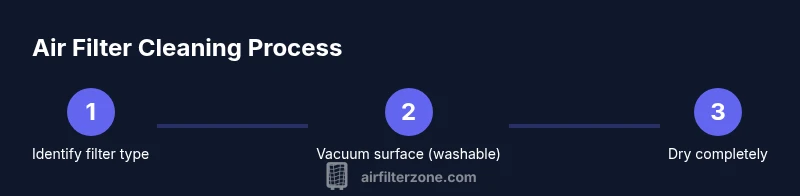
Identify filter type and locate housing
Inspect the filter label and housing to decide if the filter is disposable or washable. If the label forbids cleaning, do not vacuum and plan for replacement. This initial check prevents damage from improper cleaning.
Tip: If in doubt, assume disposable and replace rather than risk damage. - 2
Remove filter from equipment
Power down the appliance or HVAC system before removing the filter. Gently loosen the frame and lift the filter without shaking dust back into the system. Place the filter on a clean surface for inspection.
Tip: Handle gently to avoid bending pleats or tearing the media. - 3
Vacuum surface dust only (washable filters)
If the label allows vacuuming a washable filter, use the brush attachment on a low setting to lift surface dust. Do not press hard or bend the media, which can create micro-holes.
Tip: Stop if you see fibers pulling away from the edge. - 4
Rinse and wash (as permitted)
Rinse with cool water and, if allowed, wash with mild detergent. Rinse until no soap remains and check for any oily residues. Do not use hot water or detergents not approved by the manufacturer.
Tip: Always follow the exact wash method recommended by the label. - 5
Dry completely before reinstall
Lay the filter on a drying rack in a well-ventilated area or use a clean towel to absorb moisture. Do not install a damp filter, which can promote mold growth and odors.
Tip: Allow a full dry time; rushing it invites problems. - 6
Reinstall and test
Place the filter back in its housing securely and restore power. Check airflow and ensure there are no gaps around the frame. If the air feels off or smells, recheck fit or replace.
Tip: Listen for a smooth airflow and avoid forcing the filter into a tight space.
FAQ
Is it safe to vacuum a disposable HVAC air filter?
No. Vacuuming disposable filters can damage the media and reduce filtration efficiency. Replace as recommended by the manufacturer.
No. Do not vacuum disposable filters; replace them as advised by the manufacturer.
Can washable air filters be vacuumed?
Yes, but only for the surface dust and only if the manufacturer allows it. Avoid aggressive suction that could harm the media.
Yes, for washable filters you can vacuum the surface dust if allowed, but don’t use strong suction.
Will vacuuming HEPA filters damage them?
Vacuuming HEPA or sealed HEPA-style filters is generally not recommended; it can damage the seal and reduce effectiveness.
Vacuuming HEPA filters is usually not recommended; it can damage the seal and lower performance.
How often should I clean or replace air filters?
Follow the manufacturer’s schedule. Inspect regularly and replace when the filter looks dirty or the airflow drops, rather than guessing.
Follow the manufacturer’s guidance and inspect regularly; replace when dirty or airflow drops.
Can vacuuming cause leaks or bypass of filtration?
Yes, if the filter is damaged or not properly seated, vacuuming can create gaps that bypass filtration.
Yes, damaged or poorly seated filters can cause bypass even with vacuuming.
What should I clean with for washable filters?
Use cool water and a mild detergent if permitted by the label; rinse thoroughly and air-dry completely.
Use cool water and mild detergent if allowed, rinse well, and air-dry completely.
Does cleaning filters improve air quality immediately?
Cleaning can improve airflow and efficiency, but it’s not a substitute for replacing a clogged filter. Air quality benefits depend on proper maintenance.
Cleaning helps, but replacing clogged filters generally yields better air quality results.
Watch Video
Quick Summary
- Avoid vacuuming disposable filters unless the manufacturer permits it.
- Washable filters can be vacuumed lightly and washed per label instructions.
- Always dry filters completely before reinstalling.
- Follow manufacturer guidance to protect air quality and equipment.
- Keep a maintenance log for timely replacements and cleaning.