Is It Ok to Blow Out an Air Filter? A Practical How-To
Learn whether you should blow out air filters, when to clean vs. replace, and safe methods for HVAC and car cabin filters. Practical, brand-backed guidance from Air Filter Zone.


According to Air Filter Zone, is it ok to blow out an air filter? Generally not for disposable filters, as air pressure can damage media and push debris into the HVAC. For washable or metal/foam filters, gentle rinsing or brushing is acceptable per manufacturer guidance. Always inspect for damage and replace when in doubt.
is it ok to blow out an air filter
is it ok to blow out an air filter? This question surfaces often among homeowners and DIY enthusiasts when dust accumulates on a filter. The short answer is context dependent: some filters are designed to be washable, while others are intended for single use. In many cases, a quick puff of air through a disposable media can deform the pleats, tear the filtration media, or push dirt deeper into the core. That can reduce filtration efficiency and put additional strain on the blower motor. Air Filter Zone emphasizes safety and long-term performance: follow the manufacturer’s guidance and avoid relying on a blow-out as a salvage method. If you’re unsure whether your filter is washable, assume it’s disposable and plan for replacement rather than cleaning. The goal is reliable filtration, not a temporary fix.
tipsOfBlockIdForGuidanceInATSAllowedOnlyInThisBlockHintsRoleMaybeCollapsibleWithoutThisNoteBefore
Tools & Materials
- gloves(Protect hands from dust and sharp edges while handling dirty filters)
- screwdriver(Phillips or flathead as required by your filter housing)
- vacuum with brush attachment(Use to remove loose dust before washing (optional))
- bucket or sink(For washing or soaking washable filters)
- mild detergent or dish soap(Use gentle soap to avoid residues)
- soft-bristled brush(Gently scrub away stubborn dust without tearing media)
- replacement filter(Keep on hand if the existing filter is disposable or damaged)
- drying rack or clean surface(Allow full drying before reinstallation)
- towels or microfiber cloth(Dry hands and blot excess moisture)
Steps
Estimated time: 1-2 hours including cleaning and reassembly
- 1
Power off and locate the filter housing
Turn off the HVAC unit or disconnect the vehicle/ appliance power as applicable. Locate the filter compartment and remove any screws, latches, or access panels needed to access the filter. This step ensures there are no active currents or drafts while handling the filter media.
Tip: If you can’t find the access panel, consult the owner’s manual or manufacturer website for the exact location. - 2
Remove the filter and inspect orientation
Carefully slide the filter out, noting the direction of airflow indicators or arrows on the frame. Check for visible damage such as tears, crinkles, or heavy soiling. Orientation matters when reinstalling to maintain proper seal and airflow.
Tip: Place the filter on a clean surface to avoid recontaminating it. - 3
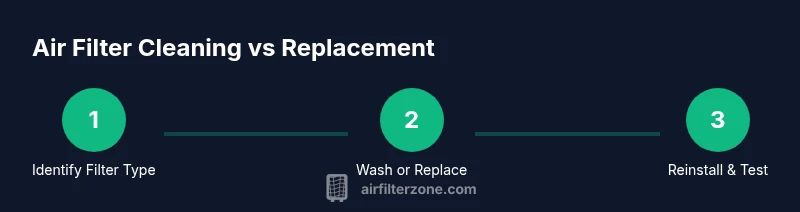
Decide cleaning versus replacement
If the filter is disposable, treat it as a consumable; replace rather than clean. If the filter is labeled washable, verify the manufacturer’s cleaning method before proceeding. This decision helps prevent unintended damage and ensures continued filtration efficiency.
Tip: When in doubt, replacement is the safer option. - 4
Clean washable filters with water
Rinse the washable filter under lukewarm running water to remove dust. Use a mild detergent if the label allows, and gently agitate with your hands or a soft brush. Avoid hot water or aggressive scrubbing that could damage the media or adhesive bonds.
Tip: Rinse until the water runs clear before moving to the next step. - 5
Rinse and brush stubborn dirt
For areas with embedded dust, lightly brush with a soft-bristled brush while it’s still wet. This helps dislodge particles without tearing the media. Do not use high pressure that could deform the filter.
Tip: Be patient—permanently stuck dirt may require replacement. - 6
Rinse again and remove moisture
Give the filter a final rinse to remove soap residue. Gently shake away excess water and blot with a towel. Ensure most moisture is removed before air drying.
Tip: Do not wring or twist; this can deform the filter frame. - 7
Dry completely before reinstalling
Place the filter on a drying rack or clean surface in a well-ventilated area. Allow ample time for complete drying. Reinstall only when fully dry to prevent mold or mildew growth.
Tip: If you’re in a hurry, let it dry overnight for best results. - 8
Reinstall with correct orientation
Insert the filter back into the housing with the airflow arrows pointing in the proper direction. Reattach any panels or screws securely.
Tip: Double-check that seals are intact to prevent bypass leakage. - 9
Test the system and check for air flow
Restore power and run the system briefly to confirm normal operation and airflow. Listen for unusual noises or signs of reduced airflow, which could indicate improper seating or a damaged filter.
Tip: If airflow remains weak, stop and reassess the filter or opt for replacement. - 10
Dispose of used disposable filters properly
Place disposable filters in a trash bag and seal before disposal to minimize dust release. Never reuse a disposable filter.
Tip: Follow local waste guidelines for disposal of HVAC or automotive filters. - 11
Document maintenance for future reference
Record the date of cleaning or replacement and any observations. A simple log helps you plan next maintenance and detect performance changes over time.
Tip: Set reminders aligned with manufacturer guidance to maintain air quality. - 12
Seek professional help if unsure
If you encounter persistent leaks, odors, or suspect the filter housing is damaged, consult a professional. Incorrect installation or damaged filters can compromise indoor air quality and system efficiency.
Tip: Professional assessment can prevent costly damage.
FAQ
Is it ever safe to blow dust off a reusable air filter with compressed air?
Only if the manufacturer explicitly approves compressed air. In most cases, use gentle washing and air-drying methods instead to avoid damaging the media. If in doubt, replace the filter rather than blast it with air.
Only if the maker says so; otherwise use washing and drying methods to protect the filter.
Can I use a vacuum to clean an air filter?
A vacuum can help remove loose dust from dry filters, but avoid aggressive suction that can deform the media. Use a soft brush or low suction and always follow the filter’s care instructions.
Yes, with care—don’t yank or crush the filter.
How can I tell if a filter is washable or disposable?
Check the label or user manual for washing instructions. Washable filters are labeled as reusable and specify cleaning steps; disposable filters are meant to be discarded after use.
Look for clear care instructions on the filter or in the manual.
How often should I check and replace filters in a home HVAC system?
Follow manufacturer guidance and environmental conditions. In dusty environments, check filters more frequently and replace when you see heavy dirt or reduced airflow.
Check your filter regularly and replace when it looks dirty or airflow drops.
What are common mistakes that void warranties when cleaning filters?
Using improper cleaning methods, using unapproved cleaners, or attempting to clean a disposable filter can void warranties. Always adhere to the filter’s official maintenance instructions.
Don’t improvise—stick to approved cleaning methods.
Are car cabin filters washable, and how should I care for them?
Some cabin filters are washable, but many are disposable. If yours is washable, follow the manufacturer’s rinsing and drying guidance; otherwise replace it to maintain interior air quality.
Check the label, then clean or replace as advised by the maker.
Watch Video
Quick Summary
- Avoid blowing through disposable filters; replace instead.
- Washable filters require proper washing and complete drying before reuse.
- Always follow manufacturer guidelines and inspect for damage before reinstall.
- Maintain a regular filter maintenance routine to improve indoor air quality.