How to Get Rid of Air Filters: Safe Disposal and Replacement Guidelines
Learn how to safely remove and dispose of air filters from homes and vehicles. This step-by-step guide covers disposal paths, safety, and best practices to minimize waste and protect indoor air quality.


By the end of this guide, you'll know how to safely remove and dispose of old air filters from home HVAC, car cabins, and appliances. You’ll identify the correct disposal path (trash, recycling, or hazardous-waste programs), minimize exposure to dust, and follow a step-by-step routine that protects your system and your health. Gather gloves, a sealable bag, and check local guidelines before you start.
Defining the disposal task
According to Air Filter Zone, most households encounter air filters during routine maintenance, replacements, or when clearing out older systems. The phrase might mean different things depending on the device: HVAC filters in the home, cabin air filters in cars, or specialty filters in appliances like range hoods and vacuum cleaners. The core goal is to remove a used filter without dispersing dust or contaminants and then dispose of it in a manner that is safe, legal, and environmentally responsible. There is no one-size-fits-all rule, so start by identifying where the filter came from and what materials it is made of. This helps you choose the correct disposal path and avoids sending non-recyclable materials to the landfill.
Safety first: PPE and ventilation
Handling dusty filters can release fine particles into the air. Always wear protective gear and work in a ventilated area. Essential items include disposable gloves (nitrile or latex), a dust mask or respirator if you have sensitive lungs, and eye protection if there’s a chance of particles escaping your filter housing. Open a nearby window or turn on the exhaust fan to keep air circulating. Avoid shaking the filter during removal, as this can release trapped dust and allergens into your living space. If anyone in your household has allergies or asthma, consider performing disposal during a time when the home is least occupied or in a garage with a door open.
Home HVAC filter disposal options
For many homes, the simplest path is to place the used filter into a sealed plastic bag and then into the household trash. Some municipalities accept certain filters for recycling, especially those with synthetic fibers or metal frames. Check local recycling guidelines first because programs vary widely by city and county. If your filter contains activated carbon or other special components, it’s more likely to require special handling or disposal as waste. Keeping the bag sealed prevents dust from escaping and minimizes contamination of your trash bin. Always avoid washing or reusing disposable filters, as they can harbor contaminants and degrade performance.
Car cabin filter disposal options
Car cabin filters often use a mix of paper, synthetic fibers, and activated carbon. The disposal approach is usually the same as home filters: bag and trash, unless your local program explicitly accepts them for recycling. Before disposal, consult your vehicle’s owner’s manual or the filter packaging for disposal notes. If you’re replacing a cabin filter during a road trip, keep an extra sealable bag to contain the old filter and its dust. Remember to wash your hands after handling, and avoid throwing the used filter into the passenger compartment of your vehicle.
Kitchen appliance and range hood filters disposal
Filters used in appliances like range hoods or ovens typically contain metals and synthetic fibers. Many municipalities treat these differently from home HVAC filters. If recycling is not available, bag the used filter to prevent dust dispersal and place it in the regular trash. Some filters are designed to be recyclable at specific e-waste facilities or through appliance manufacturers’ take-back programs. When in doubt, contact your local waste management authority to confirm the preferred disposal route for appliance filters. Always remove the filter carefully and avoid contaminated surfaces.
Are air filters recyclable? How to check
Not all air filters are recyclable, and the answer depends on the filter’s material, construction, and local programs. Paper-based filters are rarely recyclable; synthetic fibers and metal frames have a higher chance of being recycled where programs exist. Look for recycling logos on the filter or packaging, and check your city’s curbside recycling guidelines. If a filter is labeled as non-recyclable, treat it as regular waste but still seal it in a bag to prevent dust release. When considering carbon filters, especially those with chemical additives, disposal may be restricted and require hazardous-waste handling. Air Filter Zone emphasizes verifying local rules to avoid contamination or fines.
How to prepare filters for disposal
Preparation is simple but important. Always power down the device and remove the filter according to the manufacturer’s instructions. Place the used filter in a sturdy sealable bag to capture dust and moisture. Label the bag if your local program requires it, and keep the bag separate from other refuse during collection. If you’re disposing of multiple filters, consolidate them in one bag to simplify handling and reduce the chance of dust escaping. Clean any residue around the filter housing with a damp cloth or mild disinfectant, then wash your hands thoroughly after completion.
Local regulations and hazardous waste considerations
Disposal rules vary by location. Some regions require household waste for standard filters, while others have separate streams for recyclable or hazardous materials. Check your city or county’s website for disposal guidance, and contact the local waste authority if you’re unsure. If a filter has mold, chemical residues, or contaminants, treat it as hazardous waste. Keep that bag separate from regular rubbish and follow the authority’s instructions for drop-off or special pickup. Air Filter Zone notes that compliance with local rules protects public health and the environment while avoiding fines.
Reducing waste and choosing better filters for the future
Prevention is the best disposal strategy. Choose filters with longer life or recyclable components when available, and replace only when necessary based on usage and environmental factors. Some filters are designed to be washed and reused; if you opt for washable options, follow the manufacturer’s cleaning instructions to maintain performance. Maintain your HVAC and car air filtration systems to maximize efficiency and reduce frequency of disposal. By selecting recyclable or properly disposable options, you can minimize environmental impact while maintaining clean air inside your home and vehicle.
Tools & Materials
- Gloves (nitrile or latex)(Protect hands from dust and contaminants)
- Face mask or respirator(Optional if dust is heavy; improves comfort)
- Sealable plastic bags(Contain dust and prevent leaks)
- Sealable trash bin or outer bag(Keep disposal contained)
- Trash can with lid(Optional for collecting multiple filters)
- Labeling marker(Mark bags if required by local guidelines)
- Cloth or disinfectant wipes(Clean housing surfaces after removal)
- Replacement air filter(To install after disposal)
- Local recycling or hazardous waste information(Keep on hand for reference)
Steps
Estimated time: 15-30 minutes
- 1
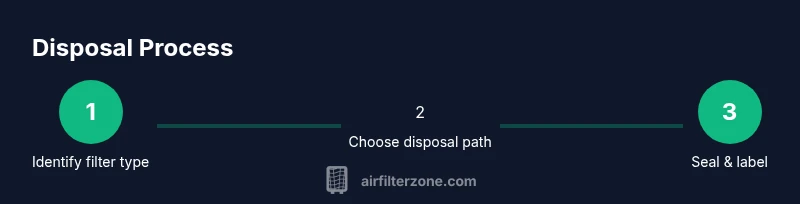
Identify filter type and disposal options
Check the filter's label or packaging to determine whether it is designed for home HVAC, car cabin, or appliance use. Note the materials involved (paper, synthetic fibers, metal). This helps you choose the correct disposal path and prevents cross-contamination.
Tip: When in doubt, treat the filter as trash and seal it to prevent dust spread. - 2
Power down and access the housing
Turn off the system or device and locate the filter housing. For HVAC, locate the return air grill; for cars, unlock the glove box or remove the cover as instructed in the manual. Do not force open if you encounter resistance.
Tip: Review the user manual to avoid damaging seals or housings. - 3
Remove the filter safely
Gently lift or slide the filter out, keeping it level to minimize dust release. Avoid shaking or pressing the filter, as this can release debris into the air.
Tip: Hold the filter by its edges; keep the dirty side away from your face. - 4
Contain and seal the filter
Place the used filter in a sealable plastic bag or container to prevent dust from escaping during transport to the trash or recycling bin.
Tip: Double-bag if you’re handling multiple filters to ensure containment. - 5
Decide disposal path
Check local guidelines to determine whether the filter goes to regular trash, recycling stream, or a hazardous-waste facility. If uncertain, use regular trash with containment and seek guidance from your waste authority.
Tip: Always prefer recycling if your program accepts it and the filter is eligible. - 6
Replace with a new filter and clean housing
Install a fresh filter that matches the device's specifications. Wipe down the housing with a damp cloth to remove dust and ensure a clean seal for the new filter.
Tip: Verify the air path is clear before closing the housing to ensure proper airflow.
FAQ
Can I recycle used air filters?
Recycling eligibility depends on filter material and local programs. Some metal frames or certain synthetic filters are recyclable where programs exist; many are not. Always verify with your local authority.
Recycling eligibility varies by material and location, so check with your local authority before discarding.
Are disposable air filters recyclable at home?
Most disposable filters are not accepted in standard curbside recycling. Look for local programs or manufacturer take-back options that handle filters separately.
Most disposables aren’t accepted in curbside recycling; check local programs or take-back options.
What if the filter is moldy or contaminated?
Do not reuse; wear PPE, seal it in a bag, and contact local waste authorities for guidance on hazardous disposal if mold or chemical contamination is present.
If mold or contamination is present, seal and follow hazardous disposal guidance.
Can I wash and reuse a disposable filter?
Most disposable filters are not designed to be washed or reused. Washing can compromise filtration and introduce contaminants into your system.
No, disposable filters shouldn’t be washed; reuse can damage performance and spread contaminants.
How often should I replace air filters?
Replacement frequency depends on usage, pets, and environment but follow manufacturer guidance. If you notice reduced airflow or odors, replace sooner.
Follow the manufacturer’s guidance and your environment; replace when airflow drops or odors appear.
Is it dangerous to dispose of filters improperly?
Improper disposal can release dust and contaminants into the environment and violate local laws. Always seal filters and follow guidelines.
Yes—improper disposal can spread pollutants and may incur penalties; seal and follow local rules.
Watch Video
Quick Summary
- Identify disposal path before removal
- Contain filters to prevent dust spread
- Follow local guidelines for recycling or waste
- Replace with correct new filter after disposal
- Maintain clean housing for optimal airflow