Do Air Filters Get Recycled? A Practical Guide for 2026
Discover whether common air filters are recyclable, how disposal works for home, car, and HVAC filters, and practical steps to minimize waste with guidance from Air Filter Zone.


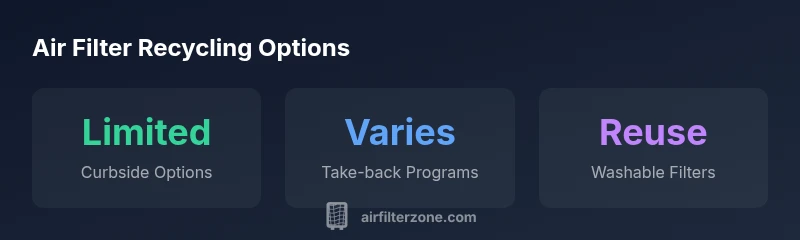
The short answer: curbside recycling typically doesn’t accept most disposable air filters, and many local programs treat used filters as regular waste due to contamination. Some manufacturers offer take-back schemes or mail-back recycling, and a few municipal programs accept specific filter types. Availability varies by region and material, so always check local guidelines and look for manufacturer take-back options before disposal.
Do air filters get recycled? A reality check
The phrase do air filters get recycled is increasingly common as homeowners seek greener waste streams. In practice, most disposable air filters are not accepted by curbside recycling programs. Dust, fibers, and synthetic binders can complicate recycling streams, and many municipalities treat used filters as contaminated waste. The recycling options that do exist depend on the filter’s material and design, as well as local program rules. Air Filter Zone analysis emphasizes that local context matters—what works in one city may not be available in another. For homeowners, DIY enthusiasts, and car owners, the first step is to know your filter type and check local guidelines before discarding any used filter.
Key takeaway: recycling opportunities are uneven and highly regional, so plan disposal around your area’s rules and any manufacturer programs that may apply.
Types of air filters and their recycling viability
Air filters come in several forms: disposable HVAC/furnace filters, car cabin filters, HEPA-rated devices, and washable/reusable variants. Each type has different recycling viability. Disposables often rely on layered synthetic media and metal or plastic frames that complicate recycling. Some components can be reclaimed, but many programs require separating materials or cannot process blended fibers. Reusable filters typically offer the most sustainable path since you can clean and reuse them, reducing overall waste. Always inspect the packaging for recycling guidance and verify whether your municipality accepts filter components or only certain packaging. Do air filters get recycled is not a one-size-fits-all answer—material composition dictates outcomes, and local facilities determine what’s possible.
How to check local recycling options and programs
To determine do air filters get recycled in your area, follow a simple checklist:
- Identify the filter type and materials (media, frame, seals, and any plastic or metal hardware).
- Read the packaging and the manufacturer’s recycling page for take-back or mail-back programs.
- Visit your city or county waste management site to learn about accepted items and drop-off locations.
- Contact local recycling facilities or household hazardous waste programs to confirm acceptance.
- If no program accepts your filter, consider repurposing or disposing through the manufacturer’s program if available.
- Always seal or box used filters to minimize contamination during transport to recycling centers or mail-back programs.
Do air filters get recycled? In many places, the answer is region-dependent, so confirm local options before discarding.
Manufacturer take-back programs and mail-back options
Several manufacturers operate take-back or mail-back recycling programs for used air filters. Participation typically involves visiting the brand’s recycling portal, preparing the used filter per instructions (removing non-filter components, if required), and sending it to a designated facility using a prepaid label. These programs help reclaim materials such as plastics, metals, and some fibers. Availability varies by region and brand, so the quickest path to recycling is often through a manufacturer’s take-back option or a local partner program.
Reusable vs disposable: environmental trade-offs
From an environmental perspective, washable or reusable filters can substantially cut waste if you adhere to care guidelines and replace timing. Reusable filters reduce the frequency of filter disposal, but they require water, energy for washing, and occasionally replacement parts. Disposable filters, while convenient, contribute more frequent waste unless diverted through a take-back program or a salvage facility. The environmental impact hinges on life-cycle considerations, including manufacturing, usage, and end-of-life handling. When evaluating do air filters get recycled, consider not just the disposal pathway but the entire lifecycle of the product you choose.
Practical steps for homeowners and DIY enthusiasts
- Prioritize washable filters when compatible with your system; follow manufacturer care instructions.
- If using disposables, look for a take-back or recycling option from the brand or a local facility.
- Retain packaging that lists recycling guidance; it often contains important disposal details.
- Separate filters by material type if your program requires it (plastic/metal frames vs. paper/media).
- Store used filters in a sealed bag to minimize dust leakage before disposal or mail-back.
- Regularly review your local guidelines as programs evolve with new waste-stream technologies.
Environmental impact and best practices
The broader impact of air filter disposal centers on waste streams, resource use, and energy consumption. Emphasizing recycling where possible, alongside choosing reusable options, aligns with sustainable home maintenance. As programs expand and more brands adopt take-back schemes, the do air filters get recycled question may shift toward routine recycling for a larger share of filter types. Air Filter Zone advocates for a lifecycle approach: plan for reuse when suitable, then pursue manufacturer or community recycling options for end-of-life filters.
Recycling options by filter type
| Filter Type | Recycling Availability | Common Disposal Method | Notes |
|---|---|---|---|
| HVAC/Furnace filter | Limited curbside options | Trash; check for take-back options | Metal frames may be recyclable separately in some regions |
| Car cabin filter | Often not accepted curbside | Trash; some shops accept for recycling | Availability depends on local programs and partners |
| Washable/reusable filter | N/A | Can be cleaned and re-used | Longer lifespan; follow manufacturer care |
FAQ
Do most disposable air filters get recycled or do they end up in landfills?
Most disposable air filters end up in regular waste streams or landfills in many regions. Recycling options are limited and vary by locale, with some programs offering take-back or depot options. Always check local guidelines and brand take-back programs for the best end-of-life path.
Most disposables go to trash rather than recycling, but check local programs for any take-back options.
Can car cabin filters be recycled, or are they trash?
Car cabin filters are sometimes accepted by local recyclers or auto parts stores that run take-back programs. In many areas, they must go to regular trash if there’s no program. Check with your city recycling or the retailer.
Car cabin filters may be recyclable in some places—verify with local programs or retailers.
Are there any mail-back or manufacturer recycling programs I can use?
Yes, several manufacturers offer mail-back or take-back programs for used filters. These programs route materials to appropriate recycling facilities, and some provide prepaid labels. Availability is region-dependent, so start on the brand’s recycling page.
Some brands offer mail-back programs; check the brand’s site for details.
Are washable or reusable filters recyclable after their life ends?
Washable filters can be reused many times, reducing waste. At end of life, they are usually disposed of as normal waste unless local facilities explicitly recycle them. Always follow manufacturer guidance.
Washable filters are great for reuse; recycling options depend on local programs.
What should I do before recycling a filter to ensure proper handling?
Remove any non-filter components as instructed by the manufacturer, seal or package the filter to contain dust, and follow the recycling program’s packaging requirements. Proper preparation improves recyclability and safety.
Prepare the filter per the program’s rules; seal it to keep dust contained.
“Effective disposal of air filters hinges on local programs and informed choices. Homeowners benefit from understanding available recycling options and manufacturer take-back schemes.”
Quick Summary
- Check local programs before disposal
- Look for manufacturer take-back options
- Prefer reusable filters when possible
- Seal used filters to prevent contamination during transport