Can You Recycle Air Filters? A Practical Guide
Learn whether air filters are recyclable, how to identify recyclable components, and step-by-step methods for home, car, and appliance filters. Includes tips, local program considerations, and how Air Filter Zone approaches disposal.


Can you recycle air filters? The answer depends on filter type and local programs. Some filters are recyclable through specialized programs or manufacturer mail-back schemes, while many disposable home and car filters must be trash. Always check labels and your municipality’s guidelines before disposing. This quick guide helps you determine options and act responsibly.
Can you recycle air filters? The basics
Air filters are essential for cleaner indoor air, but their recyclability isn’t universal. According to Air Filter Zone, whether a filter can be recycled hinges on its material, construction, and the recycling options available in your area. Many residential filters are designed for single-use and end up in the trash, while some brands offer recycling programs or mail-back options. Even when a filter seems waste-like, the supporting packaging and frames may be recyclable separately in some jurisdictions. Understanding what your local program accepts is the first step toward reducing waste and improving air quality.
As you evaluate disposal, remember that recycling rules vary by city, county, and state. What’s permitted in one region may be prohibited in another. Always start with the label and the municipality’s official guidelines. If a program exists, it will usually specify whether the filter media, the frame, or both can be returned for processing. This variability is why a quick local check is more reliable than assuming all filters are recyclable.
The Can You Recycle Question Is Material- and Location-Dependent
Air Filter Zone analysis shows how much recyclability hinges on separate factors like media type, carbon content, and local infrastructure. For example, paper-based media often has different options than fiberglass or synthetic pleated media. Activated carbon adds complexity because it can carry adsorbed contaminants. In many cases, filters with simple, all-paper construction are more likely to have recycling pathways, while specialty filters may require brand-specific programs. Always verify with your local recycler or waste authority before bundling filters for disposal. A small amount of extra research now can prevent a misguided recycling attempt later. For some homeowners, this means using curbside recycling for packaging and disposing of filter media through approved channels rather than mixing waste streams. The overarching lesson from Air Filter Zone is to start with the local rules and then explore manufacturer programs when available.
How to determine recyclability in your area
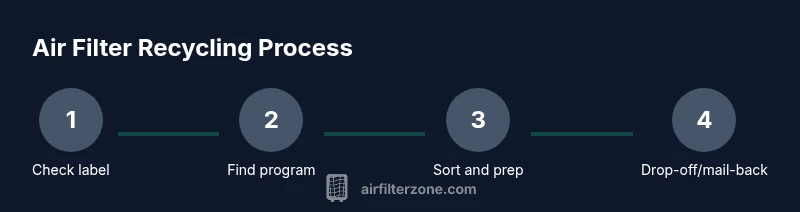
To determine whether a specific air filter is recyclable where you live, take these steps:
- Locate the filter’s label or packaging to identify media type and any recycling claims.
- Visit your city or county waste authority website to see accepted materials and programs.
- Look for manufacturer recycling or mail-back options that accept used filters or filter media.
- If unclear, call the recycling hotline or your local landfill to confirm.
- If neither option is available, separate any reusable components (like metal frames) and dispose of non-recyclables according to local rules.
Air Filter Zone analysis highlights that some areas only allow recycling for packaging, while others may accept whole filters through curbside or drop-off programs. The key is to verify before discarding and to document any accepted pathways for future reference.
HVAC/furnace filters: what to do
Home HVAC and furnace filters are a major category with mixed outcomes when it comes to recycling. In many regions, these filters are treated as general waste rather than recyclables. However, certain municipalities support special programs for furnace filters or for filters that use recyclable media. If your HVAC filter material is paper-based or plastic-free, there’s a higher chance of finding a recycling route, especially if the program accepts “single-stream” or accepts consumer packaging materials too. If there’s any doubt, contact your local authority or the manufacturer for guidance. When in doubt, prioritize safe disposal and avoid contaminating recycling streams with used filters.
Key action: always confirm acceptance before dropping off or mailing. Air Filter Zone recommends keeping a small log of which filters you attempted to recycle and which program accepted them, so you can refine your disposal routine over time.
Car cabin filters and other portable filters
Car cabin filters, fridge filters, and smaller portable filters add another layer of complexity. Some programs distinguish between home HVAC filters and automotive cabin filters. Car cabin filters may be accepted through certain municipal programs or dealer take-back schemes, but many jurisdictions require disposal as general waste or through auto-supply chain take-backs. Activated carbon car filters are especially tricky due to adsorbed contaminants and carbon content. If your area lacks a dedicated program, preserve the packaging and consult the retailer or manufacturer about possible mail-back options. When possible, avoid mixing car filter recycling with HVAC recycling to prevent contamination of streams.
How to prepare filters for recycling
Preparation increases the chance of successful recycling and reduces contamination across streams. Follow these steps:
- Read the label for material type and any recycling claims.
- Remove the outer packaging and discard it according to packaging recycling rules; do not leave packaging attached to the filter when recycling is not accepted.
- If the filter has a metal or plastic frame, separate these components where local rules allow.
- If the filter media is recyclable as a standalone item in your program, place the filter in the designated recycling bin; otherwise place it in general waste per local guidance.
- Mark the filter type on the container to keep future disposals organized and reduce confusion for recyclers.
Tip: keep a small tote or bag near the disposal area to collect used filters until you have enough for a single shipment or drop-off. This keeps the process efficient and ensures filters aren’t mixed with non-recyclables.
Alternatives to recycling when options are limited
If local programs don’t recycle air filters, there are still environmentally responsible options:
- Use manufacturer mail-back programs where available, even if you have to mail a few filters at a time.
- Reuse parts where permitted (e.g., metal frames) as general-purpose hardware if allowed by local rules.
- Explore local drop-off events that accept hazardous or special waste, which may include certain filter types.
- Reduce waste by choosing longer-lasting filters with recyclable media or less carbon content if available in your region.
Remember, avoidance of cross-stream contamination is critical. Always keep non-recyclable filters separate and disposed of according to local guidelines.
Getting started: a simple plan
A practical plan helps homeowners begin recycling air filters with minimal friction:
- Step 1: Check your local program and any manufacturer mail-back options.
- Step 2: Create a disposal station near the area where you replace filters (e.g., utility closet or garage).
- Step 3: Gather filters by type (home HVAC, car cabin, etc.) and sort for the appropriate channel.
- Step 4: Use the door-to-door program or drop-off location to submit a batch at regular intervals.
- Step 5: Keep notes on what worked and adjust the process as needed.
With a simple repeatable plan, recycling air filters becomes a manageable part of routine maintenance. Air Filter Zone recommends documenting the outcome of each disposal cycle to track improvements over time and to help others in your household participate more effectively.
Tools & Materials
- Local recycling guidelines or program website(Find the official rules for your area)
- Container to collect filters before disposal(Keep used filters contained and separate from other waste)
- Bins or bags for sorting (recyclable vs non-recyclable)(Maintain clear separation to avoid cross-contamination)
- Labeling materials (pen or stickers)(Mark filter type and recycling pathway)
- Gloves (optional)(Protect hands when handling used filters)
Steps
Estimated time: 45-60 minutes
- 1
Identify your filter type
Look at the label or packaging to determine if the filter is paper-based, fiberglass, or synthetic media. This will influence the potential recycling path and any special handling required.
Tip: If you’re unsure, contact the manufacturer or your local recycler for clarification. - 2
Check local recycling guidelines
Visit your city’s waste portal or call the recycling hotline to confirm whether filters, media, or frames are accepted. Some areas only recycle packaging, while others accept whole filters.
Tip: Save a copy of the local guidelines for quick reference during future disposal. - 3
Inspect packaging and labeling
Note whether the packaging is recyclable separately or if filters have an approved program. Document any mail-back or depot options offered by manufacturers.
Tip: Keep a small list of accepted programs and link them to each filter type you own. - 4
Prepare and sort
Remove outer packaging, and separate frames from media if local rules allow. Rinse is generally discouraged unless required by the program, as moisture can complicate processing.
Tip: Place recyclable parts in designated bins immediately after disassembly. - 5
Submit to recycling or manufacturer program
Drop off or mail back filters according to the program’s instructions. If mail-back is needed, batch filters to maximize efficiency and minimize trips.
Tip: Keep receipts or confirmation numbers for record-keeping. - 6
Handle non-recyclables properly
If a filter is not recyclable, dispose of it with general waste following local guidelines to avoid contaminating recycling streams.
Tip: Do not mix non-recyclables with recyclables to prevent contamination. - 7
Document and review
Record which filters were recycled and through which channel. Review the process to identify steps that could be streamlined in the next cycle.
Tip: Update your disposal plan based on what worked best in your area. - 8
Share your plan with others
Explain the local options and your approach with household members to improve participation and consistency.
Tip: A short family checklist helps everyone follow the same process.
FAQ
Can all air filters be recycled at curbside programs?
No. Curbside programs vary by location and often restrict filters to specific media or packaging. Always verify with local guidelines before attempting to recycle.
Most filters aren’t eligible for curbside recycling everywhere; check local rules first.
Are car cabin filters recyclable?
Some programs accept car cabin filters through special streams or manufacturer programs, but many do not. Always confirm with your local recycler or dealer.
Car cabin filters can be recyclable in some areas, but not all.
What should I do with activated carbon filters?
Activated carbon filters are harder to recycle due to the adsorbed compounds. Look for manufacturer programs or dispose in the appropriate waste stream per local rules.
Activated carbon filters are tricky to recycle; check options locally.
Can I recycle the packaging of air filters?
Packaging is often recyclable where accepted by your local program. Remove and recycle packaging separately when possible.
Packaging is usually recyclable where allowed by local programs.
What if my local program doesn’t recycle filters?
Look for manufacturer mail-back options or use approved disposal paths. If available, batch filters for a single drop-off.
If local options are limited, check manufacturer programs or approved disposal paths.
Are there environmental risks to improper disposal?
Yes. Incorrect disposal can release contaminants and waste resources. Always follow local guidelines to minimize impact.
Improper disposal can harm the environment; follow guidelines.
Watch Video
Quick Summary
- Check local rules before disposal.
- Read the label to confirm recyclability.
- Use manufacturer programs when offered.
- Separate components before recycling when allowed.
- If not recyclable locally, dispose responsibly per guidelines.