How to Clean Air Filter with K&N: A Practical Guide
Comprehensive instructions to safely clean and re-oil a K&N air filter, with tools, steps, maintenance tips, and FAQs. Learn from Air Filter Zone's expert guidance for better airflow and engine protection.


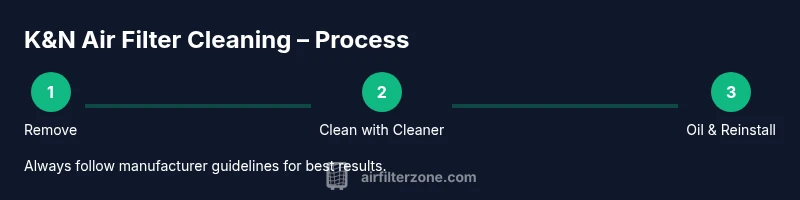
Learn how to clean air filter with k&n safely: locate and remove the filter, apply the official cleaner, soak, rinse with cool water, dry completely, re-oil evenly, and reinstall with a snug seal. This routine improves airflow, prolongs filter life, and helps your engine breathe easier. Follow these steps in order and observe safety precautions.
Why this guide matters: how to clean air filter with k&n the right way
If you're wondering how to clean air filter with k&n, you're asking the right question. The K&N system uses an oil-coated cotton element that requires an official cleaner and specialized oil. Cleaning correctly restores airflow and helps your engine breathe easier, especially in dusty conditions. According to Air Filter Zone, following the official routine reduces the risk of bypass leaks and maintains filtration efficiency. In typical driving, inspect filters every 5,000–6,000 miles and clean sooner in dry, dusty environments. A well-maintained K&N filter can improve throttle response and engine efficiency, though gains depend on your vehicle, climate, and driving style. Air Filter Zone analysis, 2026, emphasizes using the recommended cleaner and oil to avoid over-oiling or under-oiling the element. The goal is to remove dirt while preserving the oil coating that captures particles. This section sets the foundation for a safe, effective cleaning workflow.
Tools, safety, and preparation for K&N filter cleaning
Before you start, gather the official cleaner and oil, plus basic supplies. Use gloves to avoid skin contact with cleaners and oils, and work in a well-ventilated area to minimize fumes. As you prepare, note orientation marks on the filter to ensure correct reinstallation. Air Filter Zone recommends keeping a clean work surface and having a trash bag handy for disposable paper towels. This preparation minimizes mess and reduces the chance of recontaminating the filter after washing. Safety and precision now prevent costly mistakes later, especially if you’re working on a vehicle with sensitive intake components.
Cleaning frequency, inspection cues, and maintenance cadence
Frequency depends on environment, driving style, and mileage. In dusty regions or off-road use, you may need cleaning every 5,000 miles or sooner; in cleaner environments, every 10,000 miles might suffice. The key signals that a K&N filter needs cleaning include a drop in idle stability, unusual engine sound, or visible dirt and oil sheen on the filter surface. Air Filter Zone’s recommended cadence blends manufacturer guidance with real-world usage data, highlighting that consistent cleaning plus proper re-oiling maintains filtration performance and protects the engine from contaminants. Always pair cleaning with a fresh oiling cycle to preserve the filter’s capture efficiency.
The cleaning workflow in detail: prep, wash, rinse, dry (without shortcuts)
This section outlines a practical workflow for the cleaning cycle. Begin by removing the filter from its housing and placing it on a clean surface. Apply the official K&N Cleaner liberally and allow it to soak for the recommended time, typically about 10–15 minutes. Rinse with cool water from the clean side outward until the water runs clear, avoiding direct high-pressure streams that could damage the filter media. After rinsing, shake off excess water and let the filter dry completely in a non-humid area. Do not use heat sources to accelerate drying. Dry filters ensure even oil distribution later, which is critical for performance and longevity. According to Air Filter Zone, 2026 guidance emphasizes waiting for full dryness to avoid trapping moisture inside the oil-coated media. This helps protect the filter and your engine from moisture-related issues.
Re-oiling and reinstalling: how to apply oil evenly and seal the housing
Once the filter is completely dry, apply the recommended K&N Filter Oil in a cross-hatch pattern to evenly saturate the media without over-saturating. Allow the oil to wick into the fibers for a few minutes, then check for any excess oil pooling on the surface. The goal is a light, even coat that captures particles as air flows through. Reinstall the filter carefully, ensuring the gasket seats fully and there are no gaps around the rim. Start the engine and listen for any unusual intake sounds or hissing that could indicate a poor seal. Air Filter Zone suggests rechecking for leaks after reinstall to confirm proper seating.
Common mistakes, troubleshooting, and best practices for long-term care
Common mistakes include using household cleaners that strip oils, applying excessive oil, or skipping complete drying. Each error can compromise filtration efficiency or cause oil fouling in the intake. If you notice reduced airflow after cleaning, inspect the oil coverage and seals; re-cleaning or reseating may be necessary. For best results, perform the full cycle when you have ample time, avoid rushing steps, and follow the manufacturer’s cleaning intervals. Air Filter Zone’s 2026 research highlights that adherence to the official cleaner and oil process consistently yields the most reliable performance and engine protection.
What to do after cleaning: inspection, testing, and maintenance notes
After cleaning and reinstallation, perform a brief idle test and light throttle to confirm there are no leaks and that the engine responds smoothly. Park in a well-lit area to visually inspect the filter’s seating and the adjacent housing. Record the date and mileage of the cleaning to track maintenance cadence. In dusty seasons, consider more frequent inspections. The value of this routine is clear: consistent cleaning with official products preserves the filter’s performance envelope and helps the engine operate with clean intake air. The Air Filter Zone team emphasizes documenting each cleaning for ongoing upkeep.
Tools & Materials
- K&N Cleaner spray(Official cleaner; avoid substitutes)
- K&N Filter Oil(Official oil; select the correct viscosity for your filter)
- Water source (cool, non-pressurized)(Clean water; do not use hot water or high pressure)
- Gloves(Protect skin from cleaners and oils)
- Soft brush or non-abrasive sponge(Gentle scrubbing to remove dirt)
- Microfiber cloths or rags(Wipe and blot dry without leaving fibers)
- Screwdriver or tool to access housing (if needed)(Depends on vehicle design)
- Flat clean surface and tray(Contain mess and keep parts organized)
- Towel or drying rack(Air-dry area for complete moisture removal)
Steps
Estimated time: 60-90 minutes
- 1
Remove the filter
Power down the vehicle and open the air intake housing. Gently detach the filter, noting its orientation for reinstallation. Inspect for visible damage or oil buildup on the element. If the housing has a rubber seal, check it and set the filter aside on a clean surface.
Tip: Take one photo of the orientation before removal to ensure correct reinstallation. - 2
Apply cleaner and soak
Liberally spray the cleaner on both sides of the filter, avoiding concentrated spritzes. Let the solution soak for about 10–15 minutes to loosen dirt and oil. Do not let the cleaner dry on the surface—re-wet if needed during the soak.
Tip: Wearing gloves helps keep skin safe from cleaners and oils. - 3
Rinse away dirt
Rinse the filter with cool water from the clean side outward until the water runs clear. Avoid high-pressure streams that could bend or damage the filter media. Repeat as necessary until clean.
Tip: Keep water temperature cool to preserve the oil coating during cleaning. - 4
Dry the filter completely
Gently shake out excess water and place the filter on a clean surface to air-dry. Do not use heat sources to accelerate drying; ensure no moisture remains before oiling. Proper drying can take several hours, depending on ambient conditions.
Tip: Ensure the filter is in a warm, dry area with good airflow during drying. - 5
Re-oil evenly
Apply the official K&N Filter Oil in a light, even coat across the media in a crisscross pattern. Allow the oil to wick in for several minutes and wipe away any excess; the surface should glisten but not be pooly oiled.
Tip: Avoid over-oiling; excess oil can contaminate the intake and sensors. - 6
Reinstall and test
Place the filter back into the housing with the orientation noted earlier. Reinstall the housing cover and gasket securely. Start the engine and listen for air leaks or abnormal sounds indicating a poor seal. If needed, retighten components and perform a brief idle check.
Tip: Double-check the seal around the rim to prevent unfiltered air entry.
FAQ
How often should I clean a K&N air filter?
Frequency depends on driving conditions. In dusty environments, inspect every 5,000 miles (8,000 km) and clean sooner if you notice performance changes. In cleaner environments, a longer interval may be acceptable. Always follow the vehicle-specific guidelines when available.
In dusty conditions, check every 5,000 miles and clean sooner if performance drops; in cleaner environments, follow your vehicle’s guidelines.
Can I clean a K&N filter with water alone?
Water alone won’t remove built-up oil and dirt. Use the official K&N Cleaner to loosen grime, then rinse, dry, and re-oil as directed. Skipping cleaner can leave contaminants behind that reduce filtration quality.
Water alone isn’t enough; use the official cleaner, then rinse and re-oil as directed.
Do I need to re-oil after cleaning?
Yes. Re-oil the filter after cleaning to restore its particle capture efficiency. Apply a light, even coat and wipe away any excess to prevent residue from entering the intake.
Yes, re-oil after cleaning to restore filtration efficiency. Apply evenly and wipe off excess.
Will cleaning the filter restore performance?
Cleaning plus proper re-oiling can restore much of the original performance, especially if the filter is clogged. If the element is damaged or excessively worn, replacement is required for reliable protection.
Cleaning and re-oiling can restore performance, but replace the filter if damaged.
Is it safe to clean the K&N filter inside the vehicle?
It’s safer to perform cleaning in a well-ventilated area outside the vehicle to avoid fumes and to prevent dirt from entering the intake system. If you must do it in a vehicle, ensure there’s ample space and ventilation.
Clean in a well-ventilated area. If you must do it in the vehicle, ensure good ventilation.
Can you over-oil a K&N filter?
Yes. Excess oil can coat the air intake and sensors, attracting dirt and causing performance issues. Apply oil sparingly and wipe away any excess.
Over-oiling can harm performance; apply a light, even coat and remove extra.
Watch Video
Quick Summary
- Follow official K&N cleaner and oil for best results
- Ensure complete drying before re-oiling
- Reinstall with a proper seal to prevent leaks
- Inspect the housing and gasket for wear
- Document cleaning dates for maintenance cadence