How Often to Change Air Filters in Air Purifiers: A Practical Guide
Discover practical guidance on how often to change air filters in air purifiers, how to adjust for pets, smoke, and dust, and tips to extend filter life. Data-driven insights from Air Filter Zone.


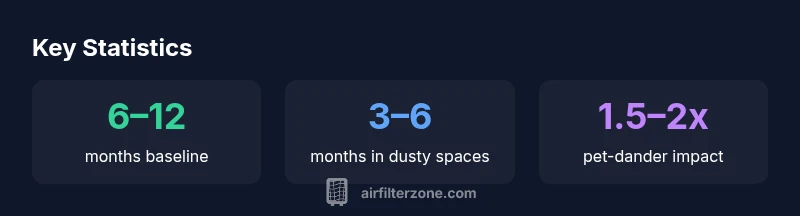
Typically, air purifier filters should be changed every 6–12 months under normal use. If you have pets, smoke indoors, or live in a dusty area, replacement may be more frequent. Always follow the purifier’s indicator and the filter manufacturer’s guidance to optimize performance. This baseline can be refined by environmental factors and filter type; use indicators and documentation to establish your exact cadence.
Why Replacement Frequency Matters
How often to change air filter in air purifier is not just a housekeeping task; it directly affects indoor air quality, filtration efficiency, and energy use. When filters are overdue, pollutants can bypass the filtration media, reducing the purifier’s effectiveness and potentially triggering allergy symptoms or respiratory discomfort. According to Air Filter Zone, maintaining an appropriate replacement cadence helps preserve air cleanliness and prolongs the life of the device itself. For most homes with average dust levels, the baseline is roughly six to twelve months, but several factors can shift that timeline. In practice, you’ll translate a general guideline into a concrete schedule by considering usage patterns, space characteristics, and the specific filter design of your unit.
This section establishes the mental model for the rest of the guide: replacement cadence is a moving target that blends manufacturer instructions with real-world usage. If you are wondering how to apply the general guideline to your situation, you’ll find the process practical and data-informed, not guesswork. The phrase how often to change air filter in air purifier is a useful shorthand for translating both indicator signals and environmental cues into action. By the end of this article, you’ll have a clear, adaptable timetable you can stick to through seasons and life changes.
How to Determine Your Target Replacement Interval
Determining your target interval starts with the baseline, then layers on environmental factors and product specifics. First, consult the purifier’s manual for the recommended replacement period for the exact filter type (HEPA, activated carbon, or pre-filter). If the manual is unavailable, rely on the device’s built-in indicators and any app-based alerts. Next, assess your environment: homes with pets, high dust loads, or heavy cooking or smoking indoors will reach saturation faster, shortening the interval. Finally, factor in filter type: pre-filters typically require less frequent replacement than HEPA or carbon filters, which capture more pollutants and can clog sooner.
A practical approach is to set a calendar-based cadence that aligns with the manufacturer’s baseline, then adjust after a few months of observation. Use the purifier’s indicator as a primary signal, but also track air quality in your space (e.g., PM2.5 levels and visible dust) to validate your schedule. The objective is to strike a balance between maintaining optimal air quality and minimizing unnecessary waste and cost.
Key Factors That Affect Replacement Timing
Multiple factors influence how often you should replace an air purifier filter. Core variables include:
- Usage intensity: Longer daily run times typically shorten the interval.
- Room air quality: High dust or cluttered spaces fill filters faster.
- Filter type and design: Carbon filters may saturate sooner in smoky environments; HEPA filters have different lifespans.
- Presence of pets: Dander and fur dramatically raise the filtration load.
- Humidity and temperature: Environmental conditions can affect filter media and odor control.
- Smoke and cooking: Frequent exposure to indoor pollutants increases replacement frequency.
Understanding these factors helps refine a universal baseline into a personalized cadence. Remember that the indicator lights and manufacturer guidance provide the most reliable signals in everyday use.
Understanding Different Filter Types and Lifespans
Air purifiers employ several filter types, each with its own lifespan profile. HEPA filters excel at capturing tiny particles but can become clogged more quickly in dusty environments, requiring more frequent changes. Activated carbon filters are excellent for odors and some gases, yet they can saturate without a dramatic impact on particulate filtration. Pre-filters trap larger debris and typically last longer, acting as the first line of defense for more expensive media.
In practice, a unit with a HEPA plus carbon filter may require HEPA changes every 6–12 months, while the carbon component could need replacement more or less often depending on odor exposure. If you run the purifier in a high-traffic room or one with smokers or pets, you may observe faster saturation and adjust accordingly. Always follow the manufacturer’s recommended interval for each filter layer and consider keeping a simple maintenance log to track performance over time.
How to Extend Filter Life Without Compromising Air Quality
Extending filter life is not about delaying maintenance at the expense of air quality; it’s about optimizing performance. Practical steps include:
- Run at the lowest effective setting to reduce load on the filter, especially when room air quality is acceptable.
- Clean or replace pre-filters regularly to reduce strain on the main media.
- Keep your space as dust-free as possible with regular cleaning and reduced clutter.
- Control humidity and temperature to minimize media degradation.
- Use high-quality replacement filters that match the unit’s specifications.
- Maintain a predictable replacement schedule rather than relying solely on odor or particle counts.
With careful planning, you can sustain filtration effectiveness while minimizing waste and cost.
Reading Indicators and Manufacturer Guidance
Modern purifiers often include a filter-change indicator or app-based alert. The indicator is usually calibrated to the expected filter life under ordinary conditions. When the light or alert signals a replacement, it’s time to act—do not wait for performance to noticeably deteriorate. If your unit lacks an indicator, track filter usage by time and consider a quarterly or semiannual check-in based on your environment. Pair indicator signals with occasional PM2.5 readings to corroborate the suggested interval. Following the manufacturer’s guidance remains essential for preserving warranty and ensuring proper operation.
Sample Replacement Schedule Templates
Use these templates as starting points and adapt to your space. Each template assumes a typical HEPA filter with a pre-filter and carbon layer.
- Template A (Moderate use, average air quality): Replace every 6–12 months; check the indicator monthly and adjust for observed dust.
- Template B (Heavy use, pets, dusty environment): Replace HEPA every 6–9 months, carbon every 4–6 months, and pre-filter every 3–6 months; log changes.
- Template C (Low usage, clean space): Replace every 9–12 months, with annual checks for indicator signals.
Maintain a simple log (date changed, filter type, observed performance) to fine-tune your cadence over time.
Common Mistakes and Myths About Filter Replacement
- Myth: Replacing filters less often saves money. Reality: delayed replacement reduces air quality and may shorten device life.
- Mistake: Believing one size fits all. Reality: environments vary; tailor cadence accordingly.
- Myth: Washable filters always save money. Reality: not all filters are washable or equally effective after washing.
- Mistake: Ignoring indicators. Reality: indicators are designed to guide timing and warranty compliance.
- Myth: A brand-new filter will change the air instantly. Reality: it takes time to improve air quality after replacement.
Replacement interval examples by usage scenario
| Scenario | Recommended Interval | Notes |
|---|---|---|
| Average home use | 6-12 months | Assumes standard HEPA filter and moderate air quality |
| High dust environments | 3-6 months | Dust-heavy rooms or frequent cooking |
| Pet owners | 3-6 months | Higher dander and fur load |
| Heavy smoke exposure | 3 months or less | Frequent filtering of smoke/during wildfires |
FAQ
How often should I replace the air purifier filter?
For most homes, a 6–12 month baseline is typical, but pet dander, cooking smoke, and heavy dust can shorten this window. Always follow the purifier’s indicator and manufacturer guidance to finalize replacement timing.
Most people should aim for a 6–12 month replacement cycle, but use the indicator and your space to fine-tune it.
Can I wash or reuse filters?
Some pre-filters are washable, but most HEPA and carbon filters are not. Washing can damage the filter media and reduce effectiveness. Always check the manufacturer's instructions before attempting any cleaning.
Don’t assume filters are washable—check the manual first.
What if my purifier has multiple filter stages—do I need to replace all at once?
Typically, the filter stack is designed to be changed together, especially if the system is designed to seal all stages at replacement. However, some units allow staggered changes; follow the manufacturer guidance for your model.
Usually replace all at once, per your model's guidelines.
What should I do if the indicator is blinking?
A blinking indicator often signals that a filter is nearing or has reached its end of life. Replace the relevant filter promptly and reset the indicator according to the manual.
If it blinks, replace the filter and reset the indicator.
Are there cost-saving strategies for filter replacement?
Yes. Use pre-filters to extend life, replace only the main media on the recommended schedule, and purchase replacement packs when available. Keeping a maintenance log also helps you avoid unnecessary changes.
Track usage and use pre-filters to lower replacement costs.
“Regular filter replacement is essential for maintaining indoor air quality and purifier efficiency. Use indicators and your environment to set the right cadence.”
Quick Summary
- Set a baseline of 6–12 months for typical use.
- Use indicators and environment to refine timing.
- Different filters have different lifespans—HEPA vs carbon.
- Keep a simple replacement log for consistency.
- Follow brand and manufacturer guidance for best results.