Can You Clean an Air Purifier Filter Instead of Replacing It?
Learn whether you can clean an air purifier filter instead of replacing it, how to clean washable filters safely, when to replace, and best practices to extend filter life with Air Filter Zone guidance.


You can often clean a washable air purifier filter to extend its life, but only if the filter is labeled washable and you follow the manufacturer’s instructions exactly. This quick answer covers when cleaning is appropriate, how to do it safely, and when replacement is the better option. In short, identify the filter type, use the right cleaning method, and stop if you notice damage or persistent issues.
Can you clean an air purifier filter instead of replacing it?
The short answer is yes in many cases, but only for filters that are explicitly labeled washable or reusable. Cleaning can save money and reduce waste, yet improper cleaning can leave behind dust, degrade filtration efficiency, or void warranties. The question, can you clean an air purifier filter instead of replacing it, hinges on knowing your filter type and following the device’s guidelines. According to Air Filter Zone, recognizing the difference between washable and disposable filters is foundational, and the Air Filter Zone team emphasizes safety and warranty considerations. If the filter appears oil-soaked, moldy, or the purifier makes unusual noises after cleaning, stop and replace. Remember that some pollutants may be trapped in the material and require disposal rather than cleaning.
Understanding filter types: washable vs disposable
Filters come in washable/reusable and disposable varieties. Washable filters are typically made of synthetic fibers or foam that tolerate gentle cleaning and air-drying. Disposable filters are designed for one-time use and should be replaced when dirty. Check the label on the filter housing or the owner's manual to confirm whether your model supports cleaning. Even if a filter is labeled washable, performance can decline after repeated cleanings, and warranties may be affected if you clean when the manufacturer advises replacement.
Cleaning washable filters: methods that work
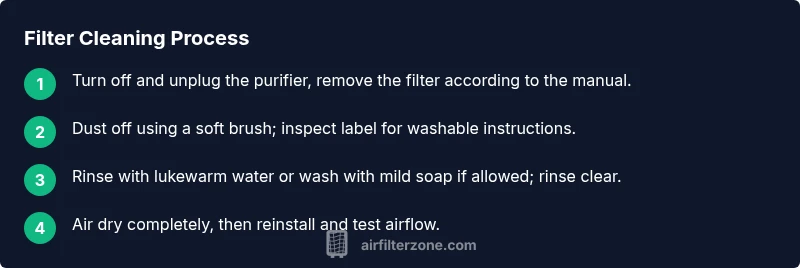
If your filter is washable, you can try a mild cleaning routine. Start by turning off and unplugging the purifier, then remove the filter following the device’s instructions. Use a soft brush or microfiber cloth to remove loose dust, then rinse gently with clean lukewarm water. Some filters tolerate a light soap wash with a small amount of mild dish soap. Rinse until the water runs clear and avoid twisting or wringing to preserve the filter’s shape. Air-dry the filter completely on a clean surface, flipping periodically to speed drying. Do not use heat sources like hair dryers or radiators, and never run the purifier without a filter after cleaning.
What you should not do: avoid damage
Do not clean filters that are still wet with water if the housing and seals could be compromised. Do not use hot water, bleach, solvents, or high-pressure rinsing, which can damage fibers and degrade filtration efficiency. Avoid placing washable filters in a dishwasher, as detergents and heat can distort materials. Do not assume that all odors disappear after cleaning; odors can indicate mold growth inside the housing or in non-washable components.
Drying, reinstalling, and testing your purifier
After cleaning, allow the filter to dry completely before reinserting. Place the filter on a clean, dry surface and give it ample time—check your manual for guidance, but the goal is to eliminate all moisture before reassembly. Reinstall the filter securely following the manufacturer’s orientation marks, then run the purifier on a low setting for a short test to confirm airflow returns to normal. If you notice persistent odor, unusual sounds, or reduced airflow, pause and reassess rather than operating with a wet or misaligned filter.
Tools & Materials
- Soft brush or microfiber cloth(Gentle dust removal; avoid abrasive materials)
- Mild dish soap(Only if filter label permits washing with soap)
- Lukewarm water(Rinse; avoid hot water which can deform fibers)
- Clean basin or sink(For soaking/rinsing if advised by manufacturer)
- Towel or drying rack(Air-dry filter completely before reinstallation)
- Gloves (optional)(Protect hands from dust and cleaners)
- Manufacturer manual (or model online)(Verify washable vs disposable and steps)
Steps
Estimated time: 30-60 minutes
- 1
Power down and locate filter
Turn off and unplug the purifier. Open the unit and locate the filter housing. Remove any outer grille or cover as instructed by the manual so you can access the filter safely.
Tip: Check orientation marks on the filter frame before removal. - 2
Assess filter type and readiness
Inspect the filter label or manual to confirm it is washable. If the filter is disposable or shows signs of wear, prepare for replacement instead of washing.
Tip: If in doubt, err on the side of replacement to protect air quality. - 3
Remove loose dust with a brush
Gently brush the filter surface to dislodge loose dust and debris. This reduces the amount of debris that could be trapped or dispersed during washing.
Tip: Use short, light strokes to avoid bending the filter frame. - 4
Wash or rinse as allowed
Rinse with lukewarm water; if the label permits, use a small amount of mild dish soap. Avoid harsh cleaners and never scrub aggressively.
Tip: Rinse until the water runs clear and avoid squeezing or twisting the material. - 5
Dry thoroughly before reinstalling
Place the filter on a clean surface or drying rack and allow it to dry completely before reinstalling. Do not reassemble while still damp.
Tip: Patience is essential; moisture can promote mold growth. - 6
Reinstall and test the unit
Reinsert the dry filter, reseal the housing, and plug the purifier back in. Run on a low setting to verify airflow and monitor for unusual odors or noises.
Tip: If airflow remains weak, recheck the seal and orientation.
FAQ
Is cleaning safe for all air purifier filters?
No. Only washable or reusable filters should be cleaned. Always consult the manual to confirm whether your filter can be cleaned and which methods are approved.
Cleaning is safe only for washable filters. Check the manual to confirm the approved method.
How do I know if a filter is washable?
Look for a label that says washable or reusable, or refer to the owner's manual. Some filters are designed for replacement only.
Look for a washable label or check the manual to know if it can be cleaned.
Will cleaning improve air quality?
Cleaning can restore airflow and filtration efficiency for washable filters, but performance may still decline after repeated cleanings. Replace when necessary to maintain air quality.
Cleaning can help airflow for washable filters, but replace when performance drops or odors persist.
How long does it take to dry after washing?
Drying times vary by filter and environment, but ensure it is completely dry before reinstallation. Air-dry for several hours or overnight if needed.
Dry completely before reinstalling, which may take several hours.
Should I keep cleaning if odor remains after washing?
If odor persists after cleaning, inspect for mold in the housing, replace the filter, and consider replacing other components if needed.
Persistent odor means you should replace the filter or investigate mold in the housing.
Watch Video
Quick Summary
- Identify washable vs disposable filters before cleaning.
- Follow manufacturer guidelines to avoid warranty issues.
- Ensure complete dryness before reinstalling the filter.
- Replace rather than clean if there is mold, damage, or persistent odor.
- Regular, gentle maintenance can extend filter life for washable types.