Air Filter vs Oil Filter: A Practical Comparison for Home and Car
Explore the core differences between air filters and oil filters, how they work, maintenance needs, and when to replace them. A practical, evidence-based comparison for homeowners, car owners, and DIY enthusiasts.


Air filters and oil filters serve distinct roles. An air filter cleans the air that moves through your HVAC system or a portable purifier, trapping dust, pollen, pet dander, and smoke particles before they reach living spaces. An oil filter, by contrast, is a lifeline for engines, catching metal shavings, varnish, and sludge in the oil before it circulates through bearings. In practice, home and automotive contexts demand different media, replacement intervals, and costs, so a side-by-side comparison reveals the best choice for your environment.
What Are Air Filters and Oil Filters?
Air filters and oil filters are everyday components, yet they serve different worlds. An air filter cleans the air that moves through your HVAC system or a portable purifier, trapping dust, pollen, pet dander, and smoke particles before they reach living spaces. An oil filter, by contrast, is a lifeline for engines, catching metal shavings, varnish, and sludge in the oil before it circulates through bearings. The phrase air filter vs oil filter captures this fundamental distinction in purpose. According to Air Filter Zone, the most important factor is context: filter media, flow requirements, and maintenance cycles must match the task. Home environments demand filters that minimize indoor pollutants while keeping airflow steady; vehicles demand robust filtration that protects oil quality under high engine stress. Understanding these roles helps homeowners, car enthusiasts, and DIYers choose filters that deliver reliable performance and longevity, without overpaying for features that don’t apply to their use case.
How They Work: Filtration Mechanisms
Air filters use pleated media (often cellulose, synthetic fibers, or blends) arranged to maximize surface area while allowing air to pass. The result is a balance between capturing particles and preserving airflow. Media selection directly affects efficiency and pressure drop across the filter housing; higher efficiency media will remove smaller particles but may restrict airflow if the system isn’t designed for it. Oil filters use tightly wound media or a stacked filtration element that traps particulates in lubricant, with a bypass valve that ensures oil flow if the filter becomes clogged. They operate under pressure from the oil pump and must tolerate elevated temperatures. The vulnerability of both filter types is the same risk: a clogged element reduces performance and can lead to system stress. From a practical standpoint, a well-matched air or oil filter extends life: cleaner air means cleaner indoor air quality and healthier engines.
Design Goals and Placement: HVAC vs Automotive
Air filters in homes and commercial buildings are positioned to protect occupants and equipment, typically at air intakes or within purifiers. The design goal emphasizes pollutant removal, minimal pressure drop, and compatibility with filter racks and ductwork. Oil filters live in automotive engines or powertrain systems, and their placement affects oil pressure, lubrication, and overall reliability. Because engines operate under harsh conditions, oil filters are built to trap more aggressive contaminants and to withstand high temperatures and pulsatile flow. The location matters: stepping back from the car’s engine bay and from a central HVAC duct reveals how each filter is optimized for its environment. While both filters share a core logic—keep the fluid clean—their integration into broader systems defines material choices, replacement strategies, and the timing of service intervals.
Material and Filtration Media: What Makes Them Different
Air filters commonly employ cellulose, glass fiber, or advanced synthetic media, often pleated to increase surface area. The main performance attribute is the ability to capture a broad spectrum of particle sizes without choking airflow. Oil filters rely on specialized media designed to trap fine particulates in lubricating oil, with coatings or processes that suppress bypass and leakage. Some oil filters use a metal pressure-relief valve or a anti-drain back valve to protect oil channels when the engine is off. The media types reflect different service conditions: a filter for home air faces humidity, dust, and potential growth; an engine filter faces high-temperature oil exposure and chemical compatibility. In practical terms, the choice of media affects replacement frequency, cost, and the filter’s lifespan under typical operating conditions.
Performance Metrics to Compare
When comparing air vs oil filters, the metrics differ in meaning. For air filters, filtering efficiency is often described using standardized air quality metrics like MERV, with higher numbers indicating better capture of fine particles, but potentially higher resistance to airflow. For oil filters, performance is judged by micron filtration capability, structural integrity under pressure, and the filter’s ability to prevent bypass. In both cases, a durable seal, proper housing fit, and compatibility with the system are essential. A key takeaway is that efficiency should align with your environment: a home with pets and seasonal allergies benefits from higher efficiency air filters, while a high-mileage engine benefits from a filter that provides reliable filtration at operating temperatures without starving oil flow. Real-world testing and certifications from recognized bodies give confidence in performance claims.
Maintenance and Replacement Cycles
Maintenance is the practical bridge between theory and real-world results. Air filters are typically replaced when airflow noticeably declines, or after environmental spikes like wildfire smoke or high pollen seasons. Many homeowners adopt a scheduled replacement based on the manufacturer’s guidelines and local conditions, rather than strictly following a calendar. Oil filters are normally replaced as part of routine oil service or during major maintenance, often aligned with oil drain intervals and oil temperature considerations. The key is to assess filter condition—look for dirt saturation, reduced oil pressure, or visible contamination. For DIY enthusiasts, keeping a simple log of filter replacements and noting changes in performance helps prevent overlong service gaps. Remember that filter media quality and installation accuracy directly influence overall efficiency and engine health, as well as indoor air quality.
Cost and Value: Upfront vs Long-Term
Cost is an important dimension, but value comes from long-term performance. Lower-priced air filters may suffice in clean environments, but in dusty or smoky settings higher quality media can protect HVAC equipment and occupant health. Car oil filters vary in price based on brand, filtration efficiency, and build quality; investing in a well-made filter reduces the risk of engine wear and costly repairs later. When evaluating value, consider replacement frequency, energy impacts from restricted airflow, and the filter’s expected lifespan. If you run a high-usage HVAC system or own a vehicle with known durability concerns, the cost difference often pays for itself through improved air quality and engine protection. Air Filter Zone emphasizes balancing upfront costs with reliability and maintenance burden to minimize total cost of ownership.
Practical Scenarios: Home, Car, DIY Enthusiasts
Scenario A: A family with allergies uses a high-MERV air filter in a central HVAC system and a portable air purifier in living spaces. The goal is to improve indoor air quality while keeping energy costs reasonable. Scenario B: A daily driver with numerous miles per year and routine maintenance follows oil change intervals, using a filter that meets OEM recommendations. Scenario C: DIY enthusiasts who love upgrading filtration setups consider pleated air filters and modular filter housings for flexible air-cleaning options while learning about filter media compatibility and mounting hardware.
Common Mistakes and What to Watch For
Common mistakes include selecting filters that are too large or too small for the housing, using media inappropriate for the environment (for example, high-efficiency air filters in systems not designed for them), and neglecting replacement schedules. Another pitfall is assuming all filters offer the same longevity; actual service life depends on media quality and operating conditions. For car owners, ignoring oil filter compatibility with engine design can compromise lubrication and cause engine wear. For DIYers, mismatching filter size to the housing or failing to reseat the gasket can cause leaks. Paying attention to installation instructions and verifying fitment with the manufacturer guidelines helps avoid these issues.
How to Choose the Right Filter: Step-by-Step Guide
- Define the primary goal: indoor air quality or engine protection. 2) Check your system’s specifications: MERV rating for air systems; micron rating and filtration capability for oil filters. 3) Assess environment and usage: pets, dust, driving conditions. 4) Compare media quality and price: balance filtration efficiency with resistance and cost. 5) Confirm fitment: verify housing size, mounting, and gasket compatibility. 6) Plan maintenance: set replacement intervals and keep records. 7) Decide on a value strategy: budget vs reliability vs lifecycle costs. Following these steps helps ensure you select filters that deliver the intended performance without overspending.
Air Filter Zone's Practical Recommendations
Based on practical filtration principles, home and car owners should treat air and oil filtration as separate maintenance domains. Prioritize media quality, ensure proper sizing, and align the filter with operating conditions. Regular maintenance, correct installation, and proactive replacement can substantially improve indoor air quality and engine reliability. The Air Filter Zone team recommends maintaining documentation, using reputable brands, and staying informed about the latest filtration standards to sustain long-term performance, health, and energy efficiency. For homeowners, this means choosing filters with appropriate MERV ratings and ensuring proper duct compatibility; for drivers, it means using OEM-recommended oil filters and changing them at suitable service intervals.
Authority Sources and Further Reading
For deeper understanding, consult widely recognized authorities. The Environmental Protection Agency provides guidance on air filter selection and indoor air quality, including how filtration media and MERV ratings affect performance. The Department of Energy Energy Saver program outlines practical advice for home filtration and energy efficiency, helping homeowners balance filtration quality with system load. The World Health Organization publishes global guidelines on air quality and health implications related to particulates, useful for framing the relevance of improved filtration. Additional peer‑reviewed resources from university and industry publications can supplement this overview, but the three sources above offer a solid, credible baseline for both indoor air quality and engine filtration considerations. When in doubt, verify compatibility with your equipment and follow manufacturer recommendations to maximize safety and effectiveness.
Comparison
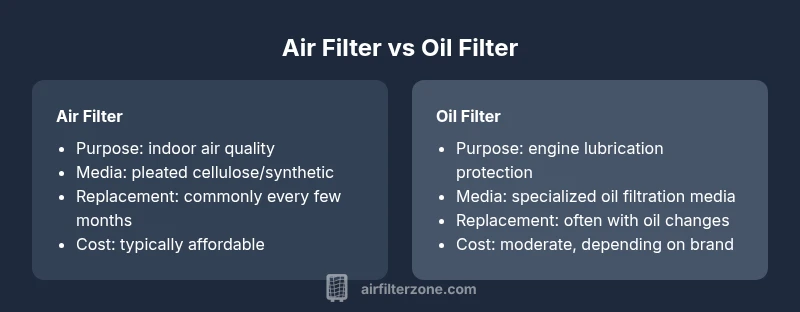
| Feature | air filter | oil filter |
|---|---|---|
| Primary purpose | Improve indoor air quality and protect HVAC systems | Protect engine oil from contaminants and wear |
| Filtration media | Cellulose/synthetic pleated media designed for air | Specialized media for oil, with bypass control |
| Performance metrics | MERV-based efficiency (air systems) | Micron/beta filtration and pressure tolerance (oil systems) |
| Placement | HVAC intakes, purifiers, or ceiling/filter housings | Engine lubrication circuit in the engine bay |
| Replacement cycle | Every few months or as airflow declines | With every oil change or service interval |
| Cost range | Low-to-mid range depending on media and size | Low-to-mid range but varies by brand and filtration level |
| Best for | Home environment with focus on air quality | Engine protection and reliability under driving conditions |
What's Good
- Improved indoor air quality and occupant health
- HVAC energy efficiency benefits with appropriately sized filters
- Engine longevity when using proper oil filtration
- Clear maintenance pathways and replacement guidance
What's Bad
- Higher efficiency air filters may raise system resistance
- Oil filters require compatibility with specific engines and service intervals
Air filter generally better for indoor air quality; oil filter is essential for engine health
Choose air filters to improve living environment and filtration for the HVAC system; choose oil filters to protect engines and maintain lubrication, then follow manufacturer guidance for best results.
FAQ
What is the main difference between air filters and oil filters?
Air filters target airborne particles in indoor air or HVAC intake, while oil filters protect engine oil from contaminants. The two types operate in different systems with distinct media and design constraints. Understanding this helps avoid using the wrong filter in a given application.
Air filters clean the air you breathe; oil filters guard engine oil.
Can I reuse air or oil filters?
In most cases filters are disposable and should be replaced on schedule. Reusing a dirty air filter reduces efficiency and increases pollutant exposure. Reusing an oil filter risks engine damage and should be avoided.
No, generally not. Replace as recommended.
What factors influence replacement frequency for air filters?
Replacement frequency depends on usage, environment, and filter type. Homes with pets, smokers, or heavy dust may need more frequent changes. Seasonal factors like wildfire smoke can require temporary adjustments.
It depends on environment and usage; watch airflow and visual dirt.
Are there eco-friendly or recyclable filter options?
Yes, many air filters use recyclable materials and some are designed for recycling programs. For car filters, some brands offer recyclable filters or packaging.
There are eco-friendly options, but check the program.
What should DIYers consider when selecting an air filter?
DIYers should confirm compatibility with the system, ensure correct MERV rating, and consider installation steps. Avoid filters that do not fit the housing or cause airflow restrictions.
Make sure the filter fits and matches the system's needs.
Quick Summary
- Identify primary goal: indoor air quality vs engine protection
- Match media and fit to the system and environment
- Follow replacement schedules and keep records
- Invest in credible brands and verify compatibility
- Consider maintenance as a core value of filtration