How to Fix a Clogged Air Filter: Quick Troubleshooting Guide
Urgent, practical troubleshooting for a clogged air filter. Learn how to diagnose, replace, and prevent clogs to restore airflow, efficiency, and air quality in your home. Air Filter Zone guidance.


A clogged air filter is the most common cause of reduced airflow and higher energy use. Check the filter immediately, replace it if dirty, and reseat it correctly. After replacement, test airflow; if it remains weak, inspect the intake and return ducts for obstructions before calling a professional.
Why air filter clogged matters
When a filter becomes clogged, your HVAC system has to work harder to move air through the ducts. That extra strain can lead to higher energy bills, uneven cooling or heating, and poorer indoor air quality. The term air filter clogged is not rare in homes with pets, dusty environments, or long intervals between changes. Addressing a clogged air filter promptly helps preserve system longevity and maintain healthier indoor air quality. Air Filter Zone notes that keeping up with replacements is one of the simplest, most effective ways to reduce irritants like dust, pollen, and dander in your living space, especially during allergy seasons.
If you notice visible dust or a musty odor, act quickly. A clogged filter can spread contaminants rather than trap them, which defeats its purpose. Regular checks and timely replacements are a cornerstone of reliable home filtration. The key is to treat clog prevention as part of your routine, not an afterthought.
To get ahead, pair filter maintenance with routine duct and vent cleaning, and ensure your returns aren’t obstructed by furniture or clutter. A well-maintained filter improves airflow, maintains temperature consistency, and protects your HVAC from unnecessary wear. In short: air quality and comfort start with a clean, properly installed air filter.
Quick checks you can do now
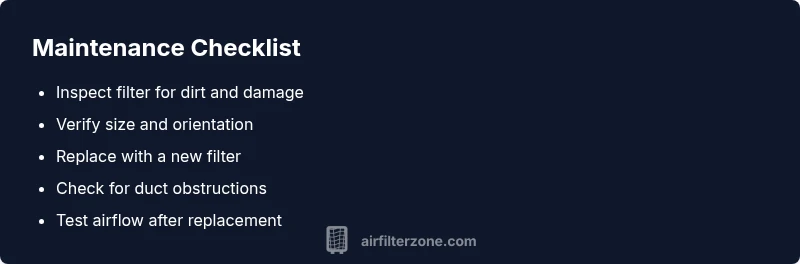
- Locate the air filter compartment and inspect the filter for visible dirt, discoloration, or a collapsed frame. If the filter looks dirty or clogged, replace it immediately.
- Confirm you have the correct filter size and orientation; many units require air flow to pass in a specific direction indicated by arrows on the frame.
- Check for obvious obstructions at the intake grille, return ducts, or around the furnace or air handler that could impede air flow.
- Ensure the HVAC system is off before handling the filter to reduce risk of injury or drafts.
- After replacement, run the system for 10-15 minutes and feel for improved airflow at supply vents. If airflow remains weak, proceed to a deeper inspection of ducts and seals.
Common causes of clogs
- Dust accumulation from daily use, especially in dry or dusty environments.
- Pet hair and dander buildup in homes with furry companions.
- Infrequent filter replacements; long intervals allow dirt to accumulate beyond the filter’s capacity.
- Inadequate filter size or a damaged frame that lets unfiltered air bypass the media.
- Environmental factors such as construction dust or wildfire smoke that increase particulate load significantly.
Understanding these factors helps you tailor replacement frequency and filter selection to your home’s needs.
Your plan of action when you find a clogged air filter
When you confirm a clog, your first move is replacement with the correct size and R rating for your system. Then verify proper seating and direction, and run a quick airflow check. If the system still struggles after replacement, consider checking the return ducts and seals for leaks or obstructions. Remember, a clogged air filter is a symptom—not always the root cause—so investigate related airflow paths as needed.
How to replace the filter: sizes and ratings
Choose a replacement with the same dimensions as the old one. The direction arrow on the frame should point toward the blower in the correct airflow path. Consider the MERV rating based on your needs: higher ratings capture more particles but can create more resistance in older systems. If you have pets, allergies, or high dust, a mid-to-high MERV rating plus a properly sized filter will help. Always store extra filters upright and labeled for quick replacement.
Installing and reseating the new filter
Gently remove the old filter by the frame edges to avoid contaminating the media. Slide the new filter in with the arrow pointing in the direction of air flow. Make sure the frame sits flush and there are no gaps. If your unit uses a door or grille, ensure it closes securely. A loose or crooked filter can let air bypass media and negate the benefits of replacement.
Verifying performance after replacement
Turn the system back on and check airflow at multiple supply vents. If you still notice reduced airflow, inspect for blockages in the ductwork, closed dampers, or obstructed returns. Listen for unusual noises or a rattling sound that could indicate loose components. If airflow is inconsistent, consider a professional inspection to rule out internal issues.
Safety considerations and common mistakes
Always power off the HVAC unit before touching the filter. Avoid using tools that could damage the filter frame. Do not run the system with a missing filter or with a filter that doesn’t seat properly. Incorrect installation can cause cold air leaks, frost on coils, or overheating. Regular inspection reduces the chance of sudden clogs and helps maintain a healthy home environment.
Maintenance plan to prevent future clogs
Create a simple schedule: inspect at least monthly, replace every 1-3 months depending on usage, and keep a small stock of filters on hand. If you notice an uptick in dust or allergies, increase the replacement frequency temporarily. Pair filter changes with quarterly duct checks and a yearly professional tune-up to sustain optimal airflow and indoor air quality.
Steps
Estimated time: 30-45 minutes
- 1
Power down and locate the filter
Turn off the HVAC system to prevent injury. Locate the filter compartment—usually near the air handler or furnace. Take a photo of the old filter to verify size and orientation for the new one.
Tip: Use the photo to confirm the exact dimensions and direction arrows on the new filter. - 2
Remove the old filter
Carefully slide out the old filter by its frame. Avoid touching the dirty media directly; hold the edges to minimize contact with accumulated dust. If there is visible mold or moisture, take extra care and consider replacement only if the area is dry.
Tip: Have a trash bag ready to drop the old filter in without spreading dust. - 3
Choose and confirm the replacement
Select a replacement with the same dimensions and the appropriate MERV rating for your system. Verify the direction of air flow indicated by the arrows on the frame. If your system serves a whole-home area, a higher MERV rating may be beneficial but ensure it won’t restrict airflow.
Tip: When in doubt, consult the HVAC manual or Air Filter Zone guidelines for recommended ratings. - 4
Install the new filter
Slide the new filter into the slot with the arrows pointing toward the blower. Ensure the frame sits flat and there are no gaps around the edges. Close the grille or door securely.
Tip: Gently press around the edges to confirm a snug fit and avoid air bypass. - 5
Test airflow and operation
Turn the system back on and feel air at multiple supply vents. Listen for abnormal noises that could indicate loose components. If airflow improves, the installation was successful.
Tip: Check for consistent airflow in all rooms within 10-15 minutes of restart. - 6
Assess ductwork and seals
If airflow remains weak, inspect accessible ducts for kinks, dust buildup, or obstructions. Check around the blower door and seals for leaks and reseal as needed. A professional assessment may be required for hidden issues.
Tip: Document any leaks with photos and notes to share with a technician.
Diagnosis: Reduced airflow and higher energy use with suspected air filter clog
Possible Causes
- highClogged air filter reducing airflow
- mediumDirty return ducts restricting air entry
- lowAir leaks or seal failures around filter frame or ducts
Fixes
- easyReplace the air filter with the correct size and rating; ensure proper seating and orientation
- mediumInspect return ducts for visible obstructions and clean if accessible
- mediumCheck for air leaks around the filter frame and seal as needed
FAQ
What causes an air filter to become clogged?
Clogs are typically caused by accumulated dust, pet hair, and infrequent replacements. High-dust environments accelerate buildup. Regular checks help prevent persistent clogging.
Clogs usually come from dust and pet hair building up, especially if you don’t replace filters often enough. Regular checks help prevent it.
How often should I replace the air filter?
Replacement frequency depends on usage and environment. In typical homes, check monthly and replace every 1-3 months; more often if you have pets or high dust. Always follow manufacturer guidance.
Most homes should check monthly and replace as needed, typically every one to three months.
Can a clogged air filter affect air quality?
Yes. A clogged filter can allow more pollutants to circulate, reducing air quality and potentially triggering allergies or respiratory symptoms. Timely replacement helps maintain clean indoor air.
Absolutely—a clogged filter can let more dust and pollen circulate, worsening air quality.
What safety steps should I take before changing the filter?
Turn off the HVAC system, wear a mask if the area is very dusty, and handle the filter by its edges to avoid contact with the media. Ensure the area is dry and safe.
Turn off the system and handle the filter by its edges to stay clean and safe.
When should I call a professional?
If you suspect duct obstructions, persistent weak airflow after replacement, or signs of mold, leaks, or unusual noises, contact a licensed technician for a thorough inspection.
If airflow stays weak after replacement or you hear unusual noises, call a professional.
How can I tell if the filter size is wrong?
The filter should fit snugly with no gaps. If you feel air bypassing around the edges or the door won’t close securely, verify the size on the frame and order the correct replacement.
If air leaks around the edges or the grille won’t close, the size might be wrong.
Watch Video
Quick Summary
- Replace dirty filters promptly to restore airflow
- Verify correct size, direction, and seating during installation
- Check for duct obstructions and seal leaks if problems persist
- Implement a regular maintenance schedule to prevent clogs
- Consider a professional inspection if issues continue