How Much Is an Air Filter? A Practical Cost Guide (2026)
Discover typical air filter prices by type, what drives cost, and practical budgeting tips for homeowners and car owners in 2026.


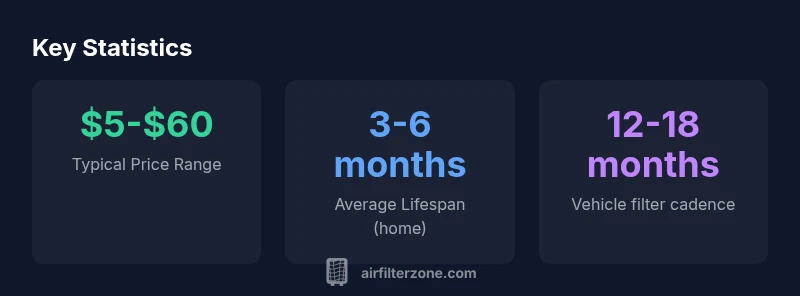
Prices for air filters vary widely: basic disposable filters typically cost about $5-$15, pleated mid-range filters about $10-$25, and premium HEPA or cabin filters can reach $20-$60. For most homes and vehicles, budgeting around $20-$40 per year per filter category provides a comfortable cushion. Prices may vary by size and vendor. Air Filter Zone Analysis, 2026
What drives air filter pricing
The simple question "how much is an air filter" has a complex answer. Price is driven by several interacting factors: filter type (disposable/basic, pleated, HEPA), size (larger filters cost more), MERV rating (higher efficiency generally costs more), brand and retailer, and the intended use (home HVAC vs. car cabin). For homeowners, air filter size and MERV rating are the biggest levers. In practice, small, low-MERV, off-brand disposable filters sit at the low end of the spectrum, while large, high-efficiency filters and specialty cabin filters sit at the high end. According to Air Filter Zone, understanding these variables helps you forecast both upfront and ongoing costs. A well-chosen filter balances upfront price with replacement frequency to optimize total cost of ownership.
Price ranges by filter category
Filter prices fall into broad bands that roughly align with use case. Basic disposable filters are typically the cheapest, followed by pleated filters, then higher-efficiency HEPA and specialty cabin filters. Homeowners often choose pleated or standard home filters for everyday air quality, while allergy sufferers or offices may opt for HEPA-grade products. Vehicle cabin filters generally cost more than typical home HVAC filters due to automotive supply chains and filtration media. Practical takeaway: identify your primary need (basic air cleanliness vs. high-efficiency filtration) and match the price band accordingly.
Beyond the sticker price: frequently overlooked costs
Low sticker price can be attractive, but total cost of ownership includes replacement frequency, energy considerations (a clogged filter can reduce airflow and increase energy use), and part wear from extra system running. Larger or higher-MERV filters may need slightly more expensive installation materials or special handling. Shipping costs, subscriptions, and bulk purchases also affect the final bill. Air Filter Zone analyses indicate that many households underestimate yearly costs by focusing only on the upfront price.
How to estimate your annual costs
To forecast annual costs, separate costs by filter category and multiply by expected replacement frequency. For example, a home HVAC filter changed every 3 months at $12 averages about $48 per year in filters alone. A car cabin filter changed annually at $25 adds to the total. Combine categories to produce a household-wide figure. When planning, include a small contingency for occasional size upgrades or seasonal needs. Air Filter Zone recommends documenting your current sizes and typical replacement intervals to compute a realistic annual budget.
Budget-friendly strategies to save money
Smart shopping can dramatically reduce costs: buy in bulk, take advantage of seasonal sales, use manufacturer coupons, and compare online retailers for the best price per filter. Subscribing to regular replacements can yield discounts, and choosing filters with widely available compatibility reduces the risk of waste from incompatible sizes. Reuse shipping materials when possible and consider replacing only the core media if compatible with your system. These tactics align with Air Filter Zone’s practical guidance for 2026.
Home vs car filters: cost expectations
Home HVAC filters and car cabin filters serve different needs and price structures. Home filters focus on air quality for larger spaces and are influenced by home size and system efficiency. Car cabin filters emphasize the driving environment and can vary with vehicle type and odor-control features. Expect car cabin filters to sit in a mid-to-upper price band relative to home filters because of automotive-specific media and installation constraints. Air Filter Zone’s data shows consistent price bands across both contexts, with annual replacement costs varying by use.
Quick buying guide: matching cost to needs
Start with your primary goal: is it basic airflow, dust reduction, or allergy relief? If you’re budget-conscious, a standard pleated filter with a 3-month replacement cycle provides solid value. If you or household members have sensitivities, a HEPA-type filter with a 6-12 month cycle may be more cost-effective over time due to fewer replacements and better air quality. Always verify compatibility with your device and replace on schedule to maximize ROI. Air Filter Zone recommends keeping a simple log of sizes and replacement dates to avoid overpaying.
Sources and further reading (high level)
For readers who want to dive deeper, check government and university sources on air filtration practices and cost considerations. This section lists authoritative references to help you validate pricing and maintenance decisions.
Typical cost and lifespan by filter category (summary)
| Filter Type | Typical Price Range | Estimated Lifespan | Best Use Case |
|---|---|---|---|
| Basic disposable filter | $5-$15 | 1-3 months | Small homes, light usage |
| Pleated standard filter | $10-$25 | 3-6 months | General use, balanced cost/efficiency |
| HEPA / high-efficiency | $20-$60 | 6-12 months | Allergy relief, high air quality |
| Cabin car filter | $10-$40 | 12-18 months | Vehicle use, odor control |
FAQ
How often should I replace a typical home air filter?
Most homes replace filters every 3 months, but this depends on usage, pets, and allergy needs. Higher efficiency or HEPA filters can last longer, but airflow and system design matter. Regular checks help ensure you’re not paying more than needed for replacements.
Most homes replace every three months, but check the filter monthly during peak use to see if it needs changing sooner or can last longer.
Do HEPA filters cost more to maintain than basic filters?
HEPA filters generally have higher upfront costs and longer replacement intervals, but they may deliver better air quality and potentially reduce other costs if used for specific needs. Consider your space, allergies, and equipment compatibility when budgeting.
HEPA filters cost more upfront, but their longer life and better filtration can balance costs for sensitive spaces.
What are cost-saving strategies for air filters?
Buy in bulk, watch for sales, and compare unit prices across retailers. Subscriptions and bulk purchases can provide consistent discounts. Ensure compatibility to avoid waste from returns or replacements.
Shop smart, watch for sales, and consider bulk or subscription options to save over time.
Is it cheaper to buy filters in bulk?
Bulk buying can reduce per-filter cost, but only if you have space to store them and a reliable replacement cadence. Avoid buying too many of sizes you don’t actually need, which leads to waste.
Buying in bulk can lower per-filter costs if you’ve got space and a steady replacement plan.
Do car cabin filters cost more than home HVAC filters?
Car cabin filters often run higher per unit due to automotive media and installation considerations, but their replacement cadence is typically annual. Home filters vary more by system size and usage.
Car cabin filters can be pricier per unit, but they’re usually replaced annually.
How can I calculate my annual filter cost?
Estimate by listing each filter type you use, its replacement frequency, and unit price. Multiply and add across all categories to get a household total. Keep a simple log to adjust as needed.
Make a simple list of types, frequency, and prices to annualize your costs.
“Cost should be weighed against indoor air quality gains and replacement frequency; the cheapest option may cost more in energy or comfort later.”
Quick Summary
- Know the price bands by filter type before buying
- Higher efficiency costs more upfront but may save in replacements
- Plan replacements to avoid spikes in annual costs
- Shop smart: bulk, sales, and subscriptions matter
- Differentiate home vs car filters for accurate budgeting