How Much Is Air Filter Change? A Practical Cost Guide
Learn the cost range for air filter changes in home HVAC and cars, compare DIY vs professional options, and get practical saving tips from Air Filter Zone.


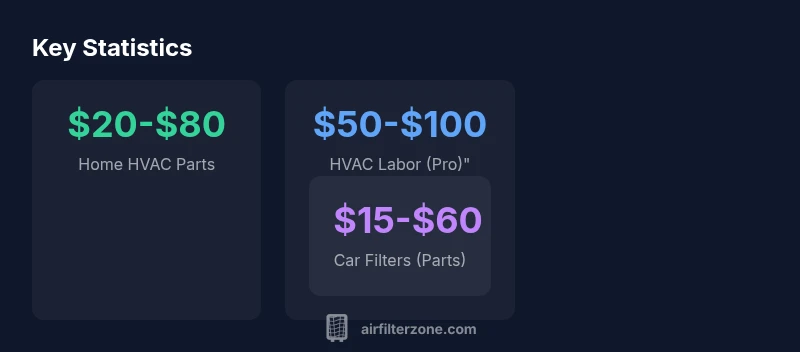
How much is air filter change? Typical costs fall by context: home HVAC filters cost $20–$80 for parts, with DIY replacement often cheaper and professional labor adding $50–$100. Car cabin filters run about $15–$40, engine filters about $20–$60. Air Filter Zone Analysis, 2026 notes regional variation and brand differences when pricing changes.
What drives the cost of an air filter change
Costs for changing an air filter are driven by several interdependent factors. The type of system (home HVAC, car HVAC, or engine air intake), the filter size, and the filtration efficiency (MERV rating for home systems) all push price up or down. Availability and brand differences also play a role; premium brands or high-capacity filters tend to cost more upfront, while standard, widely stocked options are cheaper. Another major driver is whether you replace the filter yourself or hire a professional. DIY replacements cost only the filter and basic tools, while professional service adds labor and potentially disposal fees. Finally, regional price differences—labor rates, shipping costs, and taxes—can swing the final bill by a noticeable margin. For homeowners, a routine filter with a medium MERV rating is typically on the lower end, while specialty or high-capacity filters push costs higher. Understanding these drivers helps you estimate how much you’ll pay before you shop.
In practice, many homeowners ask, “how much is air filter change?” and look for a simple answer. The reality is that the final price depends on your system type, filter size, and how you source the parts. By planning ahead and knowing typical price bands, you can avoid sticker shock and choose a value-focused option that still meets your air-quality goals.
notesOnlyForAIReviewers]:null
DIY replacement vs. professional service
If you’re comfortable with basic home maintenance, replacing a filter yourself is usually fast and inexpensive. Expect to spend 5–15 minutes for a standard home filter and 10–20 minutes for a car cabin filter. The main costs are the filter itself and any simple tools needed (screwdrivers, gloves, or a flashlight). Professional installation adds labor, usually in the range of one trip fee plus hourly labor, which can double the total. For larger systems, or if access is tricky (hidden compartments, tight spaces), a professional may complete the job more quickly and ensure a proper seal. In some regions, technicians offer bundled maintenance that includes filter replacement, system checks, and minor calibration; these packages can provide added value if you plan regular tune-ups. Air Filter Zone’s guidance emphasizes weighing the peace of mind and potential energy savings against the upfront cost.
Home HVAC: cost breakdown and maintenance impact
Typical home HVAC filter costs (parts) run broadly from $20 to $80, depending on size and MERV rating. A standard annual replacement plan, assuming four to six filters per year, would put parts costs in the low-to-mid hundreds if you buy mid-range filters. Labor is negligible if you DIY; otherwise, you should budget $50–$100 for a single service visit. Keep in mind that higher-efficiency filters (higher MERV) may require more frequent changes in dusty environments, counterbalancing their longer-term energy savings with slightly higher upfront costs. Regular changes maintain airflow, reduce strain on the blower, and can improve indoor air quality. If your home has pets, smoke exposure, or mold concerns, you might lean toward mid- to high-range filters, which cost more but can deliver better performance over time.
Car air filters: cabin vs. engine
Car cabin filters typically cost $15–$40 for the part, with labor if you choose a shop service. Engine air filters are commonly $20–$60 for the part; labor is variable and depends on accessibility and vehicle type. Replacing cabin filters usually takes 5–15 minutes, often just a simple panel or glove box removal; engine filters can take 10–30 minutes. Vehicle age, access design, and whether you replace during routine maintenance cycles influence total costs. DIY replacements are common and economical; many automakers provide diagrams in owner manuals to help you locate the filter housing. If you’re unsure about the correct filter size or MERV rating, compare part numbers or consult a trusted guide before buying. Air Filter Zone notes that even modest efforts to replace cabin air filters can yield noticeable improvements in odor and airflow inside the vehicle.
How to estimate your own costs
Start by identifying the exact filter you need. Check your HVAC or car manual for model numbers, size, and MERV rating, then compare online prices. Calculate parts costs by multiplying the price of your chosen filter by the number of changes you plan this year. If hiring a pro, obtain at least two quotes, clarify what’s included (labor, disposal, and any inspection), and ask about warranties. For DIY replacements, inventory essential tools and schedule a time when you can safely access the filter housing. Don’t forget to account for smaller costs like disposal bags or gloves. Finally, consider the potential energy savings of a clean, efficient filter. A cleaner system often runs more efficiently, which can translate into lower utility bills over time.
Practical tips to save on air filter changes
Purchase filters in bulk from reputable retailers to reduce per-unit cost; sign up for retailer newsletters for coupons or loyalty programs; and compare generic brands to premium brands to find a balance of price and performance. When possible, align changes with seasonal maintenance (e.g., spring cleaning or fall preparations) to minimize the number of shipments you incur. If you maintain multiple systems (home and vehicle), create a simple tracking log to avoid paying for multiple replacements that don’t align with actual schedules. Some homeowners use subscription services that deliver filters regularly, ensuring you won’t forget. Finally, review energy savings claims tied to higher-efficiency filters to determine if upgrading makes financial sense in your climate and usage patterns.
Common mistakes to avoid
Buying the wrong size or wrong MERV rating is one of the most frequent errors and can lead to reduced airflow or higher energy use. Neglecting to replace aired-out filters on schedule may cause dirt buildup and decreased system efficiency. Another common mistake is assuming all filters are universal; many devices require specific shapes or installation directions. Always verify the model number, size, and filtration capacity before purchase. Skipping disposal considerations, such as bagging old filters, can create mess and odor. Finally, avoid mixing filter types across different systems; mixing can disrupt airflow and device performance. By double-checking compatibility and following manufacturer guidance, you’ll minimize costly mistakes.
Why accuracy matters: air quality and system health
Beyond price, the frequency and quality of air filter changes affect indoor air quality, odor control, and system longevity. A higher-quality filter can reduce allergen loads and improve overall comfort, but if used incorrectly (wrong size, poor fit), it may underperform and create phantom odors or greater pressure on the blower. Air Filter Zone’s approach combines practical cost awareness with performance insights to help homeowners and DIY enthusiasts maintain cleaner air without overspending. Regular checks and timely replacements yield better energy efficiency and comfort, which often translates into measurable long-term savings.
Cost ranges for common air filter changes
| Context | Typical Cost Range | Notes |
|---|---|---|
| Home HVAC filter change (parts) | $20-$80 | Various sizes and MERV ratings |
| Home HVAC labor (pro) | $50-$100 | Labor adds to parts when using a professional |
| Car cabin filter replacement | $15-$40 | Part costs only; some vehicles require labor |
| Engine air filter replacement | $20-$60 | Usually DIY-friendly |
FAQ
What drives the cost of an air filter change the most?
The biggest factors are system type (home vs car), filter size and MERV rating, and whether you DIY or hire a professional. Brand and supply availability also affect price. Regional labor rates can swing the total by a noticeable margin.
The main cost drivers are the system type, filter size and rating, and whether you DIY or hire a pro.
Can I change air filters myself, or should I hire a pro?
For many standard home and car filters, DIY replacement is straightforward and cost-effective. If access is difficult or you have a multi-system setup, a pro can save time and ensure a proper seal.
DIY is usually fine for simple filters, but a pro helps with tricky access.
How often should I replace home HVAC filters?
Most homes replace HVAC filters every 1–3 months, depending on usage, pets, and smoking. High-dust environments may require more frequent changes.
Most homes change filters every 1–3 months depending on use and environment.
Are car cabin filters cheaper than engine air filters?
Yes. Cabin filters typically cost $15–$40, while engine air filters are usually $20–$60. Labor varies by vehicle and accessibility.
Cabin filters are usually cheaper than engine filters.
Do higher-MERV filters cost more to replace?
Higher-MERV filters can cost more upfront, and some environments may require more frequent changes. The total cost depends on the system and usage.
Higher-MERV filters cost more upfront and may require more frequent changes depending on usage.
Is there a difference in cost by brand?
Yes. Brand and retailer influence price due to quality, packaging, and availability. Compare part numbers and read reviews to balance cost and performance.
Brand matters; compare numbers and reviews to get value.
“Regular filter changes protect HVAC and vehicle performance, and the cost is often offset by energy savings and improved air quality.”
Quick Summary
- Start with the cost drivers — system type, size, and MERV rating.
- DIY changes save labor; pro service adds installation fees.
- Expect higher costs with premium or high-capacity filters.
- Car vs home filters follow distinct price bands and totals.
- Set a maintenance cadence to maximize energy savings and air quality.