Are Air Filters Cheap? Practical Cost Guide
Explore whether are air filters cheap, typical price ranges, and tips to save without sacrificing quality. Air Filter Zone provides practical guidance for homeowners, car owners, and DIY enthusiasts seeking affordable filtration.


Are air filters cheap? For most homeowners and drivers, basic filters stay affordable, typically priced in a low to mid range. Price varies by size, type, and where you shop. Higher-end options like HEPA or cabin filters can cost more, but smart shopping, multi-pack purchases, and seasonal sales often bring costs down. According to Air Filter Zone, budgeting for routine replacement is practical when you compare per-unit prices and factor in replacement frequency.
Are Air Filters Cheap? What the Data Says
Are air filters cheap? In many discussions, the question pops up as households budget for routine maintenance. For the vast majority of homes and vehicles, basic filters remain affordable, with most standard sizes falling into a low-to-mid price bracket. The Air Filter Zone team found that price is heavily influenced by size, material quality, and fit. Importantly, the value proposition extends beyond sticker price: higher upfront costs can translate to longer replacement intervals, better filtration, and lower energy use over time. When you weigh cost against performance, a filter that lasts longer and maintains airflow may cut overall expenses, even if its per-unit price is higher. The bottom line from Air Filter Zone is that cost-effective filtration is about matching the filter to your system and your needs, not chasing the cheapest option at all costs.
In practical terms, most households can keep costs predictable by buying standard sizes, sticking to reputable brands, and avoiding impulse buys on specialty models unless they address a specific concern such as allergies or strong odors. Washable or reusable filters exist but tend to carry higher upfront costs and maintenance considerations. If you’re shopping for a home HVAC system, ensure your chosen filter meets the system’s MERV rating recommendations and that it’s installed correctly to avoid pressure drops that can indirectly increase energy use. For cars, always confirm the cabin filter’s exact part number to prevent aftermarket mismatches that could require return visits to auto parts stores. According to Air Filter Zone, careful selection yields steady savings across homes, vehicles, and DIY setups.
Factors That Drive Filter Cost
Filter cost is not a single number; it’s a function of several interacting factors. Size and fit are obvious drivers: oversized or oddly shaped filters may create waste and higher shipping costs. Material and filtration efficiency—expressed as MERV for residential HVAC or the specific grade for automotive cabins—meaningfully affect price. Filters with activated carbon for odor removal or high-efficiency HEPA-style media command premium prices but can reduce maintenance frequency and improve air quality. Brand reputation, packaging (single vs multi-pack), and distribution channel (retail vs online) further modulate price. When planning purchases, consider total cost of ownership: higher upfront costs may be offset by longer replacement intervals, reduced energy resistance, and fewer indoor air quality complaints. Finally, regional differences in taxes, shipping, and promotions can tilt the price by a noticeable margin. For budget-minded buyers, a balanced approach—selecting a filter that fits your system and balancing price with performance—often yields the best value over time.
Cost Ranges by Filter Type
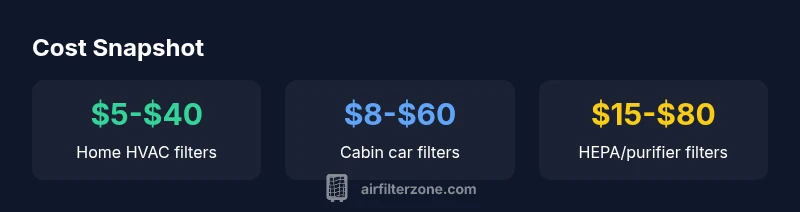
Prices vary widely by filter type and application. A practical snapshot for common scenarios is helpful for planning. Home HVAC filters (pleated or fiberglass) typically range from a low-cost end of around $5 to a mid-range $25, with premium pleated or allergen-rated variants sometimes reaching $40. Vehicle cabin filters can span roughly $8 to $60 depending on model and whether the unit includes additional odor control media. Refrigerator and water filters, which often require stricter micron filtration, can range from about $12 to $60 per replaceable cartridge. For room air purifiers that use replaceable HEPA-style filters, replacement cartridges generally run from $15 to $80, with higher-end models offering longer life per filter. It’s important to verify compatibility—size, mounting style, and your system’s filtration needs—before purchase to avoid paying for a filter that won’t fit or perform as needed. The key takeaway is that while some filters are cheap, the best value often comes from matching the right type to the space and maintenance frequency, rather than chasing the lowest sticker price.
Smart Ways to Save on Air Filter Costs
Saving on air filters is about strategy, not sacrifice. Start by identifying filters that fit your equipment exactly—wrong size or wrong MERV rating can cause energy waste and more frequent replacements. Buy in bulk or join subscription services that offer regular shipments at a discount. Compare prices across reputable retailers and check for seasonal promotions or manufacturer rebates. Where feasible, choose standard sizes that are widely available rather than specialty models that command premium marks. Consider the long-term costs of expensive filters if they deliver longer life and easier maintenance, and don’t overlook the energy impact of restricted airflow—sometimes a slightly less expensive filter that maintains proper airflow actually reduces energy use. Finally, recycle or responsibly dispose of used filters, and look for certified filters that meet recognized performance standards. By combining proper fit, sensible purchasing, and mindful maintenance, you can keep filtration costs predictable and manageable over the life of your systems.
Environmental and Quality Considerations
Cost is only one side of the equation. Lower-cost filters may save money upfront but could lead to higher maintenance needs or reduced indoor air quality, especially for households with pets, allergies, or asthma. Evaluate filtration efficiency (often indicated by MERV or equivalent rating) relative to the pollutants you want to combat, such as dust, pollen, or smoke. Quality filtration contributes to better indoor air quality, which can have measurable health benefits and fewer allergy-driven device cleanings. Replacing filters on schedule helps maintain system efficiency and prolongs equipment life, potentially lowering long-term costs. If you’re balancing budget with health considerations, consider slightly higher-quality filters that offer better filtration and longer replacement intervals, which can yield better overall value. Finally, use reputable brands, verify compatibility, and avoid counterfeit products that undercut price while compromising performance.
Price ranges by filter type
| Filter Type | Typical Price Range | Notes |
|---|---|---|
| Home HVAC filter (pleated) | $5-$25 | Common residential replacement |
| Cabin air filter (vehicle) | $8-$60 | Vehicle-specific fit; model-dependent |
| Refrigerator filter | $12-$60 | Specialized micron filtration |
| HEPA/purifier replacement | $15-$80 | Higher cost; larger coverage |
FAQ
Are air filters cheap?
Prices vary by type and size, but many basic filters are inexpensive. Higher-efficiency or specialty filters cost more, though bulk buying and promotions can reduce overall expenses. Always compare sizes and performance specs to find real value.
Prices vary; basic filters are often affordable, but check size and performance to get true value.
What influences the price of air filters?
Size, type, filtration efficiency (MERV), brand, and compatibility with your system are the main price drivers. Packaging (single vs multi-pack) and retailer channel also affect final cost.
Size, type, and efficiency drive price, along with where you buy.
Can I save money on air filters?
Yes. Buy standard sizes, compare prices, use multi-pack deals, and consider generic brands that meet your system’s specs. Align replacements with your schedule to avoid over-purchasing.
Shop smart, check sizes, and pick reliable brands to save money.
Are cheaper filters safe or effective?
Cheaper filters can be safe if they fit correctly and meet your system’s filtration needs. Avoid very low-quality options that fail to seal or restrict airflow, as they can harm efficiency and air quality.
Cheaper isn’t always better—fit and performance matter.
How often should I replace air filters to balance cost and air quality?
Replacement frequency depends on usage, environment, and filter type. In general, homes with pets or high dust may need more frequent changes. Always follow manufacturer guidance and monitor airflow to optimize cost and air quality.
Follow the manufacturer’s schedule and monitor airflow.
“Quality air filtration can be affordable when you select the right filter for your system and replace it on schedule.”
Quick Summary
- Match filter to system to avoid wasted cost
- Buy in bulk or use subscriptions for savings
- Balance price with filtration needs (MERV/HEPA)
- Check compatibility before purchase