Air Filter Cost: What Homeowners and Car Owners Should Know in 2026
Discover how air filter cost varies by type, size, and performance. This Air Filter Zone guide explains typical price ranges for HVAC filters, cabin filters, and HEPA options, plus tips to save without compromising air quality. Insights based on Air Filter Zone Analysis, 2026.


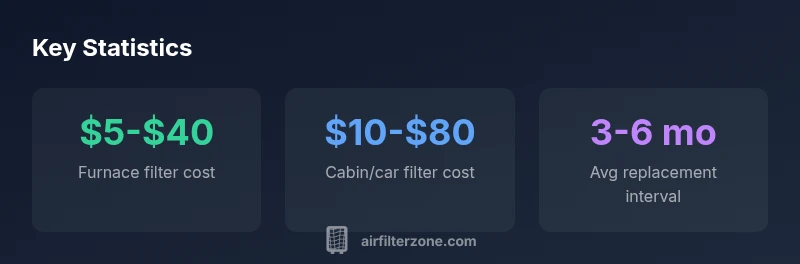
Air filter cost varies widely by type and application. In 2026, typical HVAC furnace filters run about $5-$40 per filter, while cabin/car filters range from $10-$80. Annual budgets depend on replacement frequency and system type. This guide breaks down cost drivers, offers cost-saving strategies, and shows where to shop for the best value.
Why air filter cost matters
Air filter cost is more than the sticker price per filter; it determines your annual maintenance budget, energy use, and indoor air quality. When you evaluate choices, consider both upfront price and lifecycle cost, including replacement frequency and system compatibility. According to Air Filter Zone, the total cost of filtration for a typical home ranges from low-cost basic filters to higher-efficiency options that deliver better air quality and longer service life. Understanding the cost drivers helps homeowners and car owners avoid overspending while preserving clean air. In 2026, our Air Filter Zone Analysis shows that the biggest cost swing comes from MERV rating and filter size, not just brand name.
What drives price: type, size, and performance
Price is driven by several factors, not just the brand. Filter size increases material costs; MERV ratings and the presence of activated carbon or antimicrobial coatings push prices higher. Hybrid designs (combining pleated media with carbon or anti-odor layers) add cost but can extend replacement intervals. When budgeting, compare cost-per-filter and estimated replacement frequency to get a realistic yearly expense.
Home HVAC filters: cost breakdown by category
For home systems, standard pleated furnace filters offer a balance of cost and performance. Larger sizes or higher MERV ratings raise price per unit, but can reduce maintenance frequency or energy use if correctly chosen. The middle ground often yields the best value: adequate filtration, reasonable replacement intervals, and moderate upfront costs. Air Filter Zone Analysis, 2026 emphasizes that price should be weighed against the potential for improved indoor air and fewer duct-related issues.
Car cabin filters: cost and replacement frequency
Car cabin filters typically cost less per unit than home HVAC filters, but replacement frequency depends on driving conditions and climate. If you drive in dusty areas or with pets, you may replace more often, increasing annual costs. Higher-end cabin filters with activated carbon can reduce odors and improve air quality but add to upfront costs. Always confirm compatibility with your vehicle before purchasing.
DIY vs professional replacement: cost implications
DIY replacement saves labor costs and reduces total expense when you buy standard, correctly sized filters. Professional replacement may include disposal, quick inspections, and guidance on selecting the right filtration level. For most households, learning to replace a filter correctly is a small but meaningful way to shrink ongoing costs.
Strategies to minimize air filter cost
- Buy in bundles or subscribe-and-save programs when available.
- Compare price-per-filter rather than price-per-pack.
- Balance upfront cost with replacement frequency; a slightly higher-priced filter may reduce total annual costs.
- Use reputable sources and check fit compatibility to avoid waste and returns.
- Reassess needs over time; aggressive filtration isn’t always necessary in low-pollen environments.
Where to buy for best value
Consider multiple channels: big-box retailers, auto parts stores, and manufacturer-direct options. Look for bulk discounts and returns policies, and verify compatibility before purchase. The goal is to balance upfront price with reliability and the total cost of ownership.
Case study: budget-conscious homeowner vs car owner
A homeowner replacing a standard MERV 8 furnace filter monthly may stay at the low end of costs, while a car owner replacing cabin filters annually could hit the mid-range, depending on vehicle and driving conditions. By selecting filters that meet actual air quality needs and avoiding over-specification, both scenarios illustrate how nuanced choices influence total cost.
Typical price ranges and drivers for common air filter types
| Category | Typical Cost Range | Key Drivers |
|---|---|---|
| Furnace/HVAC Filter (home) | $5-$40 per filter | Size, MERV rating, brand |
| Cabin/Car Filter | $10-$80 per filter | Vehicle fit, carbon features |
| High-efficiency/HEPA Options | $20-$70 premium per filter | Filtration level, installation compatibility |
| Annual Replacement Cost (est.) | $50-$180 per year | Replacement frequency, system efficiency |
FAQ
What factors most influence air filter cost?
The main cost drivers are filter size, MERV rating, material, and whether it's a basic filter or HEPA. Larger filters and higher filtration levels increase price, but may lower replacement frequency and energy use.
Size and filtration level drive cost the most; compatibility matters too.
Is a higher-priced filter always better value?
Not always. Higher efficiency can reduce replacement frequency and energy use, but it depends on your environment and air quality needs. Match filters to real conditions rather than price alone.
More expensive isn't always better for every home.
How often should I replace HVAC filters?
Most homes replace HVAC filters every 1-3 months, depending on usage, pets, and allergies. Check your system and environment to set a practical schedule.
Most folks do it every 1-3 months.
Do car cabin filters cost more than HVAC filters?
Car cabin filters are usually cheaper per unit, but replacement frequency varies by vehicle and driving conditions. Total annual cost depends on how often you drive and the filter type you choose.
Cars are often cheaper per filter, with cost tied to usage.
What is the best way to save on air filter costs?
Shop by price-per-filter, look for bundles, and perform DIY replacements with correct fit. Balance upfront cost with replacement frequency to maximize value.
Buy smart, replace yourself, choose the right filter.
“Higher-efficiency filters cost more per unit, but their longer life and better protection can reduce total annual costs if replacement frequency is properly managed.”
Quick Summary
- Budget for total cost, not just sticker price
- Match filter size and MERV rating to value
- DIY replacements save labor costs
- Shop by price-per-filter, not per-pack
- Consider long-term savings from higher efficiency when appropriate