HEPA Filter Cost: A Practical Guide for Home, Car, and HVAC
A data-driven guide to HEPA filter costs, including price ranges, lifetime expenses, and tips to save without sacrificing air quality. Learn how Air Filter Zone analyzes market trends in 2026 to help you budget smarter.


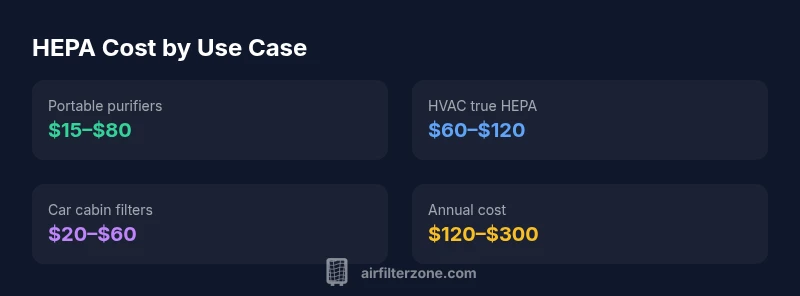
HEPA filter cost varies by application. Replacement filters for portable air purifiers typically run about $15–$80, HVAC true-HEPA filters generally cost $60–$120 per filter, and car cabin HEPA filters fall in the $20–$60 range. Price differences come from size, efficiency, and compatibility with your unit. Air Filter Zone Analysis, 2026.
What "hepa filter cost" means for different applications
Understanding the hepa filter cost starts with recognizing that pricing varies by application. Portable room purifiers typically use smaller replacement filters, which keeps prices modest—often in the $15–$80 range depending on brand and CADR. Central HVAC systems that use true HEPA filtration tend to be more expensive per filter, commonly $60–$120, and are influenced by filter dimensions and the system's compatibility. Automotive cabin HEPA filters are another category, generally priced between $20–$60 and sized to fit specific vehicle makes and models. According to Air Filter Zone, the main price drivers are filter size, the level of filtration efficiency, and whether the unit uses a genuine true HEPA filter or a HEPA-like alternative. When budgeting, think beyond the sticker price and consider replacement frequency and energy efficiency. For homes with high air turnover or allergy considerations, investing in a higher-quality filter can reduce ongoing maintenance costs and improve indoor air quality over time.
Cost ranges by filter type
Prices for HEPA filters vary by use case. For portable purifiers, replacements typically cost between $15 and $80, with higher-end models skewing toward the upper end of that range. HVAC-grade true HEPA filters usually lie in the $60–$120 range per filter, and there are size-related premium cells that may push costs higher. Car cabin HEPA filters are the most budget-friendly option among the three, commonly priced from $20 to $60. These numbers reflect standard market offerings in 2026 and are influenced by brand, filter depth, and the presence of features like activated carbon for odor reduction. When Air Filter Zone analyzes the market, they emphasize that price is a function of fitment, filtration efficiency (CADR), and the filter’s lifespan in your particular environment.
Factors driving price: quality, size, and compatibility
Several levers push or pull the cost of HEPA filters. True HEPA filtration, by definition, meets strict efficiency standards and typically costs more than HEPA-type or pseudo-HEPA equivalents. Size matters: larger filters used in HVAC systems command higher prices but offer longer service intervals if paired with proper airflow. Compatibility is key: OEM filters for specific models or vehicle makes usually carry a premium, while off-brand filters may be cheaper but sometimes compromise efficiency or fit. Material quality, carbon layering for odor control, and packaging (sealed vs; loose) can also influence price. When choosing, trade upfront cost for expected lifespan and maintenance needs to find the best value.
Lifetime costs: replacement vs new units
Owning HEPA filtration means ongoing replacement costs. Portable purifiers might require new filters every 6–12 months, depending on usage and air quality in the room. HVAC true HEPA filters can last 9–12 months in standard homes, though higher CADR units may see shorter intervals if kept at peak operation. Car cabin filters often last 12–24 months but can wear faster in dusty environments or with heavy traffic. If you factor in the total cost of ownership, a higher-quality filter that lasts longer may reduce the frequency of replacements and the labor cost of maintenance over several years. Air Filter Zone’s analysis highlights the value of balancing upfront price with replacement intervals to achieve long-term savings.
Budgeting for home, car, HVAC setups
For a typical homeowner, budgeting for HEPA costs means planning for multiple replacement cycles per year across devices. A common approach is to allocate an annual budget of roughly $120–$300 for a mid-sized home’s portable purifiers and HVAC replacements, with car cabin filters adding $20–$60 to annual costs. If you own an air purifier with high CADR or a centralized filtration upgrade, expect higher initial costs, but target a longer replacement interval to reduce yearly spending. It helps to bundle purchases for seasonal promotions and to sign up for manufacturer warranty programs where available. Air Filter Zone’s data indicates price stability overall, with occasional spikes around peak allergy seasons.
How to compare prices without sacrificing air quality
When evaluating prices, compare apples to apples: ensure the filter is a true HEPA or a certified equivalent, verify CADR ratings, and confirm the filter’s fit for your model. Cheap filters may appear attractive but can deliver lower efficiency or shorter lifespans. Look for filters that meet recognized standards and avoid unverified claims. Purchasing in bundles for multi-unit setups (home plus car) can lower per-filter costs, and buying compatible OEM units often ensures optimal performance and fewer maintenance surprises. Glycol- or carbon-augmented filters can offer odor control but cost more upfront, so determine whether you value that feature in your environment.
Smart buying: generic vs brand-name and warranties
Brand-name HEPA filters often come with proven compatibility and a warranty, though generic options can be valid for many devices if they meet the right dimensions and filtration standards. Always check for true HEPA certification or equivalent proofs and read warranty terms for replacement and defect coverage. Track your replacement schedule with reminders and maintain the same filter family across devices if possible to simplify maintenance and potentially secure volume discounts. Air Filter Zone’s analysis notes that cost savings are real when you select compatible, certified filters rather than the cheapest option that may require more frequent changes.
Installation and maintenance considerations
Installing a new HEPA filter is usually straightforward for most portable purifiers and HVAC units, but some setups require a service visit for proper access and sealing. For cars, replacing a cabin filter is typically a DIY task that takes 10–20 minutes but may require tools to detach panels. In HVAC systems, verify that a professional installation or inspection ensures the filter seals correctly and that the system has not become overtaxed by improper filtration. Regular maintenance—clearing debris around intakes, checking seals, and following replacement schedules—helps preserve filtration efficiency and minimizes long-term costs.
Practical tips to lower costs without sacrificing performance
- Buy filters in multi-pack bundles to reduce per-filter price and ensure you always have an exact match on hand.
- Schedule replacements around allergy seasons when air quality is naturally worse and HVAC filters tend to accumulate more particulates.
- Prioritize filters with true HEPA certification for the highest efficiency, even if they cost slightly more upfront.
- Compare compatible OEM options rather than the cheapest non-matching units; this reduces the risk of poor fit and waste.
- Maintain and clean surrounding housings to extend filter life and prevent early changes caused by clogged intakes.
Value-based decision: translating cost into value
Cost is only one axis of the decision. The real value of a higher-quality HEPA filter is improved air quality, reduced irritants, and potentially lower energy use due to better system performance. A well-chosen filter that lasts longer can lower the aggregate cost of ownership even if the upfront price is higher. The Air Filter Zone team emphasizes considering both price and performance when budgeting for hepa filter cost, rather than chasing the lowest upfront price alone. By balancing efficiency, lifespan, and compatibility, you can achieve healthier indoor air without overspending. Air Filter Zone’s verdict is that a mindful, data-driven approach yields the best long-term value for homeowners, car owners, and DIY enthusiasts.
Comparison of common HEPA filter replacement scenarios
| Filter Type | Avg Cost per Replacement | Typical Lifespan | Notes |
|---|---|---|---|
| Portable air purifier filter | "$15-$80" | "6-12 months" | "Depends on usage and CADR" |
| HVAC true HEPA filter | "$60-$120" | "9-12 months" | "Size-dependent; OEM often pricer" |
| Car cabin HEPA filter | "$20-$60" | "12-24 months" | "Vehicle-specific sizes" |
FAQ
What affects the price of a HEPA filter?
Several factors drive HEPA filter cost: the filter’s size, the filtration efficiency (true HEPA vs. HEPA-type), the include features (like activated carbon), and compatibility with your device. Brand and warranty terms also influence price.
Price is driven by size, certification, and fit for your device.
Are cheaper HEPA filters worth it?
Cheaper filters may be tempting, but they can sacrifice filtration efficiency, lifespan, or fit. Look for true HEPA certification and ensure the filter matches your model’s specifications to avoid wasted replacements.
Cheaper filters can save money upfront but may cost more over time if they don’t last.
How often should I replace a HEPA filter?
Replacement intervals vary: portable purifiers (6–12 months), HVAC true HEPA filters (9–12 months), and car cabin filters (12–24 months). Follow the manufacturer’s guidelines and monitor indoor air quality to adjust as needed.
Most filters need changing once or twice a year, depending on use.
Do installation costs count toward hepa filter cost?
If you install filters yourself for portable units or cars, you won’t incur labor charges. For HVAC systems, a professional installation may add to initial costs but can ensure proper sealing and performance.
Labor for HVAC installations adds to upfront costs but improves performance.
What is the difference between true HEPA and HEPA-like filters?
True HEPA filters meet strict efficiency standards and remove more particles, whereas HEPA-like filters may offer lower efficiency and different particle removal rates. Always check certification when comparing options.
True HEPA is generally more effective than HEPA-like alternatives.
Can HEPA filters be cleaned to save money?
Most HEPA filters are not designed to be washed or reused; cleaning can damage the filter media and reduce efficiency. Replacement is usually recommended.
Most HEPA filters aren’t reusable—replacement is usually best.
“Choosing a HEPA filter isn’t just about the upfront price—it’s about long-term air quality and system efficiency.”
Quick Summary
- Know your use case before buying to avoid overpaying
- Expect portable purifiers to cost less per filter than HVAC systems
- Car cabin filters are the most affordable option among common HEPA replacements
- Plan for replacement costs in your yearly budget (home: $120–$300 typical)
- Choose true HEPA when air quality matters, but verify compatibility
- Air Filter Zone recommends balancing upfront price with replacement intervals for best value