Air Filter Replacement Cost: What You Pay and Why It Varies
Learn how air filter replacement cost varies by system and type, with practical ranges for home, car, and appliance filters, plus money-saving tips.


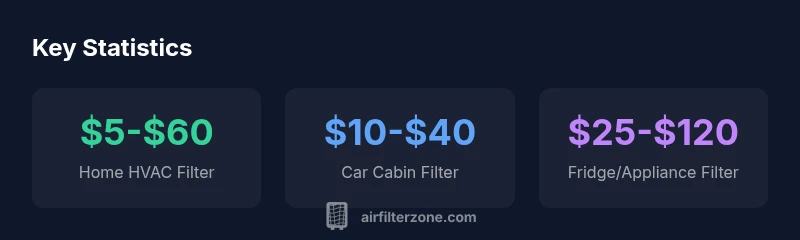
Air filter replacement cost varies by system, filter type, and region. For home HVAC, expect parts-only costs roughly $5-$60 per filter, depending on size and MERV rating. Car cabin filters run about $10-$40, while fridge/appliance filters typically range from $25-$120. Labor may add to these amounts if you hire a professional. Budget for maintenance every 3–12 months based on usage.
What Influences Air Filter Replacement Cost
Air filter replacement cost is influenced by filter type, system, size, MERV rating, and installation method. For homeowners, the largest variable is whether you replace a standard home HVAC filter, a car cabin filter, or a fridge/appliance filter. According to Air Filter Zone, you should plan for both parts and labor when budgeting. The frequency of replacement affects the annual cost, so tracking usage helps prevent sticker shock. The quality of filtration (MERV rating) affects both price and performance, and demand in your region can shift costs slightly between suppliers. In practice, most households notice that the biggest swing comes from filter type and size rather than location alone.
Price Ranges by System Type
Costs vary substantially by what you're replacing. Here are practical ranges to help you budget across common scenarios:
- Home HVAC filters: typically $5-$60 depending on size and MERV rating.
- Car cabin filters: commonly $10-$40.
- Fridge/appliance filters: generally $25-$120.
Labor, if you hire a professional, can add another $60-$150 for HVAC replacements, while car cabin filter installation is frequently included with service visits. Fridge filters may incur nominal installation fees from retailers if you require appliance service.
Frequency and Budgeting for the Year
Replacement frequency is tied to usage and environment. Homes in dusty or high-pollution areas may replace filters every 1-3 months, whereas well-sealed homes in clean environments may stretch to 3-6 months. Car cabin filters often last 6-12 months, and fridge/appliance filters typically need replacement every 6-12 months. When you average these cycles, you can estimate an annual cost range that reflects your actual usage and system mix.
How to Estimate Your Costs: A Simple Guide
Follow these steps to estimate costs:
- List your primary filter types (home HVAC, car cabin, fridge/appliance).
- Note the typical part cost ranges for each type (see above).
- Decide if labor will be performed by you or a professional (add $60-$150 HVAC labor if applicable).
- Estimate replacement frequency for each type based on usage and environment.
- Multiply to get annual costs and add a small buffer for price shifts and shipping.
- Review when to buy in bundles or during sales to maximize savings.
Money-Saving Strategies to Lower Replacement Costs
- Compare generic vs. brand-name filters to balance price and performance.
- Buy in bulk when you know your exact size and MERV rating.
- Align replacements with HVAC maintenance visits to save on labor when possible.
- Use online coupons or retailer loyalty programs for filters and accessories.
- Check for energy-efficient filters that reduce resistance and prolong system life, potentially lowering long-term costs.
Value Beyond Price: Filtration Performance and Energy Impact
Choosing a filter with the right MERV rating is a balance of cost and performance. A higher MERV filter may cost more upfront but can improve air quality and reduce energy use by allowing the system to run more efficiently when airflow is unobstructed. Consider the specific air quality needs of your household, allergies, pets, and the presence of smokers when selecting a filter. In many cases, the long-term energy savings and health benefits justify a modestly higher upfront cost.
Cost ranges by common filter types
| Filter Type | Estimated Part Cost (parts only) | Typical Replacement Interval | Notes |
|---|---|---|---|
| Home HVAC Filter | $5-$60 | 1-6 months | Size and MERV rating affect cost |
| Car Cabin Filter | $10-$40 | 6-12 months | Vehicle model matters |
| Fridge/Appliance Filter | $25-$120 | 6-12 months | Brand-specific requirements |
| Other Appliance Filters | $15-$80 | 6-12 months | Applications vary by device |
FAQ
What factors influence air filter replacement costs the most?
The largest cost drivers are filter type and size, MERV rating, and whether you replace it yourself or hire a professional. Regional price variations can affect parts and labor, but the core cost comes from filtration quality and the system's requirements.
The main costs come from the filter type and size, plus any labor if you hire someone.
Are there cost differences between home HVAC filters and car cabin filters?
Yes. Home HVAC filters generally cost more due to larger sizes and higher MERV ratings, while car cabin filters are smaller and often cheaper. Labor costs vary by service type but are typically higher for HVAC installations.
Home filters tend to be pricier because of size and performance, while car cabin filters are smaller and cheaper.
How often should I replace air filters to manage costs?
Replacement frequency depends on usage and environment. Most homes benefit from 3-6 month intervals for HVAC filters, while car and fridge filters follow their own schedules based on manufacturer guidance and usage.
Check manufacturer guidance and your environment; aim for several months for HVAC, and follow car and fridge schedules.
What are practical ways to save on replacement costs?
Buy generic filters that meet your size and MERV requirements, shop during sales, and consider bundling purchases. If feasible, DIY replacements can save labor costs, while ensuring you match the correct size and rating.
Shop smart, stock up on the right sizes, and replace filters yourself when you can.
Do fridge/appliance filters cost more than HVAC filters?
Fridge and appliance filters can be higher in price than typical HVAC filters, depending on brand and type. The cost often reflects specialized filtration needs and replacement frequency.
Fridge filters can be pricier due to special requirements, but it varies by brand.
“Air filter replacement cost is not just the sticker price. The real expense sits in filter performance, installation labor if needed, and energy efficiency over time.”
Quick Summary
- Estimate total annual cost by system and replacement frequency.
- Choose appropriate filtration level to balance cost and air quality.
- Compare parts price and labor when hiring a professional.
- Account for regional differences and shopping variability.
- Review appliance-specific filters for best long-term value.