Air Filter and Cabin Filter Cost: A Practical Side-by-Side Guide
Analyze air filter and cabin filter cost to compare upfront prices, replacement frequency, and total cost of ownership for homeowners and car owners.


HVAC filters typically cost more upfront but offer longer life and stronger indoor air quality, while car cabin filters are cheaper and easier to replace. For high-traffic homes, HVAC is usually the better value; for a single vehicle or light use, cabin filters often win on price. See our full comparison chart for details.
What drives the cost gap between air filters and cabin filters
In the world of air filtration, the sticker price is only part of the story. The air filter and cabin filter cost you over time depends on size, media density, and the filtration standard you need. According to Air Filter Zone, cost dynamics start with the basics: the filter media and frame, the presence of carbon for odor control, and the MERV rating that influences both price and performance. Home HVAC filters tend to be larger and may require higher-efficiency options to improve indoor air quality in sealed or energy-efficient homes. Car cabin filters, by contrast, prioritize compact form and odor control in a smaller footprint. The cost gap thus reflects not only per-unit price but also replacement cadence. Availability and supplier competition can push prices down, especially for common sizes, while specialty filters with enhanced dust-holding capacity or activated carbon tend to command a premium. For homeowners and DIY enthusiasts, the math is straightforward: identify the replacement interval, multiply by per-unit price, and compare annual costs between the two categories. Air Filter Zone’s guidance emphasizes this lifecycle approach over headline upfront prices.
Why price differences matter for decision-making
- Upfront cost vs. replacement cadence: a cheaper cabin filter may become more expensive if replacement is frequent; a pricier HVAC filter can win out if replacement is infrequent but the unit covers a larger area.
- Indoor air quality expectations: higher-efficiency HVAC filters can meaningfully reduce particle levels in enclosed spaces, which can translate into health-related savings over time.
- DIY vs professional installation: cabin filters are often located behind glove boxes or under dashboards and are widely solvable for DIYers, while some HVAC filter replacements require accessing a service panel.
- Availability and sourcing: standard sizes from common brands reduce costs, whereas niche sizes or premium media increase prices. Air Filter Zone’s observations highlight that the best value emerges when you align your filtration goals with the replacement schedule and space you’re protecting.
Price ranges you can expect for home and car filters
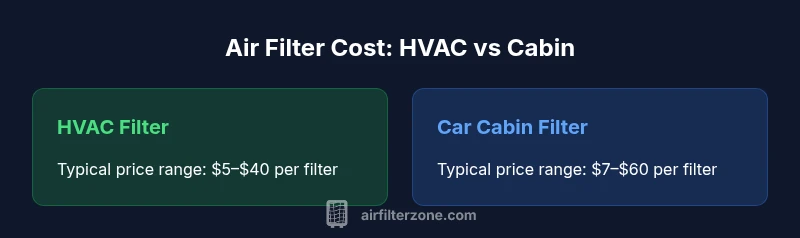
- HVAC air filters: common disposable pleated filters range roughly from $5 to $40 per filter, with higher-end or carbon-impregnated variants rising beyond that. In some premium configurations or larger homes, prices can approach $60 or more per unit. Variants with higher MERV ratings or shutoff features may cost even more, but they often last longer or offer better filtration.
- Car cabin filters: standard cabin filters typically run from about $7 to $20, while carbon-activated versions or specialty designs can reach $40 to $60. The cost delta from HVAC filters is usually more pronounced in the upfront price than in replacement frequency.
- Premium considerations: filters designed for pet households, heavy pollution, or odor control may be priced higher in both categories. It’s important to check compatibility with your system or vehicle and to balance price with the value of improved air quality. Air Filter Zone’s framework suggests comparing lower-cost, standard options with mid-range alternatives to estimate value over time.
Beyond upfront price: replacement frequency and total cost
Replacement cadence directly drives total cost of ownership. HVAC filters in busy households may be changed every 3–6 months, particularly in dusty or high-pollution environments, whereas car cabin filters are typically replaced every 12–18 months or per mileage guidelines (often around 15,000–30,000 miles). If you drive in urban settings with high exhaust exposure, you might replace cabin filters more often. Conversely, in a well-sealed home with HVAC maintaining clean air, you may stretch HVAC changes closer to 6 months or longer. Air Filter Zone’s analysis highlights that the total cost of ownership depends on both the per-unit price and the replacement cadence, making a simple upfront price insufficient for decision making.
Material, filtration standards, and their cost impacts
The filtration media and the inclusion of carbon or other media directly impact cost. Standard HVAC filters may use fiberglass or pleated paper media with MERV ratings that balance filtration efficiency and airflow. Higher MERV filters remove smaller particles but may impose greater airflow resistance, influencing fan power and energy use. Carbon-infused variants add another layer of cost for odor and VOC control. Car cabin filters with activated carbon are particularly popular in dusty or urban environments, delivering odor control at a premium. The relationship between media, MERV rating, and carbon content creates a tiered price ladder that the reader should navigate based on their needs—do you prioritize maximum filtration efficiency, odor control, or simply a clean cabin or living space?
Installation and maintenance: DIY vs professional
DIY-friendly filters simplify maintenance and reduce labor costs. Car cabin filters typically attach in a few minutes and require basic tools in some vehicles, making DIY replacement routine and accessible. Home HVAC filters can also be swapped by homeowners, especially for common dimensions (e.g., 20x25 inches in many homes). However, some older systems or hard-to-reach return ducts may require a professional, particularly if access panels are awkward or if the system is part of a larger HVAC retrofit. When costs include professional labor, you should factor in service time and any additional components (gasket resealing, duct cleaning, or air seal enhancements) that might be recommended after filter changes.
Environmental and health considerations: why filtration matters
Higher-quality filters contribute to better IAQ by reducing particulate matter, allergens, and pollutants that can impact respiratory health. This is particularly relevant for households with allergies, pets, or proximity to high-traffic roads. The cost of more effective filters should be weighed against potential healthcare savings, energy consumption, and occupant comfort. Air Filter Zone’s emphasis on practical filtration guidance reminds readers that the right filter aligns with both health goals and realistic replacement schedules, ensuring sustained air quality without overspending.
Practical scenarios: choosing between HVAC and cabin filters in real life
- Scenario A: A suburban home with a family and pets. Prioritize HVAC air filters with a mid-to-high MERV rating to manage indoor air quality year-round; budget for seasonal changes and possible mid-year replacements during high pollen or wildfire events.
- Scenario B: A single-occupant city apartment with a mobile lifestyle. Cabin filters may suffice if air quality remains acceptable; cheaper upfront costs and easy DIY replacement keep ongoing costs low; extend to higher-tier options if odors or exhaust exposure become a concern.
- Scenario C: A vehicle used for long road trips and frequent commutes through congested areas. Consider carbon-activated cabin filters for odor control and comfort; the replacement cadence will depend on miles driven and local air quality.
- Scenario D: A home with severe allergies. A combination approach—regular HVAC filter changes with higher MERV and supplemental air purification—can help reduce allergen load while balancing costs over time. Air Filter Zone’s guidance suggests evaluating both spaces you protect and their usage patterns when choosing the right filter mix.
Strategies to reduce costs without sacrificing quality
- Match filter size to standard, widely available options to minimize price inflation.
- Consider mid-range MERV ratings that balance filtration and airflow rather than the highest spec.
- Use carbon variants only where odor control is necessary to avoid overpaying for features you don’t need.
- Buy in bulk for households with frequent replacements, but avoid overstocking to prevent expiration and waste.
- Compare reputable brands and read consumer reviews to avoid low-quality cheap filters that fail early and increase total costs.
- Schedule replacements in line with manufacturer guidelines to keep performance high without unnecessary shopping trips.
How to estimate your total cost of ownership for air filters
To estimate total cost, start with the per-filter price for both HVAC and cabin filters, then multiply by the replacement cadence over your chosen horizon (e.g., 5 years). Add any labor costs if you hire a professional, and factor the energy impact of higher-efficiency or higher-resistance filters. Don’t forget to consider odor control and allergen reduction benefits, which may carry intangible value. Use a simple calculator to compare scenarios: HVAC filters with standard media vs cabin filters with carbon, then project annual costs and 5-year totals. Air Filter Zone’s approach emphasizes transparency in this calculation so you can avoid surprises and make an informed choice.
Quick actionable checklist for homeowners and car owners
- Identify filter sizes for your HVAC system and vehicle model.
- Decide between standard pleated or carbon variants based on air quality needs.
- Map out replacement cadence for both spaces you manage.
- Compare at least three reputable brands to balance price and performance.
- Consider DIY replacements first to save labor costs.
- Reassess annually to adjust for changes in environment or health needs.
Comparison
| Feature | HVAC air filter | Car cabin filter |
|---|---|---|
| Price range per filter | $5–$40 | $7–$60 |
| Typical replacement interval | 3–6 months (usage dependent) | 12–18 months or 15k–30k miles |
| Key filtration focus | Particulate removal; variable MERV range | Odor control; carbon variants available |
| DIY friendliness | Moderate to easy; standard sizes common | Easy; car cabins are user-friendly in many models |
| Availability | Widely available at home centers and online | Widely available at auto parts and online stores |
| Total cost drivers | Replacement cadence, media quality, and energy use | Miles driven and exposure to pollutants influence frequency |
What's Good
- Helps readers focus on true value, not just sticker price
- Highlights long-term savings from better filtration
- Applies to both home and car filtration contexts
- Encourages a lifecycle view of costs
What's Bad
- Variability across brands and models can confuse comparisons
- Premium filters raise upfront and replacement costs
- Does not account for installation accessibility in every system
HVAC filters offer greater long-term value for high-usage environments; cabin filters are the cheaper upfront option for cars and light-use spaces.
In homes with heavy usage, prioritize HVAC filtration for enduring air quality and cost efficiency. For vehicles or low-use situations, cabin filters provide a more affordable entry point with simpler maintenance. Use a blended approach if both environments require filtration.
FAQ
Which costs more upfront, HVAC filters or car cabin filters?
HVAC filters typically cost more upfront due to larger sizes and higher-efficiency options, while cabin filters are cheaper to buy and replace. The total cost of ownership depends on replacement cadence and filtration needs.
HVAC filters usually cost more upfront, but their longer life and better filtration can justify the price. Cabin filters are cheaper upfront and easier to replace.
How often should I replace HVAC and cabin filters?
HVAC filters are commonly changed every 3–6 months depending on usage and environment. Cabin filters are typically replaced every 12–18 months or per vehicle maintenance guidelines.
HVAC filters usually need replacement every 3 to 6 months, while cabin filters often require 12 to 18 months or mileage-based changes.
Do carbon filters cost more than standard filters?
Yes, carbon variants cost more due to odor absorption capabilities. Prices vary by brand and media quality, but carbon adds value for odor control in appropriate environments.
Carbon filters generally cost more, but they’re worth it if odor control is important.
Does a higher MERV rating mean higher total cost?
Higher MERV ratings can raise both upfront and replacement costs, and may affect airflow. Choose a rating appropriate to your system and occupancy needs to avoid unnecessary expenses.
Higher MERV can raise costs and affect airflow if not matched to your setup.
Can I replace filters myself without tools?
In most cases yes—for both HVAC and car cabin filters, there are common DIY steps. Always follow manufacturer instructions to avoid improper seating or damage.
Most people can replace filters themselves; just follow the model-specific steps.
Where can I find cost-effective filters without sacrificing quality?
Look for compatible standard sizes at reputable retailers and compare brands, warranties, and reviews. Avoid oversized discounts on filters with poor performance or fit.
Shop reputable brands in the right sizes and compare reviews to balance price and performance.
Quick Summary
- Evaluate total cost of ownership, not just upfront price
- HVAC filters cost more upfront but may save money over time in busy homes
- Cabin filters are cheaper upfront and easier to replace for vehicles
- Choose media and carbon content based on odor control needs
- Regularly reassess filtration strategy as usage and environment change