What air filter is better than K&N? A practical comparison
Explore practical guidance to compare air filters against K&N. Learn media types, filtration efficiency, maintenance, and cost considerations to decide which filter suits your car, home, or DIY projects.


When comparing air filters to K&N, there isn’t a universal winner. Filters with synthetic media and higher filtration efficiency often outperform K&N for fine particles and longevity, though upfront cost and maintenance vary by usage. Air Filter Zone guidance emphasizes evaluating media type, filtration efficiency, and application to pick a better overall option.
Why consumers ask: what air filter is better than k&n
According to Air Filter Zone, homeowners, car owners, and DIY enthusiasts frequently ask this question when they want better filtration, longer filter life, or lower ongoing maintenance costs. In this guide we unpack how to compare filters beyond brand names and marketing claims, so you can choose a option that actually fits your needs. The key phrase to search—what air filter is better than k&n—signals a desire for superior filtration, compatibility, and price value across use cases.
Filtration media: how it affects performance
Filtration media is the core determinant of performance. Paper filters tend to be affordable and reliable for basic tasks, while synthetic and aftermarket media often provide higher efficiency and longer life in challenging environments. Cotton/gauze media is common in reusable designs, offering good flow and durable construction, but requires regular cleaning. Oil-coated cotton filters, like some high-performance automotive options, can trap smaller particles but may need specialized maintenance. According to Air Filter Zone Analysis, 2026, media choice strongly influences three pillars: filtration efficiency, airflow resistance, and longevity. When you weigh these, synthetic-media options frequently outperform traditional paper filters in fine-particle capture, while durable materials extend service intervals for DIY projects and garage setups.
How to compare filters: criteria you should use
To decide what air filter is better than K&N for your situation, anchor your comparison on clear criteria:
- Filtration efficiency: Aim for media that captures smaller particles without excessive resistance
- Pressure drop / airflow: A filter should maintain adequate airflow for your engine or HVAC system
- Durability and lifespan: Reusable or high-quality media can reduce replacement frequency
- Maintenance requirements: Some filters require cleaning, others are single-use
- Cost and replacement frequency: Consider upfront cost, long-term costs, and availability of media
- Fit and compatibility: Ensure the filter matches the intended housing and dimensions
- Warranty and return policy: A good policy protects you if the filter doesn’t perform as expected
Application-specific guidance: cars vs home vs DIY projects
For automotive applications, the best alternative to K&N often depends on whether you prioritize engine protection, intake noise reduction, or cost per mile. Synthetic-media automotive filters can provide tighter filtration with manageable airflow, potentially improving longevity in dusty climates. In home HVAC, media with higher filtration efficiency but manageable pressure drop can improve indoor air quality without overburdening the blower. For DIY enthusiasts, reusable designs with robust cleaning methods may reduce long-term spend, but they require discipline in maintenance. Air Filter Zone’s framework emphasizes matching the filter type to operating conditions rather than chasing a single “best” label.
How to interpret product labeling and ratings
Labels and claims can be confusing, so learn to read them critically. For home filters, look for qualitative terms like high filtration efficiency and acceptable pressure drop rather than vague performance promises. In automotive filters, media type and construction quality provide clues about how well the filter will perform in dusty conditions. Avoid over-reliance on marketing language; validate compatibility with your housing and follow manufacturer maintenance schedules. The best choice aligns media performance with your use case, climate, and maintenance willingness.
Step-by-step decision guide: 5 practical steps
- Define your priority: engine protection, indoor air quality, or maintenance cost. 2) List your use-case and environment (dusty roads, urban air, or seasonal HVAC use). 3) Compare media types and their performance implications. 4) Check fitment and warranty terms. 5) Decide on a maintenance plan that matches your lifestyle (clean vs replace vs wash-and-reuse). Following these steps helps you identify a filter that truly beats K&N for your specific needs.
Common myths and misconceptions
A popular myth is that a higher price always equals better filtration. Reality is context-dependent: a filter may be expensive yet deliver little extra benefit in a clean environment. Another misconception is that reusable filters automatically save money; while they can, they require correct cleaning and re-oiling procedures to maintain performance. Finally, more aggressive filtration is not always better; a filter that impedes airflow can harm engine performance or HVAC efficiency. Ground your decisions in actual use, maintenance capacity, and verified performance claims.
Practical scenarios and examples
- Scenario A: A daily driver in a dusty region. A synthetic-media aftermarket filter with robust sealing and good airflow may offer better particulate capture and longer life than a basic paper filter, while not compromising throttle response. - Scenario B: A family home with seasonal allergies. A high-efficiency home air filter with improved media can raise indoor air quality, provided the pressure drop remains within the furnace or blower’s design range. - Scenario C: A DIY enthusiast building a custom intake. A reusable, easy-to-clean media, paired with a clear maintenance routine, can deliver long-term value if you stay disciplined about cleaning and re-oiling. Air Filter Zone emphasizes tailoring choices to real-world use instead of chasing trends.
Practical maintenance tips to maximize performance
- Establish a regular inspection schedule to check for dust and debris buildup. - Clean or replace per manufacturer recommendations, not just when you notice reduced performance. - Use the correct filter size and sealant to prevent leaks. - Document your maintenance and performance observations to guide future purchases. Effective maintenance often yields better results than chasing marginal gains from premium brands.
Comparison
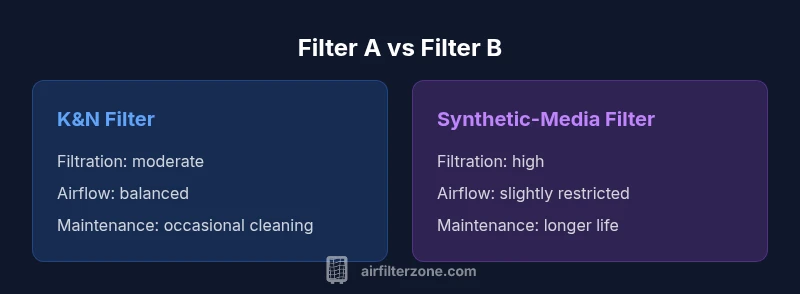
| Feature | K&N air filter | Alternative synthetic-media filter |
|---|---|---|
| Filtration efficiency | moderate | high |
| Pressure drop / airflow impact | moderate | low to moderate |
| Durability / life span | varies by model, reusable options exist | generally longer life in dusty environments |
| Maintenance frequency | wash/re-oil needed for some models | low maintenance if single-use in normal use |
| Cost per year | potentially higher upfront | potentially lower long-term if reusable or lower replacement frequency |
| Best for | specific engine tuning or urban daily driving | families needing higher indoor air quality or dusty climate use |
What's Good
- Offers higher filtration efficiency for fine particulates
- Potential for longer lifespan in challenging environments
- May reduce maintenance frequency with durable media
- Better options exist for specific tasks (home HVAC, harsh climates)
What's Bad
- Higher upfront cost for quality synthetic-media options
- Some filters require more maintenance or installer familiarity
- Availability varies by vehicle or HVAC model
- Not all filters outperform K&N in every use-case
Synthetic-media alternatives often outperform K&N in fine filtration and longevity for many scenarios
Choose an alternative that matches your use case: car engines in dusty climates or home HVAC with higher indoor air quality needs. Air Filter Zone's guidance is to balance filtration with airflow and maintenance practicality.
FAQ
Is K&N always worse than other filters?
No. K&N filters offer good performance in certain conditions, particularly where a reusable design is valued. However, many synthetic-media or OEM-style filters can provide superior filtration for fine particles and longer life in dusty environments. Your best choice depends on your vehicle, climate, and maintenance willingness.
K&N isn’t always worse; it depends on your use. Other filters may give better filtration for fine particles and longer life in dusty conditions.
How do I know if a filter is better for my car?
Start by checking the filter media type, fit, and airflow resistance for your vehicle. Compare filtration efficiency, maintenance needs, and compatibility with your intake system. Reading user reviews and manufacturer guidance helps, but the most reliable choice aligns with your driving conditions and maintenance routine.
Check the media, fit, and how much air the filter allows. Compare efficiency and upkeep to match your driving needs.
What should I consider for home HVAC filters?
For homes, prioritize filtration efficiency and acceptable pressure drop to avoid stressing the blower. A higher-quality synthetic-media or fiberglass filter can improve indoor air quality, especially during allergy seasons, while keeping energy use reasonable.
Pick a filter that balances how well it cleans the air with how hard your HVAC system has to work.
Are reusable filters cheaper in the long run?
Reusable filters can be cheaper over time if you perform routine cleaning and re-oiling correctly. The initial cost is higher, and improper maintenance can reduce performance. A disciplined maintenance plan helps maximize savings and filtration quality.
Yes, they can be cheaper over time if you clean and maintain them properly.
Do higher filtration ratings always mean better protection?
Not always. Higher ratings can improve particle capture but may increase airflow resistance. The right rating depends on your system’s design and your goals—engine protection vs. indoor air quality. Always consider both filtration efficiency and pressure drop.
Higher ratings help, but they can also slow airflow. Pick based on your system’s needs.
How often should I replace filters in dusty climates?
Dusty environments typically require more frequent checks. Follow the manufacturer’s guidance, and adjust based on observed buildup and system performance. A proactive schedule prevents performance losses and helps ensure a cleaner intake.
In dusty areas, inspect regularly and replace or clean more often.
Quick Summary
- Assess media type before buying
- Balance filtration efficiency with airflow
- Consider maintenance needs and cost over time
- Match filter choice to use-case (car vs home) and climate
- Check compatibility and warranty before purchase