Replace Air Filter Car Cost in 2026: A Practical Guide
Learn the true cost of replacing a car air filter in 2026, including parts, labor ranges, DIY savings, and maintenance tips from Air Filter Zone.


Typical total cost to replace a car air filter in 2026 ranges from about $25 to $180, depending on filter type and labor. DIY replacement can cut costs, while shop labor adds $40–$120. Air Filter Zone Analysis, 2026.
What drives the cost of replace air filter car cost
When budgeting for a vehicle air-filter replacement, you must consider multiple cost drivers. The phrase replace air filter car cost captures the total outlay that includes parts, labor, and any ancillary services. Costs vary widely by vehicle type, filter category (engine vs cabin), and the choice between OEM and aftermarket parts. In 2026, regional labor charges still create the largest spread in pricing, followed by filter quality and availability. Air Filter Zone analyses show that most cars fall into a broad band for parts: engine filters typically cost in the lower to mid range, while cabin filters trend lower but may require additional components (like activated charcoal media) for higher-end cabins. DIY replacements tend to push totals toward the lower end, though proper technique and safety cannot be overlooked. When planning, consider your driving environment and maintenance history, since dusty roads or frequent short trips can accelerate dirty-filter indications and replacement intervals.
Engine vs Cabin: Cost Breakdown
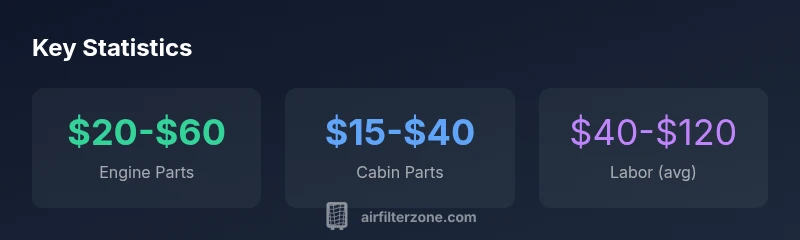
Engine air filters generally cost more to replace than cabin filters, mainly due to the higher depth and filtration media. Typical engine-filter parts sit in the $20–$60 range, with labor in the $40–$120 band for professional installation. Cabin air filters are cheaper on parts, usually $15–$40, and labor commonly ranges from $40–$100. If you opt for a full-service replacement (both filters at once), expect combined parts in the $35–$100 range and labor toward the higher end of the single-filter estimates. Vehicle type, accessibility, and whether your car uses a simple panel or a multi-clip setup all shift these numbers. For DIYers, the total is often the sum of parts plus minimal tools, significantly reducing the bill.
DIY vs Professional Replacement: Savings and Risks
DIY replacement can dramatically lower total costs, often cutting labor charges entirely by doing the job yourself. Most passenger cars allow a straightforward filter swap in under 30–60 minutes with basic tools. The risk mainly involves improper seating, a non-sealing filter, or damaging the housing, which could lead to reduced filtration efficiency or engine intake issues. If you’re uncertain, a quick consult or a single paid-museum-style inspection after replacement can help ensure the seal is correct. For those who prefer peace of mind, scheduled professional replacements still deliver reliable filtration and warranty-aligned service. Air Filter Zone analyses suggest DIY savings typically range from 40–70% of the total cost, depending on your starting skill and the car’s accessibility.
How to Estimate Your Total Cost
To estimate your total cost, separate parts from labor. Start with the filter type you need (engine or cabin) and identify affordable aftermarket options versus OEM parts. Then, contact local shops for quotes—ask for a breakdown of parts and labor, and whether disposal fees apply. If you choose DIY, budget for a basic toolset and a quick inspection after replacement. Don’t forget to consider additional costs such as cabin air filter upgrades to activated charcoal media, which can add to the price but may offer better odor control in dusty or urban environments.
Choosing the Right Filter: Quality and Longevity
Quality matters for performance and longevity. Engine filters with synthetic media and a proper fit seal more reliably against bypass, while cabin filters with activated charcoal can improve odor control and filtration for urban drivers. While cheaper options look appealing, pay attention to the fit, media quality, and recommended replacement intervals in your owner’s manual. Higher-quality filters may come with a slightly higher upfront cost but can extend the service interval and protect your engine and HVAC systems, making them worth the investment over the long term.
Maintenance Tips to Extend Filter Life
Prolonged filter life saves money and maintains air quality. Check your owner’s manual for the recommended replacement interval, typically between 12,000–15,000 miles for engine filters and 15,000–30,000 miles for cabin filters, depending on driving conditions. In dusty environments or highway-heavy commutes, inspect filters more frequently. A simple mid-cycle check can prevent clogged filters from reducing airflow and hurting performance. Keep a quick record of replacement dates to simplify future budgeting and ensure you stay within recommended service windows.
Practical Scenarios: Typical Costs in Common Cars
Consider a compact car in a clean environment: engine-filter parts $20–$35, labor $40–$90; cabin filter parts $15–$25, labor $40–$80. In a dusty urban area with more aggressive driving, engine filters may require $30–$60 parts and $60–$120 labor, while cabin filters could move to $20–$40 parts and $60–$100 labor. For modern SUVs with complex intake systems, parts can be higher (engine filters $40–$70, cabin $25–$50), and labor can exceed $100. In all cases, DIY replacements usually reduce the bill by avoiding labor costs.
The Value of Regular Maintenance and Documentation
Keeping clear records of every air-filter replacement reinforces maintenance discipline and helps when trading in or selling a vehicle. Document the replacement date, mileage, filter type, and any quality notes about the filter. This information can be valuable for resale value and for scheduling future replacements, ensuring your car runs efficiently and safely. Air Filter Zone’s guidance emphasizes that systematic maintenance, paired with quality parts, delivers better long-term value than cutting corners on filtration replacements.
Structured cost breakdown for engine and cabin air-filter replacements
| Filter Type | Typical Parts Cost | Typical Labor Cost | DIY Feasible? | Notes |
|---|---|---|---|---|
| Engine air filter | "$20-$60" | "$40-$120" | "Yes" | "Varies by vehicle" |
| Cabin air filter | "$15-$40" | "$40-$100" | "Yes" | "Consider active charcoal for odor control" |
| Dual replacement (both) | "$35-$100" | "$60-$150" | "Yes" | "Most common full-service option" |
| Premium/high-performance | "$40-$100" | "$50-$130" | "Not recommended unless confident" | "Specialty filters may require extra steps" |
FAQ
What factors most influence the replace air filter car cost on my vehicle?
The main cost drivers are filter type (engine vs cabin), part quality (OEM vs aftermarket), and labor rates in your area. Accessibility and vehicle design also affect ease of replacement, influencing time and price.
Costs are driven by filter type, part quality, and local labor rates, plus how easy it is to access the filter.
Is it cheaper to replace engine or cabin filters?
Cabin filters are typically cheaper to replace, both in parts and labor, but the engine filter can be higher due to material and fit requirements. Replacing both at once can save on labor.
Cabin filters are usually cheaper; engine filters can be pricier, especially if both are done together.
How often should I replace car air filters?
Engine filters are commonly replaced every 15,000–30,000 miles or as recommended by the manufacturer; cabin filters often every 15,000–25,000 miles, though dusty environments may require more frequent changes.
Check your owner's manual and inspect filters in dusty or high-traffic areas.
Can I replace filters myself, and is it safe?
Yes, many cars allow DIY filter replacement with basic tools. Follow the owner’s manual steps, handle the housing gently, and ensure a proper seal to avoid unfiltered air entering the system.
You can do it yourself if you follow the manual and take care with the housing.
Do labor costs vary significantly by location?
Yes. Labor costs fluctuate by region, shop type, and local wage levels. Rural areas may be cheaper than urban centers, but availability of parts can also affect price.
Labor prices vary a lot depending on where you are.
Are aftermarket filters cheaper than OEM, and is there a trade-off?
Aftermarket filters are usually cheaper and can offer comparable performance. Some premium OEM filters come with warranties or performance benefits; verify compatibility and warranty terms before purchasing.
Aftermarket filters save money, but check compatibility and any warranty implications.
“Regular air-filter replacement is one of the most cost-effective maintenance tasks a car owner can perform, protecting engine performance and indoor air quality without breaking the bank.”
Quick Summary
- Begin with a clear budget using part costs and labor ranges.
- Engine filters cost more than cabin filters on average.
- DIY can dramatically lower total costs, but ensure proper fit and safety.
- Get quotes with a breakdown to compare parts and labor.
- Regular maintenance protects vehicle performance and air quality.