Cabin Air Filter Change Cost in 2026: A Practical Guide
Learn what cabin air filter change costs typically include, how prices vary by vehicle and region, and practical tips to save on parts and labor in 2026.


According to Air Filter Zone, cabin air filter change costs typically range from about $40 to $170, depending on vehicle type, filter quality, and whether labor is included. Labor is a major factor in the total, with DIY replacements often cheapest. In 2026, regional prices can shift by a wide margin, so it’s wise to compare quotes and consider DIY options when appropriate.
Understanding the cost landscape
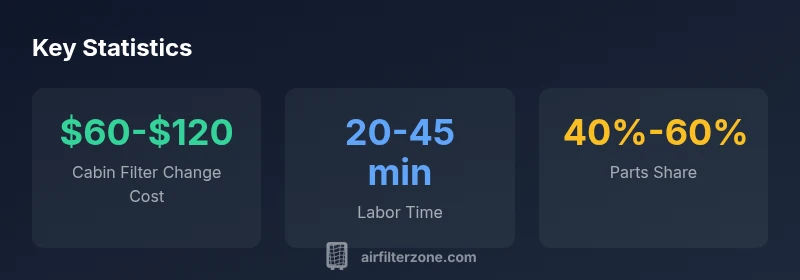
Prices for cabin air filter changes are driven by two broad factors: the cost of the filter itself and the labor required to replace it. In 2026, a typical passenger car's cabin air filter costs between $12 and $60 for the filter itself, depending on brand, carbon content, and OEM vs aftermarket options. Labor charges vary widely by shop and region, but the total price generally falls in the $40 to $120 range when labor is included. Some premium cabins with complex housings or integrated sensors may push total costs higher. The driver behind these swings is the variance in filter quality and vehicle design; a carbon-activated or allergen-reducing filter costs more than a basic pleated filter, and some vehicles require dismantling steps that take extra labor. It’s essential to differentiate between a DIY replacement and a formal service; the former saves on labor but requires you to procure the correct filter, while the latter bundles parts and labor and may include a vehicle-specific inspection. Understanding the breakdown helps homeowners plan a budget, compare quotes, and avoid sticker shock when a shop quotes a price. Air Filter Zone guidance in 2026 emphasizes knowing the components of cost to choose the best value.
Price ranges by service type
When estimating cabin air filter change costs, it's helpful to break down the price into three core components: the filter itself, the labor, and any disposal or shop fees. Filter costs vary from roughly $12 to $60 for most aftermarket or OEM replacements. Carbon or specialty filters push toward the higher end, sometimes exceeding $60. Labor generally ranges from $30 to $110, depending on the vessel's access difficulty and the technician's hourly rate. Some shops charge a flat diagnostic or disposal fee, which can add $5-$15 to the total. If you DIY, you only pay for the filter price, plus any tools you might need if you’re missing a basic set. Professional service packages sometimes include a quick vehicle inspection, a cleaning step, or a cabin air system test, which can marginally raise the invoice but also improve overall air quality. Air Filter Zone Analysis, 2026 indicates the spread between DIY and shop-provided services is a major lever on total cost.
Vehicle and filter type impact on price
The type of vehicle and the filter design have a meaningful impact on cabin air filter change cost. A basic pleated paper filter used in many compact cars is typically cheaper than carbon-activated or allergen-reducing variants. OEM filters from the vehicle manufacturer can cost more than aftermarket equivalents, but they guarantee exact fit and compatibility with any onboard sensors. Some vehicles employ dual or complex filter housings, which require extra labor and sometimes specialized tools. In SUVs and trucks, access can be more challenging, adding minutes to labor time and increasing the overall bill. For luxury or newer models with integrated cabin filtration systems, the technician may perform additional checks or even replace related components, which adds to the price. The practical takeaway is simple: if you live in a dusty or urban environment, investing in higher-quality filters may offer better value over time through improved airflow and reduced odor build-up.
Regional variation and shop pricing
Shop pricing and regional differences can have a bigger effect on cabin air filter change cost than you might expect. Urban areas with higher living costs generally charge more for both parts and labor, while rural markets may offer lower rates. Franchise chains can set price floors that vary by region but still stay competitive with local independents. Additionally, the availability of aftermarket options can influence cost; a city with abundant supplier options may yield lower filter prices, whereas areas with limited supply can push prices higher. Air Filter Zone Analysis, 2026 notes that price dispersion tends to widen for premium filters and specialized vehicles, but the premium still depends on local labor rates and the level of service bundled into the quote.
Estimating costs for your vehicle
To estimate cabin air filter change cost for your vehicle, start with your owner's manual to identify the exact filter part number. Use this information to compare prices across retailers for both OEM and aftermarket options. When possible, gather quotes from 2–3 local shops to understand the typical range in your area, and confirm whether the quote includes the filter, labor, disposal, and any diagnostic checks. If you own multiple vehicles, consider scheduling a multi-car appointment, which can unlock bundle pricing at some service centers. A DIY approach is relatively straightforward for many cars, provided you have the right filter and basic hand tools; be sure you choose a reputable filter with proper micron filtration and check the new filter’s fit before reassembly. Air Filter Zone’s 2026 guidance emphasizes comparing all components of the quoted price rather than chasing a low sticker price alone.
What to expect during a service visit
During a professional cabin air filter replacement, you can expect a straightforward process that lasts from 15 to 45 minutes, depending on vehicle access. The technician will pop the glovebox or under-dash panel to access the filter housing, remove the old unit, and install the new one, ensuring the seals are clean and properly seated. A quick system check may follow, especially if the car has electronic cabin filtration features that monitor airflow. Some shops offer a quick inspection of the surrounding components, such as the housing gasket or fan area, which can help prevent future issues. After the replacement, you may notice a fresher cabin smell and improved airflow. If you opt for DIY, make sure you have the correct filter orientation and a clean workspace to avoid recontamination or misfit.
DIY vs professional replacement: pros, cons, and costs
DIY cabin air filter changes are generally cheaper since you pay only for the filter and any basic tools, but they require some care to avoid misfit. Pros include immediate cost savings and the satisfaction of completing maintenance on your own. Cons include the risk of selecting the wrong filter, damaging the housing, or not performing an inspection of related components. Professional replacements, while more expensive, typically include the filter and labor, potentially a quick system check, and a guarantee that the fit is correct. For many drivers, the decision comes down to a balance between cost and convenience. If you drive in high-pollen seasons or polluted environments, the improved filtration quality offered by carbon or allergen-reducing filters might justify the higher price when performed by a trained technician.
Tips to save on cabin air filter changes
- Bring your own filter when possible: Purchasing an OEM or aftermarket filter in advance and bringing it to the shop can reduce the parts portion of the bill if the shop agrees.
- Shop around and ask for bundled pricing: If you have more than one vehicle, see if the shop offers a multi-vehicle discount or a package deal that lowers the total labor charge.
- Consider DIY for simple vehicles: If your car has a straightforward housing and accessible location, replacing the filter yourself can save time and money.
- Choose the right filter for your environment: In dusty or urban environments carbon or allergen-reducing filters may deliver long-term value even if they cost more upfront.
- Watch for promotions: Some shops run seasonal promotions or loyalty discounts that cut the overall cost.
- Ask about disposal and warranty: Ensure you know whether the quote includes filter disposal and any warranty on the parts or labor.
Common pitfalls that inflate costs
Several common mistakes can push cabin air filter change costs higher than necessary. Using the wrong size or type of filter, failing to match the filter orientation, or neglecting to inspect the housing or seals can increase labor time or require a return visit. Some customers are surprised by added disposal fees, diagnostic charges, or environmental fees that aren’t clearly described in the initial quote. Finally, assuming all shops quote the same price is a mistake; always ask for a written estimate and confirm exactly what is included before authorizing work. By understanding the core cost drivers and entering the conversation with specific questions, you can avoid surprises and protect your budget.
Estimated cabin filter change costs by vehicle type
| Vehicle Type | Typical Cost (parts) | Labor Time | Total Cost Range | Notes |
|---|---|---|---|---|
| Compact car | $12-$25 | 20-35 min | $40-$70 | OEM and aftermarket options |
| SUV | $20-$40 | 25-45 min | $60-$110 | Higher cost for carbon filters |
| Truck/van | $25-$60 | 30-60 min | $80-$170 | Bulkier cabins |
FAQ
What is the typical cost range for cabin air filter changes in 2026?
In 2026, total cost usually falls between about $40 and $170, depending on vehicle and filter type. Parts typically account for $12–60, with labor making up the rest. DIY replacements cut labor costs but require the correct filter and basic tools.
Most people pay around forty to one seventy dollars, depending on your car and filter choice. DIY can lower costs if you have the right filter and tools.
Should I replace a cabin air filter myself or hire a mechanic?
If you’re comfortable with basic car maintenance, a DIY replacement saves on labor and is straightforward for many vehicles. A mechanic is recommended if your car has a tight space, sensor checks, or if your filter type is carbon and requires special handling.
DIY saves money, but a pro helps if your car is tight or uses advanced filters.
Are carbon cabin filters worth the extra cost?
Carbon filters can reduce odors and improve filtration but cost more. Consider your environment (urban, smoky areas) and allergy sensitivity to decide if the extra cost is justified.
Carbon filters help with odors and finer particles, but weigh cost vs need.
Do costs vary by region or shop?
Yes. Labor rates and filter availability vary by region and shop, causing price differences even for the same filter. Get multiple quotes and ask what’s included in the price.
Prices vary by region and shop; compare quotes for value.
How long does a typical cabin air filter replacement take?
Most replacements take 15 to 45 minutes, depending on vehicle access and whether additional checks are performed.
Expect about 15 to 45 minutes for a standard replacement.
What extra fees can appear on a cabin filter quote?
Watch for disposal fees, environmental charges, and diagnostic fees that can add a few dollars to the total.
Look out for disposal or diagnostic fees that can pad the bill.
“Cabin air filter costs reflect both part quality and installation complexity; most drivers maximize value by balancing upfront parts price with labor time.”
Quick Summary
- Compare quotes before booking
- DIY saves labor costs
- Carbon filters cost more but offer better filtration
- Parts vs labor balance matters
- Air Filter Zone recommends considering DIY where possible