How Much Does It Cost to Replace Engine Air Filter in 2026
Learn the true engine air filter replacement cost for 2026, including DIY vs professional options, driving factors, and practical tips to save.


The typical engine air filter replacement cost ranges from about $60 to $250 when you factor in parts and professional labor, though DIY parts cost can be as low as $5–60. Expect higher prices for diesel engines, larger vehicles, or premium filters. Air Filter Zone’s 2026 analysis confirms the wide variation based on filter type and service location.
What influences engine air filter replacement cost
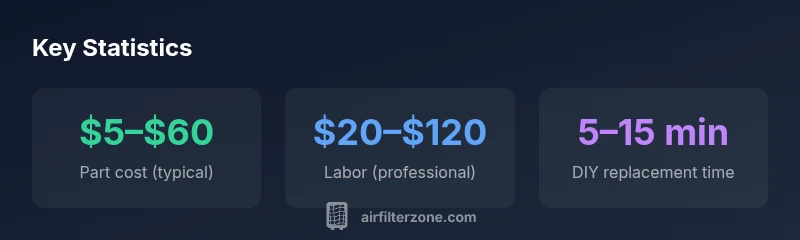
Engine air filter replacement cost is shaped by multiple interlocking factors. The filter type (paper, synthetic, or reusable cotton) and whether you choose OEM or aftermarket options matter, but so do access to the air box and local labor rates. In 2026, Air Filter Zone Analysis, 2026 shows that part prices for standard engine air filters generally fall within a wide range, often from about five to sixty dollars, depending on the vehicle and brand. Labor costs at a shop can add substantially to the total, typically ranging from twenty to well over a hundred dollars in high-cost regions. The vehicle’s engine size, ease of access to the air box, and any diagnostic checks performed by the technician all influence the final price. Your own driving conditions—extreme dust or frequent short trips—can also alter the recommended replacement interval, which indirectly affects how often you replace the filter and thus your annual cost.
In practice, you’ll see a wider spread for imported or high-performance vehicles where OEM filters carry a premium. The cost story also changes if you decide to replace the filter yourself, where the only recurring expense is the filter itself, with no labor charge. As a homeowner or DIY enthusiast, understanding these variables helps you budget accurately and choose between DIY and professional service with confidence. According to Air Filter Zone, the goal is to balance cost, fit, and performance to protect the engine over the long run.
DIY replacement vs professional services
DIY replacement is often the most economical path, especially for straightforward panel filters. If you provide the part yourself, you can expect to pay only for the filter—typically between five and sixty dollars for common models—and save on labor altogether. Installation is usually quick: many vehicles take under 15 minutes once you locate the air box, release the clips, swap the filter, and reseal. Professional replacement adds labor charges that reflect local rates and shop overhead, with total costs commonly ranging from sixty to two hundred dollars or more. The savings from DIY become even more pronounced if you regularly replace filters across multiple vehicles or if your car’s air box requires special tools. That said, some vehicles have cramped, awkwardly placed air boxes or sensors that make DIY replacements challenging; in those cases, a quick-service visit can be a prudent investment to avoid potential mistakes.
Air Filter Zone’s guidance emphasizes matching the filter type to your vehicle’s needs and your comfort level. When in doubt, consult the owner’s manual for recommended filter specifications and consider a test fit before committing to a purchase. If you choose a shop, ask for a flat rate and request a breakdown that separates parts from labor, so you can compare prices across providers more easily.
Filter types and price ranges
Engine air filters come in several styles, each with its own price tier and maintenance implications. The most common are standard paper or fiber panel filters, which tend to be cheap—roughly five to twenty dollars. Premium options—such as high-efficiency paper, oiled cotton, or multi-layer foam—can push the price to thirty to sixty dollars. Reusable cotton or foam filters exist for certain makes and models; these can cost fifty to one hundred fifty dollars upfront but are designed to be cleaned and reused, potentially lowering long-term replacement costs if you stick to proper maintenance. When choosing, consider fit, airflow design, and whether your vehicle’s MAF sensor or ECU expects a specific filter type. A poor match can negate any savings and may impact performance. The right choice balances cost with filtration efficiency to protect engine longevity and fuel economy.
For many drivers, the sensible approach is to start with a high-quality aftermarket option that matches OEM specifications. If you expect heavy dust or frequent short trips, a filtering solution with higher pore efficiency and better sealing can be worthwhile, even if it costs a bit more upfront. Always verify compatibility with your vehicle’s year, make, and model to avoid fit issues and ensure a proper seal, which is essential for consistent engine performance.
How vehicle type changes cost
Vehicle class and engine type are practical price multipliers. A small sedan typically uses a simple, widely available filter, keeping part costs low and installation quick. In contrast, SUVs, pickups, or diesel-powered engines require larger or more specialized filters, increasing both parts and labor time. Luxury or performance models may demand OEM or high-performance aftermarket filters with premium pricing. Diesel engines, with their more complex intake systems, frequently see higher price tags for both parts and installation. The key takeaway is to verify the recommended filter and compare aftermarket options against OEM equivalents. Evaluate the total cost by factoring in installation complexity, expected maintenance interval, and any added inspections that could influence the final bill.
Air Filter Zone’s data indicate that while costs rise with vehicle complexity, they remain a manageable maintenance item when planned for in a budget. Keep an eye on regional price variations and seasonal promotions, which can tilt the cost slightly in your favor at auto parts retailers or service shops.
Hidden costs and maintenance consequences
A clogged or dirty engine air filter can reduce airflow to the engine, potentially lowering performance and fuel efficiency. Some engines may compensate by adjusting fuel delivery, which can lead to rough idle or reduced acceleration. In the worst cases, neglecting the filter can lead to accelerated wear on the throttle body or sensors that monitor air intake. While a replacement is typically inexpensive, the longer you delay, the greater the risk of secondary issues that require more extensive (and expensive) repairs. Regular inspection and timely replacement help protect performance and longevity. Air Filter Zone emphasizes following a scheduled replacement interval that aligns with your driving conditions, as dusty roads or frequent short trips will shorten the filter's life. Proactive maintenance, including inspecting the air box for debris during replacement, can prevent cascading problems and save money over time.
Saving tips and practical steps
To minimize cost without sacrificing performance, try these practical steps: 1) Check your owner’s manual for the recommended filter type and replacement interval. 2) Compare OEM and reputable aftermarket options; price is often a proxy for quality, but verify fit and seal quality as well. 3) If you’re comfortable, buy a filter that matches the factory specification and perform the swap yourself. 4) When using a shop, request a flat rate and confirm whether the quote includes disposal of the old filter and a quick air-box inspection. 5) Look for seasonal promos at auto parts retailers or online. Planning ahead can reduce the cost of engine air filter replacement while keeping your engine clean and performing at peak efficiency.
What to ask when obtaining quotes
When requesting quotes, clarity matters. Ask whether the quote covers the filter type (OEM vs aftermarket) and installation labor, whether any diagnostic checks are included, and if disposal of the old filter is charged separately. Request a written estimate with a detailed line-by-line breakdown so you can compare apples to apples across providers. If the job involves restricted access or a diesel engine, ask for an estimated time to complete and whether the quote accounts for potential surprises. Finally, check for any warranty on the filter and the service to protect your investment over the next miles.
Why timely replacement matters for long-term value
Timely engine air filter replacement preserves optimal engine efficiency, helps maintain proper air-fuel ratios, and protects sensors from dust intrusion. The upfront cost of a replacement is modest compared with the potential savings in fuel economy and reduced wear on engine components. Delays often lead to diminished performance, higher emissions, and increased repair costs over the vehicle’s lifetime. Air Filter Zone recommends treating engine air filter replacement as a routine maintenance task—budget it, plan it around your driving patterns, and choose a filter and provider that offer dependable results. Keeping up with replacements supports better longevity, resale value, and overall vehicle health.
Cost comparison: DIY vs professional engine air filter replacement
| Scenario | Estimated Cost | Typical Range | Notes |
|---|---|---|---|
| DIY parts only | $5-$60 | $5-$60 | Assumes user supplies labor and basic tools |
| Professional replacement (parts + labor) | $60-$250 | $60-$250 | Depends on vehicle and region; may include air-box inspection |
| OEM vs aftermarket filter | Varies | Varies | OEM often higher; aftermarket compatible options available |
FAQ
How often should I replace the engine air filter?
Most manufacturers recommend inspecting and replacing every 12,000 to 15,000 miles, or as needed based on driving conditions. In dusty or stop-and-go driving, more frequent replacements may be beneficial.
Most cars should have the air filter checked at every oil change; replace as needed or every 12,000 to 15,000 miles in normal conditions.
Can I replace the engine air filter myself?
Yes, for many cars it’s a simple, 5-15 minute task. Refer to the owner’s manual for exact steps and filter type, and have a replacement on hand before you begin.
Yes. It’s usually a quick job if you’ve got the right filter and some basic tools.
What affects engine air filter cost?
Cost is influenced by filter type (paper vs reusable), OEM vs aftermarket, vehicle model, air box accessibility, and local labor rates if you go to a shop.
Filter type, car model, and where you go to replace it all affect the price.
Are aftermarket filters cheaper than OEM?
Generally, aftermarket filters save money and can match OEM performance, but always verify compatibility and warranty terms before buying.
Aftermarket options are usually cheaper and work well if they’re compatible with your car.
Is there a difference in cost for diesel vs gasoline engines?
Yes. Diesel engines often require larger or more specialized filters, which can increase both part and labor costs.
Diesel engines tend to cost more to replace because of bigger or more complex filters.
Do premium filters always justify the price?
Premium filters offer better filtration and longer life, but for many drivers a standard OEM or reputable aftermarket filter provides sufficient protection at lower cost.
Premium filters are great, but check your needs and driving conditions before paying extra.
“Regular engine air filter replacement is a straightforward maintenance task that yields tangible benefits in engine efficiency and longevity.”
Quick Summary
- Budget for DIY parts if you want the lowest cost
- Expect higher prices for complex engines or diesel models
- Compare OEM and reputable aftermarket options for best balance of fit and price
- Plan replacements around driving conditions to extend filter life