Car Cabin Air Filter Replacement Cost: A 2026 Guide
Explore typical costs for replacing a car cabin air filter, including parts, labor, DIY options, and money-saving tips. Learn with Air Filter Zone to estimate expenses and choose the best option for your vehicle.


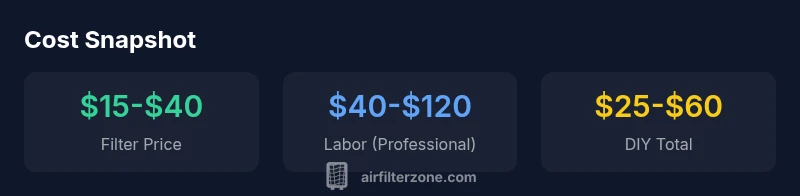
The car cabin air filter replacement cost typically ranges from about $25 to $120, depending on filter type, vehicle model, and whether you DIY or hire a shop. Parts prices are a major factor, while labor charges add when you opt for professional service. This quick guide helps you estimate costs for 2026 and plan accordingly.
Why the car cabin air filter replacement cost matters for your wallet and air quality
Understanding the car cabin air filter replacement cost helps you plan for routine maintenance and protect occupants from dust, pollen, and pollutants. The car cabin air filter replacement cost varies widely, typically ranging from budget-friendly DIY purchases to professional service, and is influenced by filter type, vehicle design, and regional labor rates. According to Air Filter Zone analysis, the overall cost is composed of two major parts: the filter price and the labor charge if you use a shop. A simple, generic paper filter is cheapest; activated carbon and true HEPA-grade options cost more. For many drivers, the cost surprise often comes from regional price differences, retailer markups, and the availability of vehicle-specific filters. This section lays out what drives costs, how to compare options, and how to stretch your budget without compromising air quality.
In practice, the cost breakdown looks like this for most vehicles: basic paper filters priced affordably, mid-range activated carbon filters offering improved odor control, and high-performance carbon or HEPA-enhanced filters for sensitive environments. The 2026 landscape shows continued growth in aftermarket filter options, including cross-compatibility across many makes and models. Air quality considerations, climate, and driving environments influence how long you can go between replacements, which in turn affects annualized costs. A practical mindset is to treat the filter as a wear item—the lower you choose, the more often you may replace it, but the upfront cost is reduced.
What factors drive the price
Several variables determine the final cabin air filter replacement cost. The most influential are filter type and labor charges. Premium carbon-based filters, anti-odor or HEPA-grade variants, can cost significantly more than standard synthetic paper options. Vehicle design also matters; some models require more complex access routes to reach the filter housing, which increases labor time. Regional labor rates differ, so a replacement in a high-cost city can push total costs higher. Finally, whether you purchase and install the filter yourself or hire a professional accounts for a large portion of the variance. If you’re shopping online, factor in shipping if the retailer isn’t close by.
Before you buy, confirm the exact part number for your vehicle and review compatibility notes, as some cabin air filters are model-specific rather than universal. If you’re unsure, check your owner’s manual or a reputable parts retailer. In 2026, the market has shifted toward more universal cross-compatibility, which lowers the price barrier for DIY replacements.
DIY replacement: cost-saving steps
DIY replacements offer the most direct way to control costs, especially if your vehicle uses a standard panel-filter design. The main expense is the filter itself, but you save on labor—often the largest portion of the price when choosing professional service. Here’s a practical, step-by-step approach to save money:
- Identify the correct filter part number for your vehicle.
- Compare prices across multiple retailers, including OEM and aftermarket options.
- Consider multi-pack deals when you replace more than one year’s worth of filters for multiple vehicles.
- Gather basic tools and follow a reputable online guide or the vehicle’s service manual.
- Recycle the old filter properly and dispose of any packaging costs in your budget.
With careful shopping, a DIY replacement can typically keep total costs well under professional service, while still achieving the same protective benefits for your HVAC system.
Filter types and their price ranges
Cabin air filters come in several families that influence price and performance. Standard paper filters are the most economical, usually delivering acceptable filtration for common driving conditions. Activated carbon filters excel at odor control and can mitigate pollutants in urban or rural environments with poor air quality, but they come at a higher price. HEPA-grade or anti-allergen variants provide the strongest filtration but are the most expensive and are typically recommended for households sensitive to allergens. Across these categories, price differences often reflect the level of filtration media, odor control chemistry, and manufacturing quality. When budgeting, plan for the highest-cost option your vehicle supports if you’re pursuing maximum air quality, but know that a mid-range filter often represents a strong value for everyday driving.
How to estimate costs for your vehicle
Estimating costs starts with your specific car model. Steps to estimate:
- Locate your owner’s manual or service booklet to confirm the exact cabin air filter part number.
- Check reputable parts retailers for price ranges—OEM parts may cost more but guaranteed compatibility.
- If you’re unsure about labor, request a quoted total from local shops and compare to a DIY price estimate (filter price plus tools).
- Consider regional factors such as climate and air quality; you may want to lean toward more robust filters in areas with high pollen or pollution.
- Keep an eye out for seasonal sales or online bundles that lower the per-filter price.
Signs you need replacement and cost considerations
Common signals that you should replace the cabin air filter include reduced airflow from the vents, unusual odors when the HVAC system runs, and visible dust or debris around the filter housing. If you notice restricted airflow, it may indicate a clogged filter, which can subtly affect energy usage and climate control efficiency. Cost considerations should factor in the long-term benefits of improved airflow, odor control, and reduced strain on the blower motor. In many cases, the cost of a replacement is small compared to the potential energy savings and maintenance benefits over the life of the vehicle.
Cost scenarios for cabin air filter replacements
| Scenario | DIY Cost Range | Professional Cost Range | Notes |
|---|---|---|---|
| Basic paper filter replacement | $25-$60 | $40-$100 | Most economical option |
| Mid-range activated carbon | $35-$80 | $60-$120 | Better odor control |
| Premium carbon/HEPA | $60-$120 | $90-$150 | Best filtration, higher cost |
| Multiple vehicles (DIY) | $60-$120 | $0-$0 | Spread cost across vehicles |
FAQ
What is the typical car cabin air filter replacement cost?
Costs vary by vehicle and filter type, but most drivers see a range of roughly $25 to $120 for the total replacement. Labor, if any, and filter quality are the main drivers of the spread. Always confirm part numbers and get a quote before starting.
Most people pay between twenty-five and one hundred twenty dollars for a cabin filter replacement, depending on the filter type and whether you DIY or go to a shop.
Is it cheaper to replace the cabin air filter myself?
Yes, DIY replacement typically costs less because you avoid labor charges. The total savings depend on the filter price and your ability to access the filter housing. Ensure you have the correct part number and follow a trusted guide.
DIY usually saves on labor, but you still need the right filter and a quick, safe installation.
How often should I replace the cabin air filter?
Most manufacturers recommend replacing every 12,000 to 20,000 miles, or roughly once a year, depending on driving conditions. In high-pollen or dusty environments, more frequent changes may be beneficial. Always check your manual for model-specific guidance.
Check your manual for the exact interval, but many cars need a change once a year or so.
Do premium carbon or HEPA filters offer enough value for the cost?
Premium filters provide better odor control and allergen filtration, which matters in urban areas or households with sensitivities. If air quality is a major concern, the extra cost can be justified. In mild conditions, a mid-range filter often delivers good value.
Premium filters help with odors and allergens, but they cost more and may not be necessary for everyone.
Will replacing the cabin filter improve HVAC performance?
A new filter can improve airflow, which helps the HVAC system maintain desired cabin temperature more efficiently. The impact on overall performance depends on how clogged the old filter was and the design of your vehicle's HVAC system.
A fresh filter can improve airflow and HVAC efficiency, especially if the old one was clogged.
“"A clear understanding of the cost drivers helps homeowners plan maintenance without surprises. DIY replacements can dramatically reduce total cost when the correct part is chosen and installed carefully."”
Quick Summary
- Estimate both parts: filter price and labor
- DIY replacements save on labor but require proper part numbers
- Higher-grade filters cost more but improve odor control and filtration
- Compare several retailers to find the best price
- Regular replacement supports HVAC efficiency and air quality