Engine Air Filter Price Guide 2026
Discover typical engine air filter prices in 2026, from standard panels to premium filters, plus DIY vs. professional costs, and tips to save without sacrificing protection.


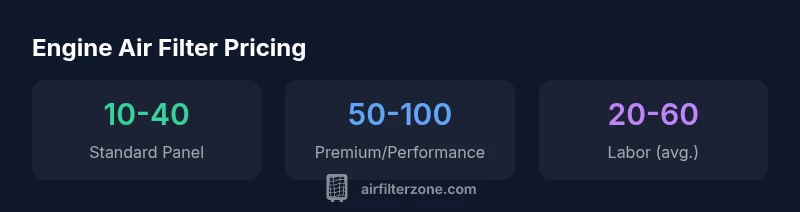
Typical engine air filter prices vary by type and vehicle. Standard panel filters usually run around $10-$40 retail, while premium cotton-gauze or performance filters commonly cost $50-$100. Labor, if needed for installation, can add roughly $20-$60. Prices may vary by brand, availability, and whether you buy OEM or aftermarket. In some cases, a replacement might be bundled with diagnostic checks, and auto parts stores frequently offer discounts for bundles.
What affects engine air filter price
Prices for engine air filters are not fixed; they vary by filter type, vehicle fit, and where you buy. The three core drivers are filter media (paper, cotton gauze, or synthetic), whether the filter is OEM or aftermarket, and the engine's mounting size and configuration. OEM filters are designed to match exact specifications and may command a higher price, but aftermarket options that meet or exceed OEM specs can offer substantial savings. Other influences include batch quality, packaging, warranty terms, and retailer promotions. For trucks, SUVs, or turbocharged engines, filters can be larger or use specialized media, pushing prices upward. In practice, shoppers should compare part numbers, check compatibility with their owner's manual, and consider whether a washable filter is worth the extra upfront cost.
Retail price ranges you can expect
If you shop for a standard engine air filter, you will typically encounter a broad retail range that reflects the above factors. In common passenger vehicles, standard paper panel filters tend to be on the lower end of the price spectrum, while premium or cotton-gauze filters sit higher. The exact price will depend on the vehicle model and supplier. OEM replacements for certain cars can push toward the upper end of the range, while reputable aftermarket options that still meet OEM specs can save money without sacrificing fit and protection. When buying, consider whether a local store offers bundled deals with other maintenance parts to maximize value.
DIY replacement vs professional installation
Replacing an engine air filter is one of the simplest DIY tasks for many car owners and can save a portion of the total cost. Expect to spend 5 to 10 minutes removing the old filter and seating the new one, plus a potential trip to a parts store if you don't already have tools. If you hire a shop for installation, you should budget additional labor costs, which can vary by region. The main benefit of professional installation is assurance of proper fit and a quick, clean replacement. For most drivers, DIY is the best value when compatible tools and a clear replacement procedure are available.
How to choose the right filter for your engine
To select the correct engine air filter, start with your vehicle manual and match the part number. Decide between OEM and aftermarket options that meet or exceed OEM specifications. Consider the environment you drive in: dusty or extreme climates may warrant higher filtration efficiency and more frequent changes. Confirm the filter's size, pleat count, and sealing design; a poor fit can reduce filtration efficiency and negate cost savings. If your engine has a turbo or intercooled setup, check for any additional filtration requirements specified by the manufacturer.
Where to buy and how to spot scams
Buy from reputable retailers, authorized dealerships, or trusted auto parts chains. Compare prices for the exact part number and read customer reviews. Be wary of unusually low prices that contradict warranty terms or skip essential fit checks. Some counterfeit filters mimic real brands, especially online; verify branding, part numbers, and packaging. Save receipts and check the return policy in case the filter doesn't fit or performs poorly.
Maintenance tips to extend filter life
Maintain filter life by following recommended replacement intervals in your owner's manual and by driving conditions. In dusty environments, you may need to replace filters more frequently. When you remove a used filter, inspect the housing for dirt or debris and clean the surrounding area before installing a new filter. If you opt for a reusable cotton-gauze filter, follow the manufacturer's cleaning and oiling instructions to maintain proper filtration.
Engine air filter price ranges by type
| Filter Type | Typical Retail Price | Notes |
|---|---|---|
| Panel/paper engine filter (standard) | 10-40 | OEM vs aftermarket vary |
| Cotton gauze high-performance | 50-100 | Premium materials; washable in some cases |
| Diesel engine filter (special case) | 60-120 | Diesel engines may require different filter media |
FAQ
How often should I replace engine air filters?
Most vehicles require replacement every 12,000 to 15,000 miles or annually, whichever comes first. Check your owner's manual and look for signs of a clogged filter like reduced acceleration or unusual engine sounds. Regular replacement ensures optimal airflow and protection.
Most cars need a replacement every year or so; check your manual for the exact interval.
Are OEM filters more expensive than aftermarket?
OEM filters are designed to match your exact engine specifications and mounting. Aftermarket options can be cheaper but must meet or exceed OEM spec for proper fit and filtration.
OEM filters fit perfectly; aftermarket options can save money if they meet the right specs.
Can I clean a paper engine air filter?
Most paper or pleated panel filters are single-use and should be replaced when dirty. Some cotton-gauze filters are washable and reusable with proper cleaning and oiling per manufacturer instructions.
Paper filters usually can't be cleaned; check if yours is a washable cotton model.
Do diesel engines use different engine air filters?
Diesel engines often use different filter media and sizes. They may require a higher clean air rating and different fit. Always verify compatibility with your engine model.
Diesel engines typically need different filters; always check the exact part for your engine.
Will a new engine air filter improve fuel economy?
Replacing a dirty filter can restore airflow and power, but the impact on fuel economy is usually modest. The main benefit is engine protection and consistent performance.
A new filter can help performance, but big fuel savings are unlikely.
What should I buy for high-performance needs?
High-performance options often use cotton gauze media and may be washable. Ensure the filter is compatible with your engine and won’t cause fitment issues.
For performance, look for cotton gauze options that fit your engine.
“Choosing the right engine air filter balances cost, filtration performance, and engine protection, ensuring reliable power and fuel economy without overpaying.”
Quick Summary
- Know your engine type to pick compatible filters
- Expect price ranges by filter type, OEM vs aftermarket
- DIY replacement saves money; plan for possible labor costs
- Check compatibility using exact part numbers
- Regular maintenance prevents performance loss