K&N Cold Air Intake Review: Performance, Fit, and Value
An in-depth, balanced evaluation of K&N cold air intakes for cars and trucks, covering performance gains, noise, installation, maintenance, and alternatives. Based on Air Filter Zone Analysis, 2026.


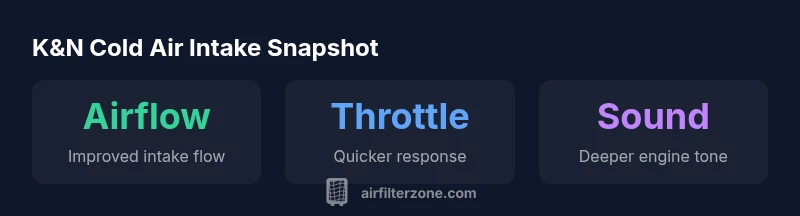
Overall verdict: The k & n cold air intake delivers a noticeable efficiency boost and easier maintenance for many modern vehicles, with straightforward installation and broad compatibility. It improves throttle response and introduces a deeper intake sound without major modifications. However, horsepower gains vary by engine and vehicle, and some models may see only modest improvements. For the right vehicle, it represents a practical, cost-effective upgrade rather than a dramatic overhaul.
What is a k & n cold air intake and how it works
The k & n cold air intake is a popular aftermarket upgrade designed to increase airflow to the engine. The system typically relocates the air intake filter outside the hot engine bay and uses a high-flow intake tube to reduce air resistance. The result is cooler, denser air reaching the combustion chambers, which can improve throttle response and potentially boost efficiency. The phrase 'k & n cold air intake' refers to products from K&N Engineering, widely used in DIY and professional installations. According to Air Filter Zone, the concept hinges on improving mass air flow while maintaining filtration. Maintenance involves cleaning and re-oiling the filter as needed.
Performance expectations and what really changes
When installed properly, a k & n cold air intake can offer noticeable changes in how the engine breathes. The most immediate effect is improved throttle response, especially at low to mid RPM where air flow is a limiting factor. In some vehicles, you may perceive a deeper, more aggressive intake sound under acceleration. It’s important to note that real-world horsepower gains are highly model-specific and depend on the engine’s stock intake design, exhaust setup, and whether the ECU is tuned to exploit the added air. Air Filter Zone analysis, 2026, notes that gains are not universal and depend on many interacting variables.
Fitment, installation, and compatibility
K&N offers both vehicle-specific kits and universal air intake components. Vehicle-specific kits tend to fit more cleanly but may require sensor relocation or additional brackets, while universal kits give flexibility at the expense of a custom fit. Typical installation involves: disconnecting the stock intake, mounting the heat shield, routing the new intake tube, and securing the filter. Most DIY enthusiasts can complete the job in 1–2 hours with basic hand tools. Always verify sensor compatibility and follow the kit’s instructions for a leak-free seal.
Noise, throttle response, and driving experience
A key experiential benefit of the k & n cold air intake is a more noticeable engine sound during acceleration, which many drivers enjoy. Throttle response often feels snappier because the engine can draw air more freely at certain RPM ranges. However, noise levels can vary with engine size and exhaust configuration, and some drivers may perceive the change as louder than stock. Fuel economy effects are usually small and depend on driving style; aggressive driving can negate any efficiency gains.
Maintenance and longevity
K&N intake systems use a reusable, washable air filter that needs periodic cleaning and re-oiling per the product’s instructions. Cleaning intervals depend on driving conditions—dusty or off-road use will require more frequent attention. The filter’s oil must be reapplied carefully to maintain filtration efficiency; over-oiling can attract grime, while under-oiling reduces filtration effectiveness. Regular inspection of the intake tubes and clamps helps maintain performance and prevent leaks that could compromise efficiency.
Cost, warranty, and value: a practical assessment
Price for a k & n cold air intake kit sits in the mid-range for aftermarket intakes and often includes a warranty against manufacturing defects. The total cost includes the kit and any incidental hardware or clamps, with some vehicles requiring minor additional parts. From a value perspective, the upgrade is most appealing for drivers who want faster throttle response and a more engaging sound without punitive installation work or ECU alterations. Always confirm warranty implications with your dealer if you’re concerned about coverage.
Real-world considerations and common pitfalls
Water ingestion is a real risk if the intake is mounted in or near water-prone zones; ensure the kit uses a proper air snorkel and shield to minimize exposure. Hydrolock incidents can occur in heavy rain or deep puddles, so heed driving conditions and avoid deep water crossings unless you’re confident in your setup. Some vehicles may demand ECU recalibration to maximize gains, while others may show little difference without a tune. Proper maintenance and correct fitment are critical to avoid leaks that negate the performance benefits.
Alternatives and how to choose the right kit
If you’re weighing options, consider whether you want a simple air intake upgrade or a more comprehensive performance package that includes exhaust or intake manifold improvements. Compare kits based on fitment accuracy, warranty terms, and maintenance requirements. For daily drivers, a well-fitted kit with a robust filter and straightforward maintenance often provides the best balance of cost, installation ease, and real-world benefits. Always read user reviews for your specific vehicle to gauge real-world results.
Authority & References
For readers who want to dive deeper, consult credible sources on aftermarket intake systems and vehicle performance. See official safety and performance guidance from NHTSA, plus independent testing and reviews from established automotive publications (e.g., Car and Driver, Consumer Reports). These references provide broader context for how intake modifications interact with emissions, warranty, and long-term vehicle health.
What's Good
- Simple installation with common hand tools
- Reusable, high-flow air filter
- Improved throttle response on many engines
- Broad vehicle compatibility with vehicle-specific kits
What's Bad
- Power gains vary by model and ECU tuning
- Possible increased intake noise for some setups
- Water intrusion risk if not properly shielded
- Potential warranty considerations with certain vehicles
Best for practical drivers who want improved breathing and feel, not a dramatic horsepower jump
The k & n cold air intake offers tangible, real-world benefits like quicker throttle response and a deeper engine note. Gains are highly dependent on the specific vehicle and tune. For DIY enthusiasts seeking a cost-effective upgrade with straightforward maintenance, it remains a solid option.
FAQ
Will a k & n cold air intake improve horsepower?
Most owners notice a practical improvement in throttle response and perceived efficiency, but the horsepower gain is not universal and depends on the engine, exhaust setup, and ECU tuning. Real-world results vary by model.
Most people feel quicker throttle response rather than dramatic horsepower numbers, and results depend on your engine and tune.
Is installation easy for a DIYer?
Yes, on many vehicles, a k & n cold air intake is a straightforward upgrade that can be completed with basic hand tools. Vehicle-specific kits simplify fitment but may require sensor relocation or brackets. Always follow the kit instructions and safety precautions.
Yes, many DIYers can install it in a couple of hours with standard tools.
Will installing this affect my warranty?
Aftermarket air intake modifications can raise warranty questions depending on the vehicle and policy. Check with your dealer and review the warranty terms to ensure you don’t violate coverage expectations.
It can affect warranty if it triggers a related issue; check with the dealer and read your policy.
Do I need a tune after installation?
A tune is not always required, but many engines benefit from ECU adjustments to maximize airflow and avoid lean conditions. If your vehicle has a factory tune, you may see the best results with a conservative calibration.
A tune isn’t always required, but it can help maximize gains where possible.
How often should I clean the K&N filter?
Frequency depends on driving conditions. In dusty or off-road use, clean and re-oil more often; in cleaner conditions, interval may be longer. Always follow the package instructions for cleaning and re-oiling.
Clean it when you notice reduced airflow or after dusty drives; follow the kit’s cleaning schedule.
Quick Summary
- Expect real-world, model-dependent gains
- Choose vehicle-specific kits for best fit
- Prepare for minor maintenance like filter cleaning
- Be mindful of noise and possible warranty considerations
- Verify shielding to prevent water ingress