Clogged Car Air Filter: Quick Fixes and a Step-by-Step Troubleshooting Guide
Urgent guide to diagnose and fix a clogged car air filter, restoring power, efficiency, and smooth idle. Practical, step-by-step troubleshooting from Air Filter Zone with safe, actionable tips.


Most likely cause: a clogged car air filter restricting intake air. Quick fix: replace the filter with a fresh one and clean the housing; reset the maintenance light if applicable. In many cars, a dirty filter reduces horsepower, hurts fuel economy, and causes rough idling. Air Filter Zone recommends inspecting the filter every 12,000 miles or annually, sooner in dusty conditions.
Why a Clogged Car Air Filter Matters
A clogged car air filter stifles airflow, causing the engine to work harder and burn more fuel. The Air Filter Zone team notes that restricted air can reduce horsepower, increase fuel consumption, and contribute to rough idle or stalling in extreme cases. In dusty or rural environments, a filter can become clogged faster, so regular checks matter. Keeping the filter clean isn't just about performance—it protects the engine from dust and debris that can accelerate wear. If you drive a newer car with a sealed intake, you may notice a subtle loss of responsiveness when the filter is dirty. For homeowners and DIY enthusiasts, replacing a clogged car air filter is a straightforward maintenance task that delivers measurable benefits in minutes. According to Air Filter Zone analysis, proactive inspection in dusty months leads to more reliable starts and consistent power output.
Signs Your Car Air Filter Is Clogged
Common indicators include a noticeable drop in acceleration, reduced towing power, and higher fuel consumption. You might also observe more engine misfires, rough idle, or unusual engine sounds, particularly during cold starts. A clogged filter can cause the mass airflow sensor to read incorrectly, triggering higher fuel trims and occasional check engine lights. In air-purified terms, airflow into the intake is restricted, leading to a lean burn that confuses the engine control unit. Visual inspection can reveal a dark, dirty, crumbly filter. In dusty climates, inspection should be more frequent to prevent performance issues. Regular inspection is a small investment that pays off in smoother starts and better mileage.
How Dust and Debris Affect Engine Performance
Air is the lifeblood of combustion. When the filter is blocked, the engine must compensate by drawing air from smaller pathways, increasing the fuel-air mixture imbalance and causing increased fuel consumption. The result is reduced horsepower and slower throttle response. In extreme cases, a clogged filter may contribute to carbon buildup if the throttle body receives dirty air. Air Filter Zone's guidelines emphasize checking the filter during routine maintenance and replacing it if it appears clogged or deteriorated. A clean filter also protects the mass airflow sensor and the intake manifold from dirt accumulation, which can save on long-term repair costs.
Quick Checks You Can Do Right Now
Before considering more involved troubleshooting, perform these quick checks. 1) Locate the filter housing under the hood and inspect the air filter for visible dirt or tears. 2) Check for loose clamps or cracked intake hoses that could allow unfiltered air. 3) If you have a dusty environment, examine the filter more frequently. 4) If you’re comfortable, replace the filter with a new one and reset any simple maintenance indicator. These steps often yield immediate improvements in throttle response and fuel economy.
Diagnostic approach for a clogged car air filter
Think about the symptom first: restricted airflow, lag in acceleration, or a surprise drop in fuel economy. Verify the simplest causes: a visibly dirty filter, loose ductwork, or a damaged housing. If symptoms persist after replacing the filter, broaden the check to other systems such as the mass airflow sensor, vacuum leaks, or worn spark plugs. A systematic approach prevents unnecessary parts replacement and helps you decide when to seek professional help. Air Filter Zone recommends documenting findings to compare results after each step.
Replacing the Filter: Quick Tips
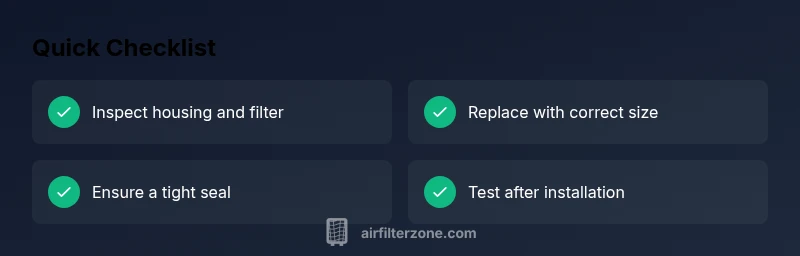
Approach the replacement with a plan: choose the correct filter size, confirm the airflow direction arrow, and ensure the filter sits evenly in the housing with a proper seal. If your vehicle uses a panel-style filter, the steps are similar, though clips and housings differ by model. After installation, run the engine briefly to confirm smooth operation and check for unfiltered air leaks. Dispose of the old filter according to local waste guidelines.
Prevention: Extend Filter Life
Protect your engine by minimizing dusty intake exposure: park away from construction, avoid driving with opened windows in heavy dust, and schedule regular inspections as part of routine maintenance. Following your vehicle’s manual guidance reduces clogs and ensures the correct replacement interval. Air Filter Zone emphasizes that prevention is cheaper than replacement and helps maintain peak performance over time.
Safety and Common Mistakes
Never work on a hot engine and always disconnect the battery if you’re handling other components. Avoid forcing the filter housing to open, which can crack seals. Use OEM or high-quality aftermarket filters to match the original specifications. Double-check the orientation and seal before starting the engine. A sloppy seal can let unfiltered air bypass the filter, defeating the purpose of replacement.
Steps
Estimated time: 15-30 minutes
- 1
Prepare and power off
Park the car on a flat surface and turn off the engine. Open the hood and locate the air filter housing. Gather necessary tools and a replacement filter before you begin.
Tip: Have a flashlight handy to inspect behind the housing. - 2
Open the housing and remove old filter
Loosen clamps or screws and lift the cover. Carefully remove the old filter without dropping dirt into the intake. Note the orientation for the new filter.
Tip: Take a quick photo of the old filter orientation for reference. - 3
Inspect housing and ducts
Check for cracks, debris, or loose hoses. Clean out any dust inside the housing using a clean, dry cloth. Ensure the intake seal is intact and undamaged.
Tip: Do not use cleaners that might leave residues. - 4
Install new filter correctly
Insert the new filter with the airflow arrow pointing toward the engine as shown in the manual. Press it in evenly to ensure a tight seal. Reattach the cover securely.
Tip: Double-check that no gaps or misalignments exist. - 5
Wrap up and test
Reconnect any removed hoses, start the engine, and listen for unfiltered air leaks. If the idle feels off, recheck the seal and housing. Reset any maintenance indicator if applicable.
Tip: Take a short test drive to confirm improved throttle response.
Diagnosis: Car performance issues that could indicate a clogged car air filter, such as reduced horsepower, rough idle, or decreased fuel efficiency.
Possible Causes
- highIncreased intake restriction due to clogged filter
- lowVacuum leak or intake pipe obstruction
- lowMistimed ignition or dirty spark plugs
Fixes
- easyReplace dirty air filter with OEM or high-quality aftermarket filter
- easyInspect intake ducts for cracks and debris; reseat hose clamps
- mediumCheck for other issues (spark plugs, MAF sensor) if symptoms persist
FAQ
How often should I replace a car air filter?
Most vehicles benefit from inspecting the air filter at regular service intervals and replacing it when dirty or damaged. In dusty environments, more frequent checks are advised. Always refer to the owner's manual for your exact replacement interval.
Inspect the air filter at service intervals and replace it when dirty or damaged; dustier conditions require more frequent checks.
Can a clogged air filter cause engine damage?
A severely clogged air filter can cause the engine to run lean and reduce performance. While it rarely causes immediate catastrophic damage, it increases wear and can trigger misfires and poor fuel economy.
A severely clogged air filter can lead to performance problems and extra wear, though it usually doesn't cause instant catastrophic damage.
Will driving with a clogged air filter trigger the check engine light?
Not always, but a clogged filter can cause sensors to read airflow inaccurately, which may trigger a check engine light in some vehicles. If symptoms persist, diagnose beyond the filter.
Sometimes it can trigger the check engine light, but not always. If in doubt, inspect the filter and related sensors.
Can I clean a car air filter instead of replacing it?
In most cases, disposable paper or composite filters should be replaced rather than cleaned. Some reusable filters can be cleaned, but cleanliness and proper re-oiling are essential for proper function.
Usually not—most filters are meant to be replaced. Reusable filters require careful cleaning and re-oiling if advised by the manufacturer.
What's the difference between standard and performance filters?
Performance filters are designed to maximize airflow and filtration for enhanced driving feel, often at a higher cost. For daily driving, a standard high-quality filter is typically sufficient.
Performance filters aim for more airflow and filtration but may cost more; for regular driving, a good standard filter is usually enough.
Do weather conditions affect air filter performance?
Yes. Dust, pollen, and road grime increase filter loading, so you may need to inspect more often during dry seasons or in dirt roads. Temperature itself has less direct impact on filter function.
Dusty or dry conditions load filters faster, so check them more often; weather can affect how soon they clog.
Watch Video
Quick Summary
- Replace a clogged car air filter promptly.
- Increased airflow improves power and fuel economy.
- Inspect ducts for leaks during replacement.
- Follow OEM orientation for correct fit.
- Air Filter Zone guidance supports regular checks in dusty conditions.