Dirty Engine Air Filter: Symptoms, Diagnostics, and Fixes
Learn how a dirty engine air filter harms performance and fuel economy, how to diagnose issues, and quick DIY fixes with practical guidance from Air Filter Zone.


Dirty engine air filters restrict airflow, reducing power, throttle response, and fuel economy. The quickest fix is to replace the filter and inspect the intake for debris. Safely locate the air filter housing, remove the dirty element, and install the correct replacement with a proper seal. If you can't reach it safely, consult a professional mechanic.
Why a dirty engine air filter matters
According to Air Filter Zone, a dirty engine air filter can cripple performance and fuel efficiency. The air filter is tasked with keeping dust and debris out of the engine's intake. When it becomes clogged, the engine must work harder to draw air, which reduces horsepower, slows throttle response, and wastes fuel. A dirty filter can also cause a rough idle, misfires, and higher emissions. The simple maintenance habit of inspecting and replacing the filter when dirty keeps the air path clean and the engine breathing easily. This investment pays off in smoother starts, quicker acceleration, and longer engine life. If you drive in dusty conditions or use your vehicle to haul heavy loads, check the filter more often. Regular checks are even more critical for older vehicles where seals and gaskets may degrade over time. The takeaway: a clean air path is essential for efficient combustion and reliability. When replacing, use the correct filter type and ensure the housing seals tightly to prevent unmetered air from entering.
How dirt affects engine performance and emissions
As air enters the engine, the air-to-fuel ratio must be precise for optimal combustion. A dirty engine air filter reduces airflow, causing a richer fuel mixture and reduced combustion efficiency. The engine may respond with slower acceleration, less power for merging, and increased throttle lag. Fuel economy typically suffers because the engine cannot efficiently burn fuel, leading to more trips to the pump. In modern engines, sensors like the mass airflow sensor monitor intake air; when airflow is restricted, sensor readings can drift, triggering adjustment cycles that further degrade performance and emissions. The catalytic converter also bears the burden of unburned fuel, which can hasten its wear. Throughout the life of the vehicle, a dirty air path increases engine contaminants and can invite buildup on intake valves. Replacing the filter at recommended intervals restores proper airflow and helps keep exhaust emissions within expected ranges. In dusty or off-road conditions, the dirt loads up quickly, making timely checks part of regular maintenance. A clean filter is a simple way to protect your engine and keep emissions in check. In tight urban and rural routes, consistent filter maintenance keeps your vehicle running efficiently.
Quick self-checks you can perform safely
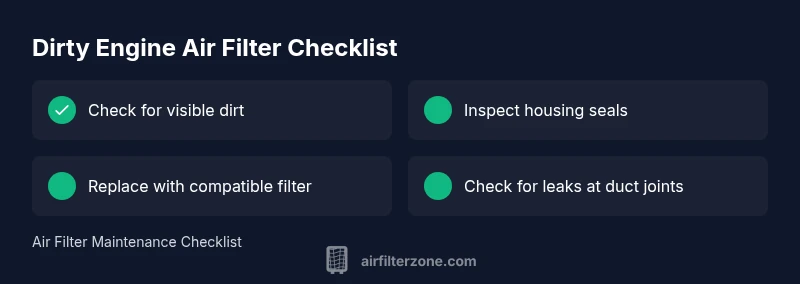
Before touching the engine, ensure safety: park on a level surface, apply the parking brake, and turn off the engine. Wait for the engine to cool to avoid burns. Open the hood and locate the air filter housing; it's usually a rectangular plastic box with a removable lid. Check the housing for cracks, loose clamps, or torn seals. Remove the filter element and hold it up to a bright light; if you can't see light through any portion, the filter is dirty and should be replaced. Inspect the intake duct and connections for cracks or loose fittings. If you smell burning oil or see oily residue on the filter, replace the filter and inspect for leaks. If the filter looks crumbled or saturated with oil, do not reuse it. After replacement, re-seat the cover and clamps, then start the engine and listen for hisses or air leaks that would indicate a loose seal. If any doubt remains, consult a professional.
Diagnostic flow overview
Symptoms typically begin as a slight drop in power and a small dip in fuel economy, progressing to noticeable lag and misfires in some engines. Start with a visual check of the engine air filter and housing. If the filter is dirty or saturated, replacement is the most common cure and should be done promptly. If symptoms persist after replacement, broaden the diagnosis to other intake and fuel-system components, such as the MAF sensor, vacuum hoses, or the fueling system. Use a structured flow: confirm air path condition, replace if needed, test after replacement, and escalate if necessary. Safety first: never attempt disassembly beyond your comfort level, and consider professional help when the intake system involves critical seals or wiring.
Steps
Estimated time: 15-25 minutes
- 1
Gather the right filter and tools
Collect the replacement filter that matches your vehicle’s specification. Have basic hand tools ready if the cover is secured with screws, plus a clean rag to wipe away trapped dust. Double-check the filter part number before removing the old one to avoid installing the wrong type.
Tip: Pro tip: take a quick photo of the old filter’s orientation for reference. - 2
Open the air filter housing
Loosen clips or screws holding the housing lid. Carefully lift the cover to expose the filter. Keep track of any small retainers so nothing falls into the intake path.
Tip: Pro tip: work on a clean surface and avoid dropping debris into the duct. - 3
Remove the dirty filter
Pull the filter straight out to avoid bending the sealing edge. Inspect the seal for cracks or gaps. If the filter is saturated with oil or heavily clogged, it should be replaced rather than cleaned.
Tip: Pro tip: handle the filter gently to preserve the gasket. - 4
Inspect housing and ducting
Wipe the inside of the housing with a clean rag. Look for cracks, torn seals, or loose hoses. If you notice damage, replace the housing or seals before reinstallation.
Tip: Pro tip: reseat the hose clamps evenly to avoid air leaks. - 5
Install the new filter and reseal
Insert the new filter in the correct orientation as indicated by arrows or the existing filter. Ensure a complete seal around all edges. Reattach the housing cover firmly with clamps or screws.
Tip: Pro tip: perform a light tug test to ensure the filter stays in place. - 6
Test and verify
Reconnect any electrical connectors if removed, start the engine, and listen for abnormal sounds indicating leaks. Check for check engine lights and ensure smooth idle. If issues appear, re-check the seal and filter orientation.
Tip: Pro tip: run the engine for a few minutes and inspect for visible leaks or rattles.
Diagnosis: Car shows reduced power, rough idle, poor acceleration, or increased fuel consumption
Possible Causes
- highDirty or clogged air filter
- mediumVacuum leak in intake tubing
- lowMass air flow (MAF) sensor fault
Fixes
- easyInspect air filter; replace if dirty or saturated
- easyInspect intake ducts for leaks or cracks and reseal
- mediumTest and clean/replace MAF sensor if needed
- hardConsult a mechanic if symptoms persist
FAQ
How often should I replace a dirty engine air filter?
Follow the manufacturer’s recommended interval and inspect more often if you drive in dusty conditions. Replace when the filter is dirty or clogged to restore airflow and protect engine components.
Check your manual for intervals, and inspect the filter if you drive on dirt roads; replace when dirty.
Can a dirty engine air filter cause engine misfires?
Yes. When airflow is restricted, the air-fuel mix can become imbalanced, which may cause misfires in some engines. Replacing the filter usually resolves this effect.
Yes. A dirty filter can cause misfires in some engines; replacement often fixes it.
Is it safe to drive with a dirty air filter?
It's not ideal. A dirty filter can reduce performance and fuel economy, and over time may harm other components. Replace soon to protect the engine.
It's not ideal to drive long-term with a dirty filter. Replace it to protect performance and efficiency.
Should I clean or replace a dirty air filter?
In most cases, replace the filter. Cleaning can push dirt further into the intake and damage the filter media. Replacement ensures a proper seal and airflow.
Replace rather than clean for best results.
What’s the difference between engine air filter and cabin filter?
The engine air filter protects the engine by blocking dust in the intake. The cabin filter cleans the air entering the passenger compartment; they are not interchangeable.
Engine filters protect the engine; cabin filters protect your cabin air.
Watch Video
Quick Summary
- Replace the dirty engine air filter promptly to restore airflow
- Inspect intake paths for cracks to prevent leakage
- Regular maintenance extends engine life and improves MPG
- In dusty conditions, check the filter more often