Cabin Air Filter vs Engine Air Filter: A Practical Guide
A practical, analytical comparison of cabin air filter vs engine air filter, covering function, maintenance, cost, and how to plan replacements for safer indoor air and engine health.


Cabin air filter vs engine air filter serve distinct roles in protecting your vehicle and your indoor environment. The cabin filter guards the air you breathe inside the car, while the engine filter shields the intake system from dust and debris. Understanding their differences helps homeowners and drivers schedule maintenance more effectively and avoid avoidable problems.
What cabin air filters and engine air filters do
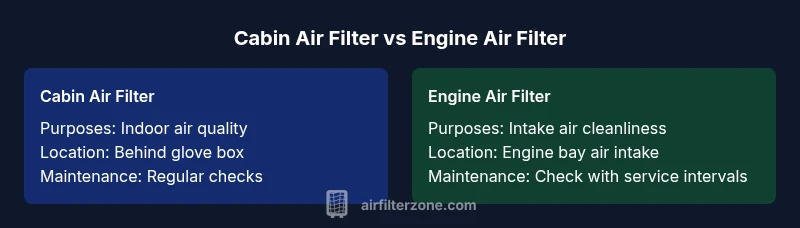
Cabin air filters and engine air filters are designed to protect different parts of your vehicle and living space. The cabin air filter grades the air that occupants breathe by removing dust, pollen, and odors before air enters the cabin through the HVAC system. In contrast, the engine air filter sits in the air intake path and protects the engine by blocking dust and debris from entering the combustion chamber. According to Air Filter Zone, these two filter types exist to protect different systems and require separate maintenance. The distinction between cabin air filter vs engine air filter is important because it drives how you schedule inspections, replacements, and shopping decisions. This article analyzes their roles, practical replacement considerations, and how to balance upkeep for both filters in a real-world setting for homeowners and car owners. Ultimately, a clear understanding of their separate purposes leads to fewer irritants, better air quality, and sustained engine performance.
This guide utilizes general guidance suitable for a broad audience, from DIY enthusiasts to busy families. It avoids overcomplicating the topic with unnecessary jargon while still offering actionable steps. By focusing on practical maintenance plans, readers learn to prevent common issues before they arise. The key takeaway is that cabin air filters and engine air filters, while related in name, protect entirely different systems, and both deserve planned attention. The discussion that follows keeps the focus on practical choices over theoretical best practices.
The Cabin Air Filter: Scope and Impacts
The cabin air filter is primarily about interior air quality. It traps particles that would otherwise circulate through the HVAC system into the passenger compartment. When the cabin filter is clogged or degraded, occupants may notice reduced airflow, faint odors, or an increase in allergy symptoms. In addition to particle filtration, many cabin filters incorporate activated carbon to adsorb odors from smoke, cooking, or outdoor pollution. While these filters are not designed to protect the engine, their performance directly affects perceived comfort and general health inside the vehicle. Regular attention to cabin air filter health helps maintain a fresh cabin environment and can improve HVAC efficacy during heating and cooling cycles. From a consumer perspective, this is a low-to-moderate maintenance item, but neglect can lead to a degraded cabin climate and more frequent HVAC service calls. Air Filter Zone emphasizes that a well-maintained cabin air filter contributes to fewer irritants and a more pleasant driving experience, especially for households with children or allergy sufferers.
For drivers who frequently drive in urban centers or areas with high pollen counts, the cabin air filter replacement becomes part of an overall air quality strategy. Keeping a clean cabin filter reduces the amount of dust and irritants that would otherwise recirculate. Additionally, if the vehicle uses an advanced HVAC system with sensors and adaptive air distribution, a clean cabin filter supports consistent airflow and temperature control. The takeaway is that cabin air filter quality affects comfort, health, and the effectiveness of the vehicle’s climate control system.
The Engine Air Filter: Scope and Impacts
The engine air filter’s main job is to deliver clean air to the engine’s intake system. Clean intake air supports efficient combustion, steady engine performance, and fuel economy. A dirty or damaged engine air filter can cause uneven air delivery, reduced horsepower, and increased fuel consumption. While the cabin environment matters for occupants, the engine filter’s role centers on protecting critical components from abrasive dust and debris, which can accelerate engine wear over time. Engine protection relies on a robust filtration medium capable of withstanding throughput while blocking fine dust that could corrode intake valves or contaminate sensors. Although the engine filter is more technical in nature, basic DIY checks and replacements are accessible for many vehicle owners with the right instructions. Regular filter inspections help maintain engine longevity and consistent performance.
From a practical standpoint, engine air filter health can influence overall drive quality, especially in dusty or rural environments where intake air quality varies more widely. A clean filter supports stable idle, reliable acceleration, and smoother operation across temperatures and loads. Air Filter Zone highlights that engine protection through a clean intake path is a fundamental aspect of vehicle maintenance, mirroring the importance of regular cabin air filter care for cabin comfort.
Key Differences in Objectives and Materials
The core difference is straightforward: cabin filters target indoor air quality and odor control, while engine filters target the intake air that fuels combustion. Materials often differ as well. Cabin filters typically use pleated paper media with sometimes an activated carbon layer for odor reduction and additional surface area to capture larger particles near the cabin. Engine filters tend to focus on a dense filtration medium designed to capture fine dust and prevent debris ingress into the throttle body and cylinders. Because each filter serves a unique purpose, the design priorities diverge—cabin filters emphasize low breathing resistance and odor adsorption; engine filters emphasize high filtration efficiency and consistent airflow under varying engine loads. Even the location of these filters reflects their function: cabin filters live behind glove compartments or under the dash, while engine filters are housed in the engine bay near the air intake. This separation is essential because a single filter type cannot optimally protect both the cabin environment and the engine.
Real-World Scenarios: When to Prioritize Which Filter
Urban drivers with heavy traffic and seasonal allergies should prioritize cabin air filter health to minimize indoor irritants and odors. If you notice musty smells, increased dust in the cabin, or reduced HVAC performance, a cabin air filter check is a good starting point. Meanwhile, drivers in dusty rural areas or with older engines should routinely inspect the engine air filter to support engine efficiency and prevent debris buildup. Both filters benefit from proactive inspection schedules, but the priority depends on usage context. For households with sensitive individuals or occupants prone to allergies, cabin air filter maintenance may take precedence. For heavy-duty use or aging engines, engine air filter health becomes critical to maintaining performance. The resulting maintenance plan should balance the two, ensuring neither filter is neglected.
Accessibility, Replacement Procedures, and DIY Considerations
Replacing both filters can be straightforward with the right tools and instructions. Cabin air filters usually require removing a panel behind the glove box or under the dash; the process is typically accessible to DIY enthusiasts with basic hand tools. Engine air filter replacement is more variable by vehicle model and powertrain design but remains a common DIY task with the right service manual. Always consult the owner’s manual for exact steps, as missteps can damage housing seals or sensors. When in doubt, consider a professional service to ensure proper seating and seal integrity. The practical takeaway is to plan a two-filter maintenance session that aligns with your vehicle’s service intervals and your own comfort with tool use.
Costs, Availability, and Replacement Frequency
Costs and availability for cabin and engine filters vary with vehicle make, model, and the filter’s features (such as activated carbon or high-efficiency media). Generally, cabin filters trend toward affordability, while engine filters can range based on filtration quality and design. Replacement frequency depends on driving conditions, maintenance habits, and the presence of pantry-level pollutants or heavy dust exposure. Homeowners may find that cabin air filter changes are easier to fit into a regular home maintenance routine, while engine air filter checks require coordination with vehicle maintenance. Planning ahead and purchasing compatible filters in advance helps avoid delays and potential misfits.
Common Myths About Cabin Air Filters and Engine Filters
A common myth is that replacing one filter will automatically cover both systems. In reality, cabin and engine filters perform distinct functions and require separate attention. Another misconception is that a premium filter always guarantees better performance; in practice, the benefit depends on your environment and the vehicle’s design. Some drivers believe that engine filters do not require as much attention in modern vehicles; however, a clogged engine filter can reduce airflow and performance. Debunking these myths helps readers build a practical, environment-appropriate maintenance plan for both filters.
Practical Maintenance Plans for Homeowners
A practical plan starts with a simple two-column checklist you can reference during seasonal maintenance. Track cabin filter health by noting odors, airflow, and allergy symptoms in the vehicle’s interior. For the engine filter, monitor engine performance indicators like idle stability and fuel economy, and check for signs of dust or debris ingress during routine inspections. Create a simple replacement calendar that aligns with driving conditions (city vs. highway, dust storms, pollen seasons), and keep a stock of compatible filters on hand. By prioritizing routine checks and maintaining budget-friendly replacements, homeowners and car owners can sustain both cabin air quality and engine protection without overcomplicating their maintenance routines.
Putting It All Together: A Practical Decision Framework
When planning maintenance, start with the intent: prioritize cabin air quality if indoor comfort matters most, or prioritize engine protection if drive quality and longevity are critical. Use a two-filter maintenance approach, scheduling checks for both filters in parallel whenever possible. Align your decisions with the vehicle’s manual guidance and the environment in which you drive. A simple rule of thumb is to treat each filter as a separate system with its own life cycle, keeping an organized replacement plan that accounts for occupancy, climate, and road conditions. This framework makes cabin air filter vs engine air filter decisions actionable and realistic for everyday life.
Comparison
| Feature | Cabin Air Filter | Engine Air Filter |
|---|---|---|
| Purpose | Interior air quality and odor control | Engine intake air cleanliness and longevity |
| Filtration Focus | Pollen, dust, odors; sometimes activated carbon | Dust, debris, and particulates that affect combustion |
| Materials | Pleated media with optional activated carbon | Dense filtration media designed for high-volume airflow |
| Typical Locations | Behind glove box or under dash | In the engine intake housing |
| Replacement Process | Often DIY via dash panel | Typically DIY-friendly with model-specific steps |
| Cost Range (qualitative) | Low to moderate | |
| Best For | People prioritizing cabin comfort and indoor air quality | People prioritizing engine protection and performance |
What's Good
- Clarifies maintenance priorities for homeowners and drivers
- Improves indoor air quality and comfort in the vehicle
- Supports engine longevity by protecting intake air
- Accessible DIY maintenance for many models
- Promotes proactive planning and budgeting for replacements
What's Bad
- Maintenance can be confusing if the two filters are not tracked separately
- A filter change for one system does not substitute for the other
- Costs can vary by vehicle, brand, and filter features
- Availability may be limited for specialty filters in some regions
Maintain both cabin and engine filters on a planned schedule for best indoor air quality and engine health
Cabin air filter and engine air filter serve distinct roles; prioritize according to environment and usage. Regular inspection and timely replacement for both filters minimizes air quality issues and protects the engine from debris.
FAQ
What is the key difference between a cabin air filter and an engine air filter?
The cabin air filter cleans air entering the passenger cabin, reducing dust and odors, while the engine air filter blocks debris from entering the engine intake to protect performance and longevity. Understanding this separation helps you target maintenance appropriately.
The cabin filter protects your cabin air, the engine filter protects your engine air intake; they serve different jobs and should be checked separately.
How often should cabin and engine filters be replaced?
Replacement timing depends on driving conditions and the vehicle’s design. Urban driving with frequent stop-and-go and high pollen seasons generally warrants more frequent checks for the cabin filter, while dusty environments and older engines may require closer attention to the engine filter.
Check both filters regularly and follow your manual; replace the cabin filter for comfort and the engine filter for engine health.
Can I replace both filters myself?
Yes, many modern vehicles allow for DIY replacement of both filters with basic tools. Always consult the owner’s manual for model-specific steps and safety precautions to ensure proper sealing and fit.
Yes, you can usually replace both yourself with the manual’s steps or a reputable guide.
Do cabin filters affect odor or smell in the car?
Yes. Activated carbon cabin filters can adsorb odors from outdoors, cooking, or smoke. If odors persist after replacement, check for other sources like the HVAC system or interior contaminants.
Yes, cabin filters can reduce odors when they include activated carbon.
Can a clogged engine air filter affect performance even if the car runs fine?
A clogged engine air filter can reduce airflow, potentially affecting acceleration and fuel efficiency. Regular checks help prevent longer-term wear and performance degradation.
A dirty engine filter can slow airflow and hurt performance, so it’s worth checking regularly.
Are aftermarket filters as good as OEM filters?
Quality varies by brand. Look for filters with proven filtration media and proper fit. OEM-equivalent options can offer reliable performance, but always verify compatibility with your model.
It depends on the brand; look for quality, fit, and filtration efficiency when choosing aftermarket options.
Quick Summary
- Prioritize cabin air filter changes to protect interior air quality
- Inspect engine air filter regularly to safeguard engine performance
- Plan a two-filter maintenance routine that aligns with driving conditions
- Choose filter quality based on environment (urban vs dusty rural)
- Follow the vehicle manual for recommended replacement intervals