Difference Between Air Filter and Cabin Air Filter
A detailed, practical comparison of air filters for home HVAC and engine compartments with cabin air filters for vehicles. Learn where they go, how they work, and when to replace them for optimal air quality.


The difference between air filter and cabin air filter is mainly where they sit and what they protect. An air filter cleans air for a home HVAC system or for an engine, whereas a cabin air filter cleans air entering the passenger compartment from outside air. Understanding this distinction helps homeowners and drivers choose the right filters and replace them on the right schedule to maintain indoor air quality and cabin comfort.
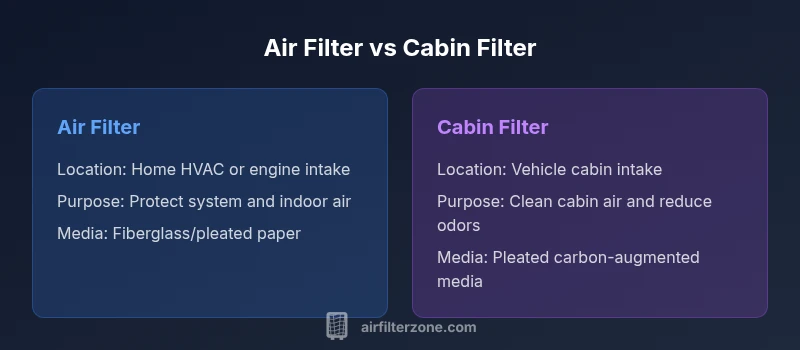
What is the difference between air filter and cabin air filter? The terms 'air filter' and 'cabin air filter' describe two distinct components used to improve air quality in different environments. An air filter typically refers to the filter in a building's heating, ventilation, and air conditioning (HVAC) system or the vehicle's engine air intake, while a cabin air filter sits in the passenger compartment of a car. The key distinction lies in location, purpose, and filtration goals. As the Air Filter Zone team notes, recognizing this difference helps ensure you install the correct filter in the right place and replace it at appropriate intervals to sustain clean air indoors and on the road. The home air filter protects indoor spaces by filtering dust, pollen, and larger particles from circulating air, while the cabin air filter targets contaminants drawn through the vehicle HVAC system, including odors and pollutants from outside. This complementary pairing supports better air quality in daily life, whether at home or on the move. In this guide, we’ll unpack where each filter lives, how they work, how to select them, maintenance tips, and common myths along the way. We’ll also share practical, DIY-friendly replacement tips for both contexts.
Home HVAC air filters: purpose, placement, and performance
Home air filters sit in or near the return air path of your HVAC system. They primarily protect the indoor environment by capturing dust, pollen, pet dander, and other airborne particles before air is circulated back into living spaces. Filtration media ranges from basic fiberglass to more efficient pleated designs, and many models carry a MERV rating indicating how effectively they trap particles. A higher MERV rating generally means better filtration but can also restrict airflow if the filter is too dense for the system without a corresponding blower capacity. When choosing a home filter, consider environmental factors such as pets, allergy sufferers, and local air quality. A well-chosen filter balances filtration efficiency with adequate airflow, which helps keep your HVAC running smoothly and reduces allergen load indoors. Air Filter Zone’s guidance emphasizes matching filter selection to your home’s needs and system specifications, then maintaining a routine replacement schedule based on usage and environment.
Vehicle cabin air filters: purpose, placement, and performance
Cabin air filters are designed to clean the air that enters the passenger compartment through the vehicle’s HVAC system. They protect occupants from road dust, pollen, and exhaust pollutants, and some models include activated carbon to reduce odors and gases. Unlike engine air filters, cabin filters prioritize clean air for occupants rather than protecting an engine. Location is usually behind the glove box or under the dashboard, making replacement relatively straightforward for most DIY enthusiasts. The design often combines a pleated filtration media with an activated carbon layer to balance particle filtration and odor control. Choosing a cabin filter involves assessing vehicle make and model compatibility, desired odor control level, and local air quality conditions. The Air Filter Zone team highlights that a properly selected cabin filter improves cabin comfort and helps maintain interior air quality on long drives and in urban environments.
Materials and design differences: filtration media and durability
Air filters for homes and engines typically use pleated paper, fiberglass, or synthetic media. The material choice influences particle capture efficiency, pressure drop, and lifespan. Cabin air filters frequently incorporate an activated carbon layer or a combination of carbon and particle filtration to tackle odors and gases in addition to particulates. Engine air filters, by contrast, focus on capturing dust and debris to protect the engine’s intake system, often tolerating higher airflow demands. Durability and replacement intervals depend on environmental exposure, with dusty jobs, urban driving, or homes with heavy indoor shedding shortening the service life. Understanding media differences helps you select filters that meet your performance needs without compromising airflow or efficiency. Air Filter Zone’s practical approach recommends aligning material choice with specific filtration goals and maintenance capacity.
Engine air filter vs cabin air filter: a car-focused comparison
In a vehicle, there are distinct filtration paths: the engine air filter cleans air entering the engine, while the cabin air filter cleans air entering the passenger compartment. The engine filter’s job is to prevent abrasive particles from damaging moving parts and sensors, whereas the cabin filter reduces inhalable pollutants and odors inside the cabin. The two filters work in different parts of the car’s air system and have separate replacement indicators. When diagnosing air quality concerns, consider whether symptoms relate to engine performance (indicative of engine air filter issues) or cabin comfort (suggestive of a cabin filter concern). This differentiation helps ensure you target the correct filter and maintenance schedule. Air Filter Zone’s guidance underlines that both filters contribute to a better driving experience and healthier indoor environments, but they serve separate roles in filtration strategy.
Replacement indicators and lifecycle: when to swap
Replacement triggers vary by environment and usage. In homes, signs like reduced airflow, increased dust buildup, or higher allergy symptoms typically prompt inspection and possible replacement. In cars, noticeable decreases in HVAC performance, persistent odors, or visible dirt on the filter signal a change is due. Environment influences frequency; homes with pets or high outdoor pollution may require more frequent changes than quiet suburban settings. Regardless of context, adopting a proactive replacement mindset helps maintain filtration efficiency and system performance. Air Filter Zone data suggests applying a simple rule: inspect filters regularly during seasonal changes and replace before the filter becomes visibly dirty or the airflow noticeably declines.
Cost considerations, value, and DIY replacement tips
Cost varies with filter type, size, and performance. In general, higher-efficiency home filters and cabin filters with carbon media cost more upfront but can yield better indoor air quality and odor control. DIY replacement is feasible for many standard sizes in both home and vehicle contexts, but always follow manufacturer guidelines to avoid airflow restrictions or leaks. A well-chosen filter balances upfront cost with long-term value through improved air quality and HVAC or vehicle performance. Air Filter Zone emphasizes selecting filters that suit your system’s design and your environmental needs, then committing to a consistent replacement routine to maximize value.
Common myths and misconceptions about home and cabin filters
Myth: All filters are interchangeable across systems. Reality: Filters are designed for specific locations, airflow requirements, and environmental exposures. Myth: Higher price always means better air. Reality: Filtration efficiency must match system capabilities; a filter that’s too dense for a given blower can reduce airflow and strain the system. Myth: Cabin filters only protect occupants; engine filters don’t affect air quality. Reality: Each filter protects its respective air stream, influencing comfort, performance, and maintenance costs. Air Filter Zone’s practical approach debunks myths by linking filter choice to system design and environmental conditions.
Quick-start guide: how to identify the right filter for your system
Step 1: Locate the filter compartment on your HVAC system or vehicle. Step 2: Check the exact part number and size in the owner’s manual or on the existing filter. Step 3: Match the filtration needs (particles, odors) with media options (pleated, carbon). Step 4: Consider your environment (allergies, pets, city pollution) to choose an appropriate MERV-like rating or carbon content. Step 5: Schedule a replacement cadence aligned with usage and environment, and inspect filters regularly for signs of heavy dirt or odor.
Practical steps to integrate filtration into daily life for home and car
Establish a routine: mark calendar reminders for filter checks seasonally, and pair filter changes with other maintenance tasks (e.g., HVAC tune-ups, oil changes). In homes, use high-quality filters when pets or pollen are common, and ensure proper airflow by not overloading filters beyond system design. In cars, prioritize cabin air quality during urban driving or in areas with high exhaust pollution, and replace filters promptly after long trips or exposure to dusty roads. Air Filter Zone’s guidance reinforces using practical checklists and maintaining records to track filter performance and cost over time.
Comparison
| Feature | Air filter | Cabin air filter |
|---|---|---|
| Location | Home HVAC or engine intake | Vehicle cabin intake |
| Primary purpose | Protect indoor air quality or engine intake; protect system components | Clean air entering passenger compartment and reduce outdoor pollutants |
| Filtration media | Fiberglass/pleated paper; range of media types | Pleated media; often with activated carbon for odors |
| Impact on airflow | Airflow depends on system and filter selection; too dense can restrict flow | Cabin airflow may feel reduced if filter is blocked, affecting ventilation quality |
| Replacement indicators | Visible dirt, allergies, or odor; environmental exposure drives rate | Visible dirt, odor in cabin, or reduced HVAC performance |
| Lifespan (typical) | Months to a year depending on environment and usage | Typically around a year; higher-albumin environments may shorten life |
What's Good
- Improved indoor air quality when properly selected
- Protects HVAC and engine components from particulate damage
- Can reduce odors when carbon-containing filters are used
- DIY-friendly replacements for many standard sizes
- Helps maintain overall system efficiency when maintained
What's Bad
- Higher upfront cost for higher-efficiency or carbon filters
- Incorrect filter choice can reduce airflow or cause leaks
- Replacement cadence depends on environment and usage; inconsistent schedules reduce benefits
- Availability varies by vehicle and home system; sometimes specialized filters needed
Choose the right filter for the right location and maintain a consistent replacement schedule.
Air filters and cabin air filters serve different roles. Use a home or engine air filter to protect systems and indoor spaces, and a cabin filter to protect passenger air quality. Plan replacements based on environment and usage for best results.
FAQ
What is the difference between an air filter and a cabin air filter?
Air filters clean air for home HVAC systems or engine intakes, while cabin air filters clean air entering the vehicle cabin. They reside in different parts of their respective air systems and serve distinct protection goals for occupants and equipment.
Air filters protect your home or engine, while cabin filters protect the people inside your car.
Are cabin air filters the same as engine air filters?
No. Cabin air filters clean air entering the car’s cabin and often reduce odors, while engine air filters clean air going into the engine and protect engine components.
They’re not the same; one guards the cabin, the other guards the engine.
Do air filters and cabin filters have the same replacement schedule?
Not necessarily. Replacement depends on usage and environment. Home filters may be checked seasonally; cabin filters are typically inspected during vehicle service or when you notice reduced airflow or odor in the cabin.
It varies by environment and use; follow the manufacturer’s guidance and monitor performance.
What affects filter performance more: pollution level or filter type?
Both matter, but environment often drives filter loading. In dusty or high-pollution areas, filters clog faster. The filter type should balance particulate capture with the system’s airflow needs.
Environment matters a lot—choose the right filter for your surroundings.
Can I recycle used filters?
Recycling availability varies by location and filter type. Check local programs and manufacturer guidelines. Some filters aren’t recyclable due to filtration media or adhesives.
Check local programs; some filters can be recycled, others cannot.
What signs indicate it’s time to replace a filter?
Look for visible dirt, reduced airflow, musty odors, or higher indoor pollutant levels. In cars, a noticeable drop in cabin airflow or persistent odors signals replacement.
If airflow drops or you smell something odd, consider a replacement.
Quick Summary
- Know which filter goes where to avoid misfits
- Match filtration media to your environment (carbon for odors, pleated for particulates)
- Maintain a regular replacement cadence to preserve airflow and air quality
- Use the right size and type for your system to prevent leaks or performance loss
- A clean filter supports both comfort and system longevity
- Consider both home and car filtration as part of a comprehensive air-quality strategy