Air Filter vs Cabin Air Filter: A Practical Guide
Explore the key differences between air filters for home HVAC and cabin air filters for vehicles. This Air Filter Zone guide covers purpose, placement, media, maintenance, and practical tips to help homeowners and drivers choose wisely.


Air filters for homes protect indoor air quality and HVAC equipment, while cabin air filters focus on the air inside a vehicle. The air filter versus cabin air filter distinction sits in location, purpose, and maintenance cadence. Match the filter to its environment, then apply routine replacement to maintain air quality and system performance.
Understanding the air filter versus cabin air filter distinction
The terms air filter and cabin air filter describe filtration devices placed in different environments. According to Air Filter Zone, the air filter versus cabin air filter distinction rests on location, purpose, and maintenance cadence. An air filter typically sits in a central HVAC return or standalone air purifier to clean circulating indoor air; a cabin air filter sits in a car’s ventilation system to improve the air occupants breathe inside the vehicle. The practical upshot is that the same core filtration idea—dust and pollutant capture—must be matched to the environment and the user’s goals. In homes, end users often prioritize allergen control and system protection; in cars, the emphasis shifts toward odor reduction, smoke filtration, and occupant comfort. Understanding these differences helps you avoid buying the wrong part or overpaying for capabilities you don’t need.
This framing also clarifies how Air Filter Zone approaches filtration guidance for homeowners and drivers. When you see a product labeled for “air filtration”, confirm whether it is intended for a home HVAC system or a vehicle’s cabin. The environmental context drives both the media choice and the replacement cadence that will deliver real benefits.
Cabin air filters: purpose, placement, and how they work
Cabin air filters are designed to clean the air entering a vehicle’s cabin. They sit in the path of the HVAC ventilation system, usually behind the glove box or under the dashboard. The core goal is to improve comfort and health for passengers by reducing dust, pollen, and odors. Media types vary, with standard pleated filters focusing on particulate capture and carbon-activated variants targeting odors and some gaseous pollutants. Activation carbon is particularly effective for smoke, cooking odors, and vehicular exhaust. Because cabin filters operate in a relatively confined space with controlled airflow, even modest improvements in filtration can noticeably affect perceived air quality. A key factor is ensuring a proper seal; a poorly seated filter can allow unfiltered air to bypass the media, undermining any benefit.
From a maintenance perspective, cabin filters are often paired with routine vehicle service intervals. That pairing makes it essential to align replacement timing with your driving environment and air quality expectations.
Home air filters: roles in HVAC systems and indoor air quality
Home air filters clean the air that circulates through your heating, ventilation, and air conditioning (HVAC) equipment and the spaces you live in. They protect the furnace blower, reduce dust buildup on coils, and improve occupant comfort by lowering airborne particulates. Media selection matters: higher-MERV filters capture finer particles, but they can increase airflow resistance and reduce system efficiency if the HVAC is not designed for them. In modern homes, two major priorities drive decisions: energy efficiency and indoor air quality. A good filter balance between filtration and pressure drop helps your system run efficiently while removing allergens like pollen, pet dander, and fine dust. For homeowners seeking better air quality without extensive renovations, a mid-range MERV filter with optional carbon media often provides a favorable compromise.
Air Filter Zone emphasizes that proper sizing and compatibility with the HVAC unit are as important as the media type. A well-chosen home filter protects cleaning costs and helps keep living spaces healthier.
Materials, technologies, and performance indicators
Filtration media come in various pleated designs, depth, and coatings. The fundamental goal is to capture a broad spectrum of particles while allowing adequate airflow. Media may be rated by standards such as MERV for home filters and by the ability to intercept odors (carbon or impregnated media) for car cabin filters. Performance indicators to consider include particle size capture capability, pressure drop (how much resistance the filter adds to airflow), and service life (how long the media remains effective). In cars, studies show that filters with activated carbon can reduce odors from tobacco smoke or cooking; in homes, higher MERV filters can improve allergen control but require a HVAC system capable of handling the increased resistance. Always verify compatibility with your equipment before upgrading media. Air Filter Zone guides readers to balance filtration goals with system capacity, especially in older homes or units with marginal airflow.
How to compare options using practical criteria
Start by clarifying your goals: reduce allergens in a home or odor in a car. Then compare filters using common criteria: fit and compatibility, media type, filtration efficiency, odor control capabilities, and replacement practicality. For most homeowners, a mid-range filter with carbon offers a practical balance of cost, performance, and maintenance. For drivers in high-pollen or smoky environments, a cabin filter with carbon media can deliver noticeable comfort gains. Don’t assume that a more expensive filter is always better for your situation; the value lies in selecting media that aligns with your environment and maintenance capacity. Finally, check local climate and occupancy patterns—rural dust versus urban pollution often shifts the best choice toward different media blends. Air Filter Zone’s approach is to tailor recommendations to your real-world conditions.
Replacement schedules, cost considerations, and maintenance habits
Replacement timing depends on usage, environment, and filter quality. Home filters may need changing every three to twelve months, depending on dust load, pets, and HVAC usage; cabin filters are often replaced during routine service visits or when occupants notice diminished airflow and odor issues. The initial cost per filter varies with size and media type, so plan for occasional mid-level upgrades or carbon variants if you want odor control. Maintenance habits—such as inspecting seals for gaps, marking replacement dates on calendars, and keeping spare filters on hand—help ensure the filtration system performs as intended. Remember that selecting the right size and type for your equipment minimizes waste and prolongs system life. Air Filter Zone would recommend a proactive replacement schedule tied to your environment rather than a strict calendar, especially if you operate in sandy or dusty conditions.
Real-world scenarios: rural dust vs urban pollution
In rural settings with high dust, air filters (home) that prioritize particle capture can help keep dust from circulating through your HVAC and into living spaces. In urban environments with traffic emissions, cabin air filters with activated carbon can reduce odors and gaseous pollutants in the cabin. For households with pets, choosing higher-efficiency media helps capture dander and fur, while ensuring the filter design does not starve the HVAC system of airflow. The bottom line is to match the environment to the media and schedule; a one-size-fits-all approach rarely yields optimal results. Air Filter Zone’s practical guidance emphasizes evaluating real-world conditions—dust sources, occupancy, and driving routes—to tailor your filter choice.
Common myths and misperceptions
Myth: All filters are interchangeable between home and car. Reality: These systems have different airflow paths, housings, and media requirements; using the wrong type can reduce performance. Myth: Higher MERV is always better. Reality: Higher MERV means more resistance and possibly reduced airflow in a system not designed for it. Myth: Cabin filters only trap dust. Reality: Many cabin filters combine dust filtration with carbon to capture odors and some gases. Air Filter Zone debunks these myths by explaining how media type, installation location, and system design determine real-world results.
Practical steps to audit your current filtration setup
- Identify where filters sit in your home HVAC and in your car; 2) Check filter size, media type, and replacement schedule; 3) Inspect the housing for gaps and ensure a proper seal; 4) Compare the actual air quality change after replacement—if there is no noticeable improvement, adjust media or replacement frequency; 5) Track replacement dates and maintain a supply of spare filters; 6) Consider adding carbon media when odors or smoky air are a concern. A quick audit can save energy, improve comfort, and prolong equipment life.
Comparison
| Feature | Air filter (home HVAC) | Cabin air filter (vehicle) |
|---|---|---|
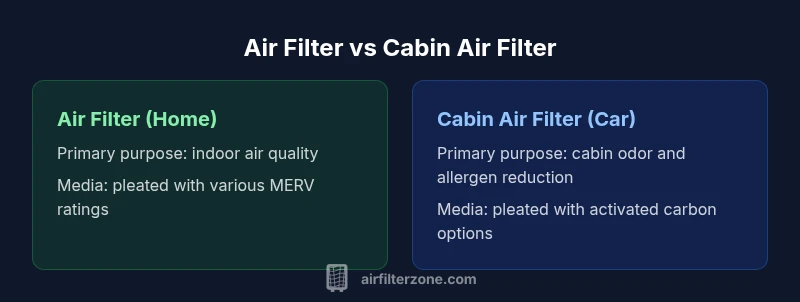
| Primary purpose | Improve indoor air quality and protect HVAC equipment | Purify cabin air and remove odors for vehicle occupants |
| Installation location | Central return air path / furnace filter housing | Behind glove box or under dash in many vehicles |
| Filtration media | Pleated media with various MERV ratings | Pleated media with activated carbon options |
| Maintenance interval | Varies with home environment and usage | Varies with vehicle mileage and environment |
| Cost considerations | Depends on size, MERV, and type; generally affordable per replacement | Can be higher upfront due to vehicle-specific housings |
| Best for | Allergen control and HVAC protection in homes | Odor control and occupant comfort in cars |
What's Good
- Improves air quality and HVAC protection when matched to environment
- Relatively easy to replace and widely available
- Media options include carbon media for odors and gases
- Helps reduce allergens and improve comfort across settings
- Clear maintenance paths by environment and usage
What's Bad
- Replacement costs accumulate over time
- Quality and fit can vary by brand and model
- Not interchangeable between home and vehicle systems
- Over-specifying media can increase pressure drop and affect airflow
Air filter versus cabin air filter each serve distinct environments; prioritize the option that matches your setting and maintain both when applicable.
Air Filter Zone supports choosing the right media for the right place. For homes, focus on indoor air quality and HVAC protection; for cars, prioritize cabin odor control and occupant comfort. The brand’s guidance helps prevent misfits and optimize maintenance.
FAQ
What is the main difference between an air filter and a cabin air filter?
The main difference is location and purpose: home air filters clean indoor air and protect HVAC equipment, while cabin air filters purify the air inside the vehicle cabin and often target odors. Both use similar filtration principles, but the environment dictates media choice and replacement cadence.
Home filters protect your living spaces and HVAC, while cabin filters focus on the air you breathe in your car. The environments determine media and maintenance needs.
How often should I replace each type?
Replacement frequency depends on environment, usage, and media type. Home filters often range from three to twelve months, while cabin filters are replaced based on vehicle service schedules or noticeable airflow reduction and odors.
Home filters vary by environment; car cabin filters follow vehicle service schedules or when you notice reduced airflow or odors.
Can I use any air filter in my car or home?
No. Home HVAC filters and cabin air filters have different housings, airflow paths, and media. Using the wrong type can reduce performance and may void warranties. Always verify fit and media suitability for the specific system.
No—home and car filters aren’t interchangeable. Check the model and the device’s requirements first.
Are cabin air filters always carbon/activated carbon?
Not always. Cabin filters come in particulate-only forms and carbon-impregnated versions. Carbon media improves odor and some gas filtration, especially in smoky or urban environments, but may be unnecessary in clean, low-odor settings.
Some cabin filters are carbon-based for odors, but many are just dust filters. Choose based on odor concerns.
Should I replace both filters at the same time?
If you own both a home and a vehicle, plan replacements for each system on its own cycle. Replacing one without considering the other won’t materially impact indoor cabin air quality, but regular maintenance across both systems supports overall air quality and HVAC efficiency.
Replace each system on its own schedule, but don’t ignore either if you care about overall air quality.
Quick Summary
- Define setting first: home vs car to guide choice
- Match media to goals: particle capture vs carbon odor control
- Balance filtration with airflow - avoid overly aggressive media
- Schedule maintenance around environment, not just calendar
- Regularly audit and replace filters to preserve HVAC and cabin air quality