Troubleshooting a Bad Air Filter in Car: Quick Guide
Urgent troubleshooting guide to diagnose and fix a bad air filter in car. Learn symptoms, diagnostic flow, safe fixes, and maintenance to restore performance and fuel efficiency.


Most problems from a bad air filter in car start with reduced acceleration, rough idle, and lower fuel economy. The quickest fix is to replace the clogged filter and reset any related maintenance reminders. If you notice misfires or check engine light after driving with a dirty filter, stop driving and inspect the air intake.
Symptoms you may notice
A bad air filter in car typically shows up as a drop in performance and odd engine behavior. According to Air Filter Zone, a clogged filter restricts air flow into the intake, which can cause hesitation during acceleration, rough idle, and higher fuel consumption. You might also notice reduced power at highway speeds, or a sensation of coughing or stalling when the engine tries to breathe. In many cars, a dirty filter can trigger the check engine light if the MAF sensor detects an air imbalance. Cabin comfort can also suffer as the air conditioning system works harder to pull air through a restricted path. If you live in dusty or sandy environments, these symptoms can appear sooner. The key sign is that everyday driving feels “not quite right” compared with your vehicle’s usual responsiveness. Addressing the filter early protects engine components and keeps your cabin air clean.
Why a clogged air filter hurts performance
When the air filter is dirty, the engine receives less air for each combustion event. That lean condition can reduce horsepower and throttle response. The engine control unit compensates by injecting more fuel, which lowers fuel economy and can cause carbon buildup in the intake. A restricted air path can also cause the MAF sensor to report abnormal readings, triggering diagnostic trouble codes. In turbocharged or high-compression engines, the impact is more noticeable because those engines rely on precise air flow for boost. Driving with a bad air filter in car thus increases exhaust emissions and can shorten engine life if left unresolved. In dusty environments, the filter can become saturated quickly, accelerating the damage. Replacing the filter promptly restores air flow and protects the intake tract, throttle body, and sensors.
How to diagnose a bad air filter in car
Diagnosing starts with a visual check: locate the air filter housing (usually near the front of the engine bay), unclip the cover, and pull out the filter. If the filter is gray-brown, saturated with dust, or has visible tears, it’s time for a replacement. A quick intake leak check by spraying a small amount of soapy water around the housing seam can reveal gaps that admit unfiltered air; bubbles indicate a leak. If the engine runs roughly or stalls after replacing the filter, scan for related codes (lean condition or airflow/MAF issues) and inspect the intake tract for cracks or leaks. For cabin air, check the HVAC system performance; a stale odor or reduced airflow can signal a cabin air filter issue that compounds the problem. Remember, a bad air filter is a symptom, not the only cause of poor performance—consider other intake or sensor issues if symptoms persist.
Safe, step-by-step fixes you can perform today
If you suspect a bad air filter, the quickest fix is a filter replacement. Ensure you have the correct part for your car model, orient the filter correctly (arrow on the filter pointing toward the engine), and reseal the housing tightly to prevent unfiltered air ingress. After replacement, clear any maintenance reminders and reset the ECU's adaptation if your vehicle requires it. Then take a short test drive to confirm smooth acceleration and steady idle. If you still notice power loss or see check engine light, don’t drive aggressively; inspect for leaks, misrouted hoses, or dirt trapped in the housing. If you’re not comfortable with DIY replacement, seek a technician’s help. Regular checks and a simple replacement schedule can prevent repeated issues.
Maintenance tips to prevent future issues
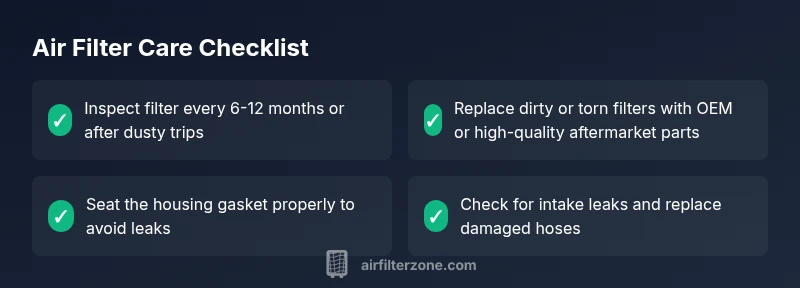
To minimize future problems, keep the air intake free of debris and replace filters according to your environment. In dusty areas, more frequent checks are essential; in clean suburban areas, longer intervals may be acceptable. Use OEM or high-quality aftermarket filters that fit your vehicle precisely, and verify the seal on the filter housing to avoid unfiltered air leaks. Periodically clean the housing and inspect hoses for cracks, which can mimic or exacerbate symptoms of a bad air filter. A consistent maintenance habit reduces fuel consumption, protects the throttle body, and extends engine life.
Steps
Estimated time: 20-30 minutes
- 1
Power down and locate the air filter housing
Park on a flat surface and turn off the engine. Open the hood and locate the air filter housing (usually near the front of the engine bay). Remove any clips or screws securing the cover. This prepares you for a visual inspection.
Tip: Take a photo of the housing orientation before removing parts to simplify reassembly. - 2
Remove old filter and inspect for dirt
Gently remove the filter from the housing. Check both sides for dust, grit, or tears. If the filter is gray with embedded dust or damaged, replace it. A soaked filter often indicates a heavy dust environment.
Tip: If you see any cracks, do not reuse the filter; replace immediately. - 3
Install the new filter with correct orientation
Insert the new filter with the airflow arrows pointing toward the engine. Ensure the seal sits evenly and the housing closes tightly without gaps. Refit the cover and secure clips or screws.
Tip: Double-check that the filter sits flat and doesn’t sag against the housing. - 4
Reassemble and reset maintenance indicators
Reconnect any hoses and reattach the housing cover. If your vehicle requires a maintenance light reset, do so per the owner's manual. Start the engine and listen for normal intake sounds.
Tip: A quick idle after replacement helps confirm there are no immediate leaks. - 5
Test drive and observe performance
Take a short drive to test acceleration, idle stability, and fuel economy. If the symptoms persist, recheck for leaks or consider sensor diagnostics. Do not ignore persistent warning lights.
Tip: Document any remaining symptoms to show a technician if needed. - 6
Consider professional help if unresolved
If the check engine light remains on or performance does not improve after replacement, a professional inspection can identify deeper issues like intake leaks or sensor faults.
Tip: Professional help now can prevent further engine damage.
Diagnosis: Car shows reduced power, rough idle, or decreased fuel economy
Possible Causes
- highClogged or dirty air filter restricting air intake
- mediumAir intake leaks around filter housing or vacuum hoses
- lowFaulty MAF sensor or intake sensor reading
Fixes
- easyReplace the air filter with a correctly rated part for your vehicle
- easyInspect and reseal the air intake housing; replace torn hoses if needed
- mediumIf symptoms persist, scan for sensor faults and test for vacuum leaks with a diagnostic tool
FAQ
What are signs of a bad car air filter?
Common signs include reduced acceleration, rough idle, decreased fuel economy, and sometimes a check engine light. In dusty environments, symptoms appear sooner. Replacing the filter often resolves these issues.
Common signs are reduced power, rough idle, and worse gas mileage.
Can a dirty air filter damage my engine?
Yes, prolonged restriction can cause a lean air-fuel mixture, misfires, and increased piston and valve wear. It also raises intake-side pressure and may affect sensors.
Yes, a dirty filter can lead to lean conditions and sensor issues.
How often should I replace my car air filter?
Most cars benefit from a filter replacement every 12,000 to 30,000 miles, depending on driving environment and manufacturer recommendations. Check your owner’s manual for the recommended interval.
Usually every 12k to 30k miles, depending on environment.
OEM vs aftermarket filters: is there a difference?
OEM filters guarantee fit and performance with your vehicle. Aftermarket options can offer cost or performance benefits, but verify fitment and warranty support.
OEM guarantees fit; aftermarket can be good if you choose a trusted brand.
What should I do if the check engine light comes on after replacement?
Stop driving if the light comes on and diagnose with a scan tool or seek professional help. Don’t assume the problem is resolved simply by replacing the filter.
If the light comes on, stop and diagnose with a scanner or get professional help.
Watch Video
Quick Summary
- Replace the filter promptly to restore air flow.
- Check for intake leaks if symptoms persist.
- Regular maintenance reduces engine wear and improves efficiency.
- Use proper filter type and ensure a tight seal after replacement.