What Causes a Dirty Air Filter in a Car? Troubleshooting Guide
Discover the main causes of a dirty car air filter, how to diagnose the issue, and proven replacement and prevention tips from Air Filter Zone to keep your engine clean and efficient.


Most dirty air filters in cars are caused by dusty driving environments, frequent short trips, and delayed replacement. A quick fix is to inspect the filter and replace it if it's dark, clogged, or crumbly. According to Air Filter Zone Team, replacing the filter every 12,000 miles (or 12 months) helps protect the engine.
What Causes a Dirty Air Filter in a Car
The air filter's job is to clean air entering the engine. When it becomes clogged, performance drops and fuel efficiency suffers. The most common causes, according to Air Filter Zone Team, are dusty driving environments, frequent short trips that don't allow full engine warm-up, and delayed replacement. A filter exposed to heavy dust or pollen will accumulate particles faster than a filter designed for normal highway driving. Engine oil from a worn PCV system can also foul a filter, creating a sticky layer that further blocks airflow. Regular maintenance and awareness of environmental conditions help prevent the worst cases. This is not just about performance—it's about protecting your engine from dirt, debris, and contaminants that can cause wear over time. Air Filter Zone emphasizes using the correct filter type for your vehicle and adhering to maintenance schedules to minimize risk.
Signs Your Air Filter Is Dirty
A dirty air filter often shows up as a noticeable drop in engine performance. You might experience reduced acceleration, sluggish throttle response, misfires at idle, or a drop in fuel efficiency. In some cases, you’ll notice more dust or debris around the filter housing when you remove the cover. A dark, stiff, or crumbly filter is a clear sign it’s time for replacement. In modern engines, a clogged filter can also trigger fault codes related to air flow. According to Air Filter Zone, recognizing these symptoms early can prevent more expensive repairs later.
Environmental Factors That Accelerate Dirt Build-Up
Environmental conditions have a big effect on filter life. Rural or construction-heavy areas with higher dust levels will clog filters faster than urban basins with cleaner air. Seasonality matters too: pollen in spring and leaves in fall can accumulate quickly. Driving with dusty gravel roads or desert air dramatically shortens service intervals. Regular checks help catch early signs of contamination, allowing for timely replacement before engine performance is compromised. Air Filter Zone notes that portable or pseudo-cleaning methods do not substitute for a proper filter change.
Vehicle Factors That Contribute to Filter Contamination
Beyond the environment, certain vehicle conditions hasten dirt buildup. A misfiring engine, a stuck PCV valve, or a leaking intake can pull extra contaminants into the intake tract, contaminating the filter faster. A damaged housing or improper seal lets unfiltered air bypass the filter entirely, rendering it ineffective. Poorly maintained cabin air systems can also redirect dirt back toward the engine air intake in some designs. Regular inspection of hoses, clamps, and seals ensures contaminants don’t sneak past the filter.
How to Inspect Your Air Filter Without Tools
To gauge filter condition, locate the air filter housing under the hood, remove the cover, and check the filter itself. If the filter is dark brown or black, visibly clogged with particles, or smells dusty, it needs replacement. If you see oil buildup or a shiny film, there may be an issue with the PCV system or the intake that requires attention. Remember, even if the filter looks okay, it can still be partially blocked—use your vehicle’s performance as a gauge. Air Filter Zone recommends a quick visual check every 6–12 weeks during heavy driving periods.
Replacement vs Cleaning: What Makes Sense
In most cases, replacing a dirty air filter is the best option. Cleaning filters can damage the medium fibers, reducing filtration efficiency and potentially reintroducing dirt into the engine. Some reusable filters can be washed and re-oiled, but this is specific to the filter design and requires following the manufacturer’s instructions. For budget and reliability, Air Filter Zone generally advises replacement over cleaning unless you’ve confirmed the filter is reusable and you can properly recondition it.
Proactive Maintenance to Extend Filter Life
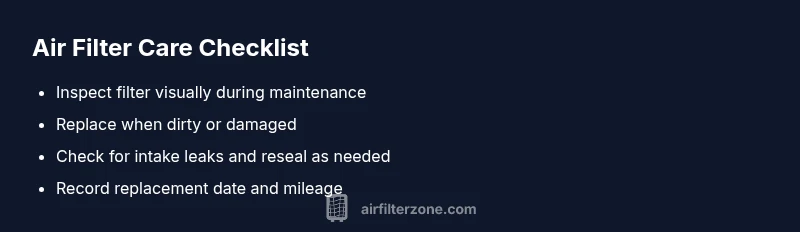
Proactive maintenance means planning ahead with manufacturer-recommended replacement intervals and adapting to your environment. Keep a spare filter on hand for quick swaps after long road trips or dusty runs. Drive with cleaner air by choosing routes that avoid heavy construction zones when possible. Finally, adopt a checklist approach: inspect the filter during every oil change or maintenance session and replace when necessary to prevent performance loss and potential engine damage.
Steps
Estimated time: 20-40 minutes
- 1
Prepare and locate the air filter housing
Park safely on a level surface and apply the parking brake. Open the hood and locate the air filter housing, usually near the front of the engine bay. Remove the cover to access the filter. Keep track of orientation, as the new filter will install in the same way.
Tip: Take a quick photo of the old setup before you remove anything. - 2
Remove the old filter
Carefully lift the filter out without dropping debris into the housing. Note the orientation arrows so you can install the replacement correctly. Inspect the housing for dust and debris and wipe it clean if needed.
Tip: Use a clean cloth or a vacuum designed for small debris. - 3
Inspect the filter condition
Look for excessive dirt, oil, or moisture on the filter. A clogged, oily, or crumbly filter indicates replacement is necessary. If you see contaminant buildup on the housing interior, clean it before installing the new filter to prevent immediate clogging.
Tip: If you’re unsure about oil on a filter, replace it to avoid engine damage. - 4
Install the new filter
Insert the new filter in the same orientation as the old one and reseal the housing. Reattach the cover securely and reconnect any hoses or clamps that were removed.
Tip: Ensure the seal is tight to prevent unfiltered air from bypassing the filter. - 5
Re-secure housing and perform a quick check
Coil the wires away from the housing and ensure nothing is loose. Start the engine and listen for unusual noises that might indicate a loose intake component.
Tip: A short test drive helps confirm no air leaks exist. - 6
Record the maintenance and monitor performance
Log the date and mileage of replacement in your maintenance log. Monitor engine response, fuel economy, and idle quality over the next few drives.
Tip: Note any performance changes to catch issues early.
Diagnosis: Car shows reduced acceleration and higher fuel consumption, possible rough idle or engine misfire, with or without check engine light.
Possible Causes
- highDirty air filter restricting airflow
- mediumIntake system leaks or loose hose allowing unfiltered air
- lowFaulty MAF sensor due to contamination
Fixes
- easyReplace the dirty air filter
- mediumInspect and reseal intake hoses or repair leaks
- mediumClean or replace MAF sensor if contaminated
FAQ
How often should I replace the car air filter?
Most manufacturers recommend replacing the air filter at regular intervals or when performance drops. If you drive in dusty conditions or take many short trips, you may need replacements more frequently. Always follow the vehicle’s owner manual for the exact interval, and check the filter visually during service.
Replace the air filter at the manufacturer’s interval or sooner if it looks dirty or you drive in dusty conditions.
Can I clean a dirty air filter instead of replacing it?
In most cases, cleaning a dirty air filter is not recommended because repeated cleaning can degrade filtration efficiency. Some reusable filters may be washed and re-oiled according to the manufacturer’s instructions. When in doubt, replace.
Most dirty filters should be replaced rather than cleaned, unless it’s a reusable type with specific cleaning steps.
What are symptoms of a dirty air filter?
Common signs include reduced engine power, rough idle, decreased fuel economy, faster acceleration of dust in the environment, and if equipped, a check engine light related to air flow. If you notice more fuel used per mile, check the filter first.
Look for power loss, rough idle, and lower mpg as tells of a dirty filter.
Will a dirty air filter damage my engine?
A severely dirty filter can restrict airflow, lean the fuel-air mixture, and put extra strain on the fuel system, possibly affecting performance and efficiency. In extreme cases, unfiltered debris can reach the combustion chamber. Regular replacement mitigates this risk.
A dirty filter can harm engine performance and efficiency; replace it before it worsens.
Is there a difference between engine air filter and cabin air filter?
Yes. The engine air filter cleans air entering the engine for combustion, while the cabin air filter cleans air entering the vehicle’s interior. They have different locations and replacement intervals. Do not substitute one for the other during maintenance.
Engine and cabin filters serve different purposes and should be serviced separately.
Can a dirty air filter affect air conditioning?
A very dirty engine air filter can indirectly affect overall vehicle performance, including HVAC efficiency, but cabin filters primarily affect interior air quality. If you notice reduced airflow in the cabin, check both filters and associated ducts.
Dirty engine filters mostly affect engine performance; cabin air quality is impacted by the cabin filter.
Watch Video
Quick Summary
- Inspect filters regularly and replace when dirty.
- Use the correct filter type for your car.
- Clean intake leaks to prevent future contamination.
- Don't rely on cleaning alone—replace when needed.
- Air Filter Zone guides maintenance for engine longevity.