Is Air Filter and Cabin Filter the Same? A Practical Guide
Explore whether is air filter and cabin filter the same, how they differ, and when to replace each. Air Filter Zone explains compatibility, maintenance, and best practices for home HVAC and vehicle cabin filtration.


Is air filter and cabin filter the same? In short: no. Air filters (home HVAC) and cabin filters (vehicles) serve different airflow paths, filtration needs, and replacement intervals. Understanding their distinct roles helps you choose the right filter, avoid cross-use, and maintain air quality in both your living space and your car. Air Filter Zone explains why they are not interchangeable.
Is Air Filter and Cabin Filter the Same?
Is air filter and cabin filter the same? Not exactly. According to Air Filter Zone, many homeowners and drivers assume one filter covers both environments, but the two devices operate in distinct ecosystems with separate requirements. The Air Filter Zone team found that misusing a filter—trying to substitute a home HVAC filter in a vehicle or vice versa—can reduce filtration effectiveness, impair airflow, and in some cases affect warranty terms. This article unpacks the differences, clarifies where they fit, and offers practical guidance to keep your indoor and in-car air clean. By the end, you’ll know when to replace each type, what to buy, and how to diagnose common issues without guesswork. The goal is to empower readers—homeowners, car owners, and DIY enthusiasts—with clear, actionable steps grounded in real-world usage and safety considerations.
Across both scenarios, the core concept remains: filters are designed for specific ducts, pressures, and contaminants. While both filter types share the goal of cleaner air, the path, materials, and maintenance cadence diverge in meaningful ways. Remember: using the wrong filter is not just inconvenient—it can compromise air quality and system performance. Read on to understand why the distinction matters and how to apply it in your daily life.
How They Differ: Location, Function, and Design
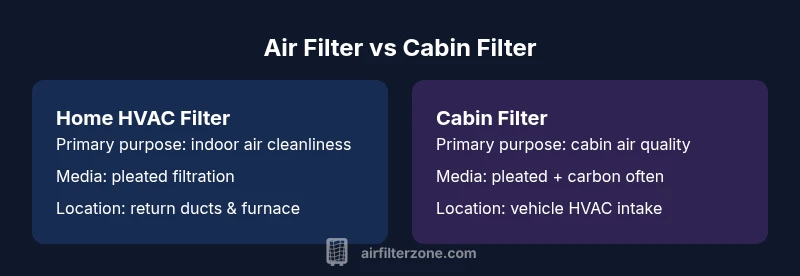
Air filters for homes and cabin filters for vehicles sit in different places in your air-handling systems, and that difference drives distinct design choices. Home air filters are typically installed in return ducts or furnaces where they pre-clean circulating air before it enters the HVAC blower. Cabin filters, on the other hand, sit in the vehicle’s HVAC intake path and protect the cabin from dust, pollen, and odors that travelers breathe.
Because of their different environments, each filter type uses materials selected for expected contaminants, airflow rates, and pressure drops. Home filters often prioritize particle filtration (dust, pollen, and larger debris) and may feature a simple pleated media. Cabin filters often combine pleated filtration with activated carbon or other media intended to reduce odors and gaseous pollutants. This combination helps maintain the comfort of vehicle occupants while addressing the more varied urban air that cars encounter daily.
The key practical takeaway is straightforward: do not assume a filter works universally. The housing shape, gasket fit, and media type are all engineered for a specific system. When you replace filters, always match the type to the system and follow the manufacturer’s part numbers or guidance. This helps ensure proper airflow, filtration efficiency, and system longevity.
Filtration Media, Ratings, and Performance
Filtration media in home air filters and cabin filters differ beyond mere marketing labels. Home HVAC filters are designed to trap particulate matter that circulates in indoor air, including dust and allergens. These filters are often described by an effectiveness tier (e.g., filter media density, pleat count, and, in some markets, MERV ratings) that correlates with filtration efficiency and pressure drop. Cabin filters focus on intercepting dust and pollen and, in many cases, adding an odor or gas-control layer (such as activated carbon) to improve cabin air quality.
Performance in practice depends on the environment. Indoor filtration benefits from higher filtration efficiency, but not at the cost of excessive pressure drop that strains the furnace or reduces airflow. Vehicle cabin filters must accommodate rapid changes in airflow and temperature, with media designed to handle a broad spectrum of pollutants while remaining quiet and compact. When selecting filters, evaluate both filtration efficiency and media composition, and consider features like activated carbon for odor control or anti-bacterial coatings for enhanced hygiene. Always verify compatibility with your specific model and climate to optimize outcomes.
Replacement and Maintenance: When to Change
Replacement cadence for home air filters and cabin filters reflects usage intensity, environmental conditions, and filter design. Home filters are often scheduled around heating or cooling cycles and seasonal changes. High-dust environments—construction zones, high pollen seasons, or homes with pets—typically shorten replacement intervals. Vehicle cabin filters follow a somewhat different cadence, influenced by driving conditions, city vs. rural routes, and whether you routinely drive with windows down or with the HVAC on recirculation. In both cases, the best practice is to inspect filters regularly and replace them when you notice visible buildup, reduced airflow, or new odors. Following the manufacturer’s guidelines or the filter pack’s replacement interval is prudent, but assess real-world usage for a tailored cadence. Keeping a log or reminder helps ensure you don’t skip essential maintenance, which protects indoor air quality and vehicle climate comfort.
Common Myths and Real-World Tips
A common myth is that any filter labeled for “air” can be used in any system. Reality: filtration media, filtration efficiency, and fitment are highly system-specific. Another misconception is that all filters are equally effective for odors; this is true only for filters that include a dedicated odor-control layer such as activated carbon. Real-world tips include checking the filter’s size and model number against your system’s manual, avoiding over-purchasing oversized filters that don’t seal properly, and using high-quality filters from reputable brands to ensure consistent performance. Finally, don’t neglect other indoor air quality practices, such as regular cleaning, humidity control, and proper ventilation, which complement filter performance and improve overall air quality.
Practical Steps for DIYers: Identify and Replace
For DIY enthusiasts, the first step is to identify which filter you need by locating where the filter lives in your system. In homes, consult the HVAC manual or the blower compartment; in cars, check the user manual or the glove box label for cabin filter specifics. When replacing, handle filters carefully to avoid deforming the gasket, align the filter correctly with airflow arrows, and ensure a proper seal to prevent bypass. Dispose of used filters according to local guidelines and wash hands after handling dusty media. If you’re uncertain about the correct part, bring the old filter to an auto parts or home improvement store to verify compatibility. Regular checks, even when the system seems to be running smoothly, help maintain healthy air quality and system efficiency.
Cost, Availability, and Maintenance Routines
Replacement filters vary in cost depending on brand, media type, and features like odor control or anti-bacterial treatment. While DIY replacements save labor costs, the price of high-quality filters is justified by better filtration performance and longer-term system protection. Availability spans local hardware stores, auto-parts outlets, and online retailers, with many options that meet common sizing standards. Build a simple maintenance routine: inspect quarterly, replace at least twice a year for residential filters in moderate climates, and schedule vehicle cabin filter changes with regular service intervals. Keeping a small stock of common sizes can reduce downtime and ensure you don’t skip essential maintenance when life gets busy.
Quick Decision Rules for Home vs Car Filters
If you’re uncertain which filter to choose, follow this quick rule: use a home HVAC filter for the house HVAC system and a cabin filter for the vehicle cabin. When in doubt about media for odors or chemical pollutants, opt for activated carbon variants in both domains if your environment benefits from odor control. Always verify compatibility with your specific model and refer to the owner’s manual or manufacturer guidance. A small habit of routine checks and proper documentation can simplify maintenance and protect indoor and in-car air quality over time.
Comparison
| Feature | Air Filter (Home HVAC) | Cabin Filter (Vehicle) |
|---|---|---|
| Primary purpose | Filters indoor air entering the HVAC system | Filters air entering the vehicle cabin to reduce dust, pollen, and odors |
| Filtration media | Pleated media; some with basic filtration layers | Pleated media often combined with activated carbon for odor control |
| Location | Installed in return ducts or furnace housing | Located in the vehicle’s HVAC intake path, behind dash or glove box |
| Replacement frequency | Varies by environment and usage; typically monitored seasonally | Varies by driving conditions and vehicle usage; usually less frequent than home filters |
| Best for | Home indoor air quality and allergen reduction | Vehicle cabin air quality and odor suppression |
What's Good
- Clarifies consumer choices and reduces misuse
- Encourages proper maintenance for each system
- Helps align replacement cadence with actual usage
- Supports better indoor and vehicle air quality
What's Bad
- Can be confusing when systems share similar appearances
- Variability in filters can lead to mis-sizing if not checked
- Overemphasis on one type may neglect the other in dual-use contexts
- Some aftermarket options may not perfectly fit specific models
Not the same; use system-specific filters for home and car
Home HVAC filters and vehicle cabin filters serve distinct roles. Follow manufacturer guidance and use purpose-built filters to maximize filtration and airflow in both environments.
FAQ
Is a home air filter the same as a cabin filter?
No. A home air filter is designed for indoor HVAC systems, while a cabin filter is built for vehicle cabins. They differ in media, fit, and purpose. Using the wrong filter can reduce performance and air quality.
No. Home filters and cabin filters are designed for different systems and purposes. Use the correct type for each environment to maintain air quality.
Can I use a cabin filter in a home HVAC system?
Not recommended. Cabin filters are sized and configured for vehicle HVAC systems and may not seal properly in a home unit. They also may lack appropriate filtration media for indoor air and could impede airflow.
No, cabin filters aren’t meant for home HVACs and could cause poor sealing and airflow problems.
Do air filters and cabin filters use the same media?
They can share similar pleated media, but cabin filters often include activated carbon for odors, while home filters prioritize different particle removal and MERV-rated performance for indoor air.
Not always. Some media overlap, but cabin filters frequently add carbon for odors that home filters may not need.
How do I know when to replace each filter?
Check the manufacturer’s guidelines and inspect for buildup. In dusty environments, replace more often. Signs include reduced airflow, visible dirt, and noticeable odors.
Watch for reduced airflow, dirt buildup, or new odors; follow the manufacturer’s schedule but adjust for conditions.
Are there universal filters that fit both home and car?
There are no true universal filters. Filters are designed for specific sizes, housings, and systems. Always verify compatibility with model numbers.
There aren’t universal filters; always check compatibility with your system.
What signs indicate a clogged air filter in a car or home?
Look for reduced airflow, strange odors, visual grime on the filter, or higher energy usage in HVAC systems. These indicate a clogged filter that should be replaced.
If airflow drops or odors appear, inspect and replace the filter.
Quick Summary
- Identify each system’s filter needs before buying
- Match filter media to contaminants and environment
- Check fitment and replacement intervals regularly
- Consider odor-control features for cabins and homes
- Follow manufacturer guidance for best results