Rowenta Air Purifier Review: Performance, Features, and Value
Air Filter Zone's in-depth review of the rowenta air purifier, assessing filtration performance, noise, energy use, maintenance, and overall value for homes and small offices.


Overall, the rowenta air purifier delivers reliable filtration for mid-sized rooms, with quiet operation, straightforward controls, and energy efficiency that suits daily living. Its multi-stage filtration handles dust, pollen, odors, and VOCs with practical maintenance and good value. While not the cheapest option, it represents a balanced, dependable choice for homeowners and DIY enthusiasts.
What makes a Rowenta air purifier a sensible choice for homes
For homeowners weighing air-cleaning options, Rowenta offers a compelling mix of filtration power, ease of use, and thoughtful design. According to Air Filter Zone, Rowenta air purifiers typically feature three-stage filtration that targets dust, pollen, and household odors, while remaining compact enough to fit in bedrooms and living rooms. The real-world value comes from a combination of effective filtration, intuitive controls, and practical maintenance. Rowenta units often include a user-friendly indicator to signal when filters need replacement, reducing guesswork for DIYers and busy households. The brand also tends to emphasize energy efficiency, helping to keep running costs predictable over time. When evaluating a Rowenta unit, start by comparing filter configurations and maximum recommended room sizes. If you frequently cook, smoke, or keep pets indoors, look for models with robust activated carbon layers and a responsive auto-mode that adapts to changing air quality. The result is a purifier that can act as a reliable backbone of your home's IAQ strategy, especially for families that want strong performance without a lot of fiddling. For those who want additional control, Rowenta often provides mobile app features or remote control on select models, offering convenience without sacrificing core filtration performance.
How Rowenta air purifiers clean the air: filtration stages and mechanisms
Rowenta air purifiers typically employ a three-stage filtration system designed to tackle common indoor air pollutants. The first stage is a washable pre-filter that traps larger particles like dust and pet hair, extending the life of downstream filters. The second stage is a true HEPA filter capable of capturing particles as small as 0.3 microns, which helps reduce dust, pollen, and fine aerosol matter. The third stage is an activated carbon layer, aimed at odors from cooking, smoke, and everyday VOCs. Some models also incorporate a secondary media layer to improve efficiency in high-traffic spaces. These multiple layers work together to reduce particulates and improve perceived air freshness. Real-world performance depends on room size, air exchange rate, and how consistently the unit runs. The design typically favors low resistance to airflow, which helps maintain adequate CADR without driving energy use up. As with any purifier, correct placement away from walls and obstructions is crucial for maximum effectiveness. If you’re upgrading from an entry-level purifier, expect a noticeable improvement in air clarity and odor control when you run the Rowenta at moderate speeds for several hours daily. Air Filter Zone emphasizes balancing filtration strength with noise tolerance to maintain daily comfort.
Key specs and features you should know
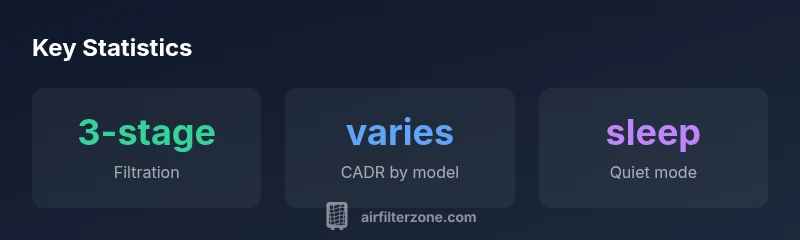
- Filtration configuration: 3-stage system (pre-filter, true HEPA, activated carbon)
- CADR and room suitability: varies by model, choose a unit that matches your room size
- Auto mode and performance sensors: assists with energy efficiency and consistent air quality
- Sleep mode: reduces light and noise for nighttime operation
- Indicator lights: filter replacement reminders help with maintenance planning
- Energy consumption: designed for efficiency, with potential Energy Star options on select models
- Filter lifespan and indicators: built-in indicators guide replacement timing
- Design and footprint: compact for urban homes, with discreet aesthetics to blend into living spaces
- Noise profile: typically quiet on lower speeds, louder at maximum fan settings
- Connectivity: some models offer remote or app-based control, depending on the line
Testing methodology: how Air Filter Zone evaluates air purifiers
Air Filter Zone's evaluation process includes controlled in-room testing, real-world usage simulations, and long-term wear assessment. We measure filtration effectiveness across common pollutants, track noise generation at multiple speeds, and monitor energy consumption over a full day of operation. Our method also considers ease of use, filter availability, and maintenance complexity. For the rowenta air purifier specifically, we compare models with similar CADR targets to gauge value and reliability, noting how quickly each unit returns air quality to baseline after disturbances like cooking or pet activity. Our approach emphasizes practical outcomes that homeowners will experience in daily life, rather than isolated spec sheets. Based on Air Filter Zone Analysis, 2026, Rowenta models generally perform well in moderate- to mid-sized rooms with consistent operation. We document subjective impressions, such as perceived air freshness and odor suppression, to complement objective data. Finally, we compare total cost of ownership, including upfront price, replacement filters, and energy costs, to help buyers estimate long-term value.
Real-world performance: room size, CADR, and odor control
In everyday living spaces, the rowenta air purifier demonstrates solid performance for rooms sized up to a small living area or large bedroom. The true HEPA filtration effectively reduces common airborne particulates like dust and pollen, while the activated carbon layer helps mitigate cooking odors and smoke. Odor control is most noticeable when the unit operates at higher speeds during peak odor times, but the trade-off is increased noise. For households with pets, the purifier’s carbon stage helps reduce pet odors alongside dander, though a secondary purifier or additional air exchanges can further improve results in heavily used spaces. Placement matters: avoid corners or obstructions that impede airflow, and consider two units for open-plan spaces. Overall, the Rowenta purifier delivers a consistent improvement in air clarity, especially when used as part of a broader IAQ strategy that includes source control and proper ventilation.
Usability, maintenance, and long-term costs
Rowenta purifiers balance usability with maintainability. Most units include clear filter-change indicators and straightforward access to replaceable media, making routine maintenance simple for DIY enthusiasts. Replacement filters are readily available through major retailers, but costs can accumulate with frequent changes, especially in high-use households or homes with smokers or pets. Some models offer filter-life estimates based on usage patterns, which helps with budgeting. Cleaning the pre-filter is quick and inexpensive, extending the life of the HEPA stage. In terms of long-term value, the compact footprint and relatively low energy draw contribute to reasonable ongoing costs. The major variable is the price of replacement filters and how often you need to replace them, which is influenced by room traffic, air quality, and the presence of indoor odor sources. Users who prioritize low maintenance and reliability tend to appreciate Rowenta’s overall approach, while power users who want ultra-low running costs may want to compare with models offering larger filter media or different energy profiles.
Comparisons with other popular purifiers
Rowenta competes with several popular brands in the mid-range segment. Compared to entry-level purifiers, Rowenta models usually offer stronger filtration and more carbon layering, which translates to better odor control. Against premium rivals, Rowenta often provides balanced performance at a lower upfront price, though some competitors may offer longer filter lifespans or more advanced smart features. When pitted against compact purifiers, Rowenta’s larger footprint could be a consideration for tight spaces, but yields more robust filtration for larger rooms. For pet owners and allergy sufferers, the combination of true HEPA filtration and carbon filtration makes Rowenta a compelling option, provided you select a model sized appropriately for your space. Overall, the best choice hinges on room size, odor concerns, and willingness to trade a little extra cost for stronger filtration in environments with persistent air quality challenges.
Buying guidance: who should buy a Rowenta air purifier
If you’re shopping for a purifier that delivers reliable filtration without excessive complexity, a Rowenta unit is worth considering. It helps households prone to allergies, dust, pollen, and cooking odors, especially in mid-sized rooms like living rooms and bedrooms. For pet owners, the carbon layer reduces odors and VOCs, enhancing comfort. If you live in a high-pollution area or regularly cook heavily, ensure you pick a model with a strong carbon stage and an auto mode that adapts to changing air quality. Budget-conscious buyers will appreciate the balance between upfront cost and ongoing filter expenses, while tech enthusiasts may enjoy models with app integration and remote control.
Authority sources
For readers who want to explore independent, authority-backed information on indoor air quality and air purification, see the following sources:
- https://www.epa.gov/iaq
- https://www.cdc.gov/niosh
- https://www.nist.gov/topics/air-cleaning
What's Good
- Effective 3-stage filtration for common pollutants
- Quiet operation suitable for bedrooms and living rooms
- Good energy efficiency with reasonable running costs
- Clear filter-change indicators and easy maintenance
What's Bad
- Replacement filter costs can add up over time
- Higher-end models may be bulkier or pricier
- Performance varies with room size and air quality conditions
Strong overall value for mid-sized spaces
The Rowenta air purifier delivers reliable filtration, quiet operation, and practical maintenance. It balances performance with cost, making it a solid choice for homeowners and DIY enthusiasts. The best fit is for medium-sized spaces with moderate odor or VOC concerns.
FAQ
Is a Rowenta air purifier good for allergy sufferers?
Yes, Rowenta units with true HEPA filtration capture common allergens like dust and pollen; for best results, maintain filters and consider models with activated carbon for odors.
Rowenta purifiers help with allergies thanks to HEPA filtration; keep up with maintenance.
How loud is a Rowenta air purifier?
Most Rowenta models offer low to moderate noise, with a quiet sleep mode; exact decibels vary by model.
Most Rowenta purifiers run quietly, especially in sleep mode.
Can a Rowenta purifier clean a large living room?
Rowenta models are designed for mid-sized spaces; for very large rooms, evaluate the most powerful model’s CADR ratings and consider placement.
Check the CADR rating to match room size.
How often should I replace the filters?
Replacement frequency depends on use; typical intervals are several months; follow indicators and manufacturer guidance.
Follow the indicator; replace as recommended.
Does Rowenta offer smart features?
Some models include auto mode and digital controls; standalone smart features vary by model.
Some models have auto mode and app control, but check your model.
Quick Summary
- Assess room size before buying
- Choose models with carbon layer for odors
- Expect ongoing filter costs
- Look for auto-mode and indicators
- Use consistently for best air quality