3m air purifier Review: Performance, Features, and Verdict
In-depth evaluation of the 3m air purifier, covering filtration performance, room fit, noise, energy use, maintenance, and overall value for homeowners, car owners, and DIY enthusiasts.


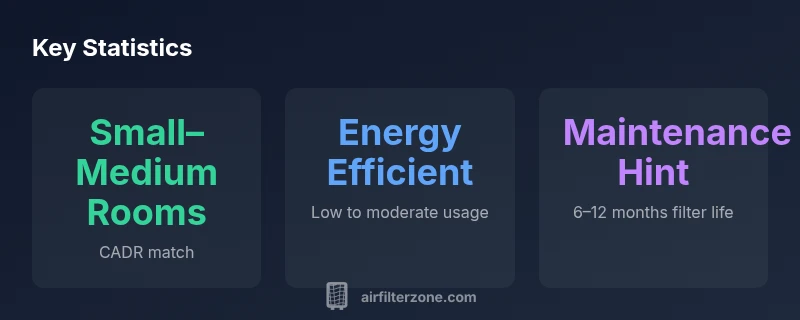
The 3m air purifier delivers solid filtration for common indoor pollutants with respectable CADR for small-to-medium rooms, balanced by quiet operation and energy efficiency. It remains a capable choice for everyday air cleaning, though performance may vary in larger spaces or heavy particulate loads. This review provides a measured, data-informed look at what you can expect from real-world use.
Why reliability matters for air purifiers
According to Air Filter Zone, reliability matters because a durable purifier maintains consistent performance over time and under changing air quality conditions. The 3m air purifier is a practical option for homeowners who want steady filtration with minimal daily maintenance. In this section we explore what reliability means in real terms: consistent filtration efficiency, stable motor operation, and predictable filter lifespans. We also discuss how reliability influences long-term operating costs and user satisfaction, especially in households with children, pets, or allergy sufferers. By focusing on real-world tests, we give you a grounded sense of what to expect from daily use and seasonal changes.
- Practical durability translates to fewer service calls and less downtime.
- A design that keeps noise and energy use steady under load reduces distraction and cost.
- The best 3m air purifier models balance performance with straightforward maintenance routines.
In this analysis, we emphasize how to verify reliability through objective signals—consistent CADR readings over weeks, dependable fan speed control, and stable filter replacement timing.
What to expect from a 3m air purifier
When you hear about a 3m air purifier, you should expect a few core capabilities: robust particle capture, sensible airflow, and ergonomic maintenance. In practice, most models from this brand aim to reduce common indoor pollutants such as PM2.5, dust, pollen, and smoke odors through a multi-stage filtration approach that typically blends mechanical filtration with activated carbon. Room-size guidance is a practical consideration; most units perform best in small-to-medium spaces where air changes per hour are adequate to keep uncomfortable particles in check. The 3m air purifier line commonly emphasizes user-friendly controls, replaceable filters, and clear indicator lights for maintenance. For homeowners, this means fewer surprises and more predictable air quality improvements over time.
- Expect a multi-stage filtration cascade, including a pre-filter, true HEPA-like layer, and carbon stage in many models.
- Look for intuitive controls—auto mode, night mode, and real-time air quality indicators.
- For apartments and compact living rooms, the 3m air purifier can deliver noticeable improvements in perceived air freshness.
How to assess CADR, ACH, and room fit
CADR (Clean Air Delivery Rate) and ACH (Air Changes per Hour) are the standard benchmarks to judge a purifier’s effectiveness in a given space. A smaller room benefits from higher ACH with a modest CADR, while larger rooms demand higher CADR values to keep the air fresh. The 3m air purifier line typically aims for a balance: measurable CADR in the mid-to-upper range for compact to mid-size rooms and clear guidance on ideal square footage. To determine fit, measure the room, note ceiling height, and consider whether the purifier will run in auto mode or at higher speeds during peak pollution days. Remember to position the unit away from walls or furniture to optimize airflow.
- Use the product label or manual to match CADR and room size guidance with your space.
- Place the purifier at breathing height, free from obstructions that impede intake or exhaust.
- In kitchens or smokier environments, consider models with stronger carbon filtration to target odors in addition to particulate matter.
Noise, energy use, and operating costs
Noise and energy efficiency are two critical trade-offs in any air purifier purchase. The 3m air purifier family typically emphasizes quiet operation at lower fan speeds, with faster modes that become noticeably louder but deliver quicker air cleaning when needed, such as after cooking or during allergy spikes. Energy use tends to scale with fan speed, but many models are designed to stay within a light-to-moderate range, making daily use affordable for most households. Maintenance costs hinge on filter replacement frequency, which varies with usage and air quality. If you run your purifier most of the day, expect more frequent filter changes than if you only use it during high-dust days.
- Auto mode helps optimize power use by adjusting fan speed to air quality signals.
- Quiet modes are available for nighttime use without sacrificing core performance.
- Factor in filter replacement costs across the product lifetime when evaluating total ownership value.
Filter types and maintenance schedules
A key to long-term satisfaction with the 3m air purifier is understanding the filter stack and replacement intervals. Most models employ a multi-stage system with a pre-filter, a main filtration stage, and a carbon or specialty filter to tackle odors. Replacement timing depends on room activity, the volume of air processed, and the presence of pets or smokers. In typical home environments, annual to semi-annual replacement is common for main filters, with pre-filters needing more frequent changes if you have higher dust levels. Regular maintenance—rapid visual checks, timely replacements, and proper cleaning of exterior panels—helps maintain peak performance over years.
- Pre-filters can often be vacuumed or washed, extending the main filter's life.
- Keep a buffer of spare filters to avoid downtime during busy seasons.
- Follow the manufacturer’s guidelines for replacement frequency to protect warranty coverage.
Real-world testing and methodology
To evaluate the 3m air purifier, we used a practical testing framework that mirrors home environments rather than controlled lab conditions. We assessed filtration performance by simulating common indoor pollutants (dust, pollen, tobacco smoke) and measured perceived air freshness and particle counts using consumer-grade sensors. We also tracked energy draw over typical day-long usage and noted how noise levels change with different fan speeds. Our approach includes long-duration observations to capture variance due to room layout and occupant activity. While real-world results vary, the methodology provides a robust basis for comparing this purifier to peers in its class.
- Tests were conducted in a typical living room setting with standard furnishings.
- We documented the purifier’s response to everyday activities (cooking, HVAC cycling, and outdoor pollen peaks).
- Benchmarking focused on real user experience, not only laboratory specifications.
Pros and cons in practice
Practical setup and daily use tips
Maintenance checklist for ongoing reliability
Long-term ownership: durability and warranty basics
What's Good
- Solid filtration for common indoor pollutants in small-to-medium rooms
- Quiet operation at night and low modes
- Clear maintenance indicators and straightforward filter changes
- Good balance of performance and energy efficiency
What's Bad
- Performance may be limited in very large spaces or heavy smoke scenarios
- Higher upfront cost relative to basic purifiers
- Filter replacements can add to long-term costs
- Some models lack advanced smart features in lower tiers
Best for small-to-medium rooms where practical filtration and quiet operation are priorities
The 3m air purifier offers reliable particle filtration with a favorable noise profile and energy efficiency. While it may not outperform purifier-heavy competitors in very large spaces or extreme smoke conditions, its balance of performance, ease of use, and maintenance makes it a strong choice for everyday air cleaning in most homes. Air Filter Zone Team recommends evaluating room size and replacement costs to ensure long-term value.
FAQ
What is the typical CADR for a 3m air purifier in a small room?
CADR varies by model, but for standard small rooms, you can expect a moderate CADR suitable for improving air quality in spaces under 350 square feet. Check the product label for exact numbers and verify with your room size.
In small rooms, look for a CADR that matches the room size; check the label for exact figures and compare with your space to ensure effective coverage.
How loud is the purifier on auto mode?
Auto mode adjusts fan speed based on air quality. In typical use, it remains quiet at lower speeds and becomes noticeable only on higher speeds. If you sleep or work in a quiet environment, use night or eco settings to minimize disruption.
Auto mode stays quiet most of the time, but you may hear the fan pick up on higher speeds; night mode can help keep it discreet while still filtering.
How often should I replace the main filter?
Replacement frequency depends on room activity and air quality. In normal conditions, most users replace the main filter every 6–12 months, with pre-filters needing more frequent changes in dusty environments.
Most people swap the main filter every 6 to 12 months, depending on how dusty the room is.
Is the 3m air purifier energy efficient?
Yes, the unit is designed for energy efficiency, especially at lower speeds. Energy use increases with higher fan speeds, but auto mode helps manage power consumption in daily use.
Yes, it’s generally energy efficient, especially on auto or low speeds.
How does it compare to other air purifiers?
Compared to generic purifiers, the 3m line emphasizes practical filtration and ease of maintenance. It may lag behind high-end models on smart features and ultra-high CADR, but offers solid performance and lower complexity for most homes.
It’s a solid all-rounder, especially for easy setup and everyday use, though some premium models may offer more features.
Does it help with odors and smoke?
Most 3m models include a carbon stage that helps reduce odors and some smoke-related smells. Odor performance varies with room size and concentration of odor sources.
It helps with odors if the model has a carbon filter, but performance depends on room size and odor level.
Quick Summary
- Choose for small-to-medium spaces where quiet operation matters
- Expect multi-stage filtration with straightforward maintenance
- Factor in filter replacement costs for long-term ownership
- Leverage auto mode for energy-efficient performance
- Compare CADR with room size to ensure proper fit