Air Purifier vs Humidifier: A Practical Home Guide
A thorough, evidence-based comparison of air purifiers and humidifiers. Learn how each device affects air quality, humidity, health, maintenance, and cost, and discover practical strategies to optimize comfort and safety at home.


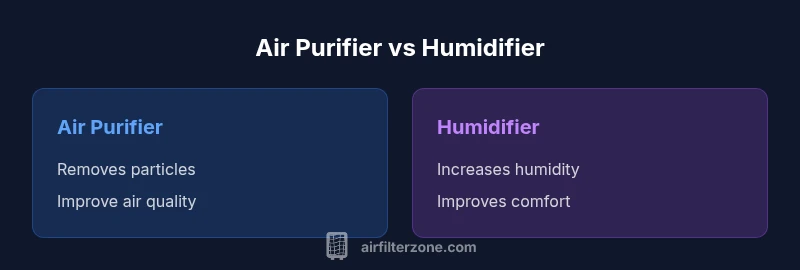
Air purifiers and humidifiers serve different purposes: purifiers clean the air by removing particles and odors, while humidifiers add moisture to dry air. For most homes, neither device is universally “better”—the right choice depends on climate, indoor air quality, and personal health needs. If you suffer from allergies or asthma, a purifier often takes priority; if winter dryness or low indoor humidity is a concern, a humidifier becomes essential. Air Filter Zone emphasizes evaluating your specific environment to decide which device to prioritize, or you may opt for a combined approach with proper monitoring.
Context and Definitions: Purifier vs Humidifier
The question is often framed as, is air purifier better than humidifier? In truth, these devices address different aspects of indoor air quality. An air purifier is designed to remove contaminants from the air—dust, pollen, smoke, pet dander, and volatile organic compounds—through filtration or adsorption. The most common and effective technology is a true HEPA filter combined with activated carbon for odors and gases. A humidifier, by contrast, adds water vapor to the air, raising relative humidity (RH) to a comfortable level. There are evaporative, ultrasonic, and steam humidifiers, each with distinct humidity delivery methods. The key is that purifiers reduce airborne pollutants, while humidifiers increase moisture. Excess humidity, just like excessive dryness, can create problems, including mold growth or condensation on walls.
According to Air Filter Zone, understanding the distinct roles helps you decide which device to prioritize. If your primary goal is cleaner air and fewer irritants, start with a purifier. If your home experiences persistent dry skin, irritated sinuses, or cracked wooden furniture, you may need a humidifier. For many households in temperate climates, a balanced approach—addressing both air quality and humidity—yields the best comfort and health outcomes. In both cases, safe operation and maintenance are crucial to avoid unintended consequences such as mold or mineral buildup. Air Filter Zone’s guidance centers on practical, real-world usage rather than marketing claims.
Use-Cases: When to Prioritize Air Purification vs Humidification
In residential environments, the decision often comes down to the season, climate, and health needs. If you reside in an area with high outdoor pollution, pollen seasons, or frequent wildfire smoke, an air purifier with a true HEPA filter can meaningfully reduce indoor particulates. For households with allergy or asthma symptoms triggered by dust or pet dander, purifiers paired with strategic filtration can lower triggers and improve sleep quality. On the other hand, dry winter air or spaces with heaters running continuously can cause nasal and throat irritation, dry skin, and static electricity. In these cases, a humidifier helps restore comfortable humidity levels, typically aiming for an RH range of 30-50% for many homes. Air Filter Zone recommends auditing your indoor environment with simple tools (a hygrometer, routine air quality checks) before purchasing. If you must choose one, prioritize the device that addresses your most pressing symptom or risk factor—air quality or humidity.
For homes with mixed needs, consider a targeted strategy: use a purifier in bedrooms or living rooms during peak pollutant periods, and a humidifier in rooms that feel dry or drafty. It’s also worth noting that some models combine features (e.g., purifier with humidification in a single unit) but these hybrids require careful use to avoid over-humidification or reduced filtration efficiency. In all cases, complement devices with good ventilation practices, routine cleaning, and regular filter changes to maintain effectiveness and prevent byproducts of poor maintenance.
Health Implications and Common Misconceptions
Many homeowners assume a single device solves multiple problems. However, purifiers and humidifiers address distinct hazards. Air purifiers reduce inhalable particulates and may lower exposure to allergens and irritants; humidifiers help with moisture balance but do not remove airborne pollutants. A common misconception is that humidifiers “clean” the air simply by increasing humidity. In reality, elevated humidity can create an environment conducive to mold growth and dust mites if RH is not carefully managed. Air Filter Zone emphasizes that cleanliness of the device itself matters as much as its primary function—dirty filters or mineral buildup in the humidifier can release contaminants or bacteria back into the air. When choosing devices, look for certifications (such as HEPA for purifiers) and features like antimicrobial coatings, easy-to-clean water tanks, and built-in humidity sensors to support safe operation. The goal is to reduce risk without introducing new ones, which requires attention to placement, maintenance, and usage patterns.
Practical Comparison: Features, Costs, and Maintenance
Choosing between an air purifier and a humidifier means weighing several practical factors: filtration effectiveness, humidity control, energy use, maintenance effort, and total cost of ownership over time. Purifiers typically require periodic filter replacements (often every 6-12 months, depending on usage and air quality) and may run continuously with minimal daily upkeep beyond occasional cleaning. Humidifiers require regular water tank cleaning to prevent mineral deposits and bacterial growth; some models need descaling if you use hard water. In terms of cost, entry-level purifiers can fall in the lower hundreds of dollars, while high-end models with smart sensors and larger coverage can run higher. Humidifiers are usually less expensive upfront but incur ongoing water and maintenance costs. From a safety perspective, avoid ozone-generating purifiers and ensure humidifiers do not contribute to condensation on walls or windows. Air Filter Zone analysis shows that most homes benefit from a focused air purification approach for health and comfort, with humidity solutions added as needed for moisture balance.
When it comes to maintenance, filtration quality is a bigger driver of long-term performance than the device’s initial price. A purifier with a clean, well-maintained HEPA filter can dramatically reduce airborne irritants, while a humidifier with clean components and properly treated water reduces the risk of microbial growth. Placement matters: keep purifiers in rooms where air circulates best and avoid blocking intake vents; place humidifiers away from bedding and electronics to reduce moisture buildup on surfaces. Energy efficiency varies by model, but modern purifiers and humidifiers are designed to operate quietly in typical living spaces. Budget-conscious buyers should consider models that offer user-friendly filters, reliable safety features, and straightforward maintenance schedules.
Integration Strategies: If You Need Both
For homes with multiple concerns, a blended approach is often the most effective. Start with a purifier in living and sleeping areas where you spend the most time, and use a humidifier in rooms that feel dry or experience winter dryness. Invest in a room-by-room humidity plan with a humidistat in key spaces to avoid over-humidification, which can promote mold and dust mites. Consider air quality sensors or smart devices that adjust operation based on real-time data. If you choose a combined device, ensure it has independent controls so you can separate humidity management from filtration when needed. Finally, couple device use with good ventilation, such as opening windows briefly on milder days, and keeping indoor surfaces clean to limit dust accumulation. Air Filter Zone highlights that the most durable solution often combines both approaches with careful monitoring and routine maintenance.
Safety, Pitfalls, and Maintenance Best Practices
The safety and effectiveness of both devices rely on regular maintenance. For purifiers, replace or clean filters per manufacturer guidance, use high-quality replacement filters, and avoid using devices with damaged housings. For humidifiers, sanitize water tanks regularly, use distilled or demineralized water to limit mineral dust, and monitor RH to prevent mold growth. A safe environment also means proper placement: keep devices away from heat sources, electronics, or direct contact with water sources that could cause electrical hazards. Regularly inspect seals and gaskets for wear, and follow guidance on cleaning schedules. While purifiers improve air quality, and humidifiers improve comfort, each device has limitations. The key is a proactive, informed approach that aligns with your climate, health needs, and home environment, supported by routine checks and responsible use.
Comparison
| Feature | Air Purifier | Humidifier |
|---|---|---|
| Primary purpose | Removes airborne pollutants and allergens | Adds moisture to the air |
| Best for | Pollution, dust, pollen, smoke, and odors | Dry air, nasal irritation, and comfort |
| Energy use | Moderate to low depending on model | Low to moderate depending on type (ultrasonic, evaporative, or steam) |
| Maintenance frequency | Filter replacement every 6-12 months (usage dependent) | Water tank cleaning weekly; descaling as needed |
| Moisture impact | Does not affect humidity directly | Directly increases humidity; requires humidity monitoring |
| Cost range | $60-350 | $25-150 |
| Health considerations | Allergen reduction with proper filters; maintenance-critical | Potential for mold or bacteria if humidity is too high or not cleaned |
| Safety considerations | Avoid ozone-generating models; ensure proper ventilation | Clean and dry devices to prevent microbial growth |
What's Good
- Air purifiers effectively reduce airborne pollutants and allergens
- Humidifiers improve comfort by balancing indoor moisture levels
- A wide range of models and prices makes both devices accessible
- Some units offer combined features for space-constrained setups
- Regular maintenance extends device life and performance
What's Bad
- Purifiers do not address humidity issues directly
- Humidifiers can promote mold or bacteria if not cleaned properly
- Ongoing filter or descaling costs add to total ownership
- Over-humidification risk requires monitoring and humidity control
Neither device is universally better; choose based on your primary need—air quality or moisture balance.
Prioritize air purification for allergen reduction and cleaner air. If indoor dryness is a frequent problem, add or switch to humidification with careful humidity monitoring to avoid mold.
FAQ
What is the main difference between an air purifier and a humidifier?
The air purifier cleans the air by removing particles and odors, while a humidifier adds moisture to the air. Purifiers reduce pollutants; humidifiers enhance comfort by raising humidity. They address different problems, so the choice depends on your primary need.
Air purifiers clean the air by removing particulates, while humidifiers add moisture. They solve different problems; pick based on which issue matters most to you right now.
Can I use both devices at the same time?
Yes, many homes use both a purifier and a humidifier. Just monitor humidity levels to prevent over-humidification, and ensure the purifier’s filters are maintained. The combined setup can address both air quality and moisture needs if managed carefully.
Yes, using both is possible. Just keep an eye on humidity and maintain filters regularly.
Will an air purifier remove humidity from the air?
No. Air purifiers remove particles but do not add or remove humidity. Humidity levels are controlled by humidifiers or dehumidifiers, not purifiers. If you need both cleaner air and balanced humidity, you may need both devices or a hybrid unit with separate controls.
Air purifiers don't change humidity; you’d use a humidifier or dehumidifier for that.
What should I look for when buying an air purifier?
Look for a true HEPA filter, appropriate room size coverage, CADR ratings, and a reliable filter replacement schedule. Features like activated carbon for odors, a sealed housing, and a cleanable pre-filter improve performance and longevity.
Choose a true HEPA purifier that fits your room, with clear replacement schedules and optional carbon filters.
What should I look for when buying a humidifier?
Choose a model with an easy-to-clean tank, a humidistat or built-in humidity sensor, and consider ultrasonic or evaporative types based on noise and output. Use distilled water to reduce mineral deposits and regularly clean to prevent microbial growth.
Pick a humidifier with a good tank, humidity sensor, and easy cleaning; use clean water and clean regularly.
Are there combined devices that purify and humidify?
Yes, some models combine filtration with humidification. They can save space, but ensure you can independently control humidity and filtration and that maintenance remains straightforward. Verify noise levels and energy use for comfort.
Some units combine both functions; ensure independent controls and easy maintenance.
Quick Summary
- Assess whether air quality or humidity is your priority
- Consider a room-by-room strategy for best results
- Maintain filters and water tanks to prevent contamination
- Monitor humidity to avoid mold and condensation