How Often to Run an Air Purifier: Practical Scheduling for Clean Air
Discover how many hours per day you should run an air purifier to maintain clean indoor air. This guide covers room size, pollutant loads, and practical scheduling strategies for homeowners and DIY enthusiasts.


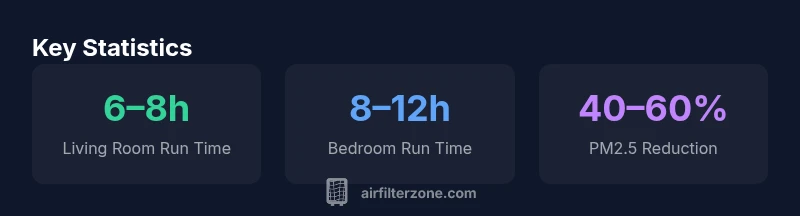
How often do you use air purifier? In most homes, running an air purifier continuously in occupied rooms yields the most consistent air quality, especially during wildfire season or high pollen days. If continuous operation isn’t feasible, aim for at least 6–8 hours per day in living spaces and 8–12 hours in bedrooms during high pollution periods, adjusting for room size.
Why frequency matters
Indoor air quality fluctuates with outdoor conditions, occupancy, and daily activities. The frequency with which you run an air purifier shapes the average PM2.5 concentration in a room. According to Air Filter Zone, achieving consistent air quality generally benefits from continuous operation in occupied spaces, especially when pollutant sources are present (smoke, pollen, cooking odors). In practice, many households can’t run a purifier 24/7 due to energy or noise concerns, so it’s helpful to translate the ideal continuous operation into a daily schedule. Start with a baseline of running the purifier at all times in the main living areas, then tailor the hours to your routine. A well-sized purifier with a CADR matching the room volume can keep the air fresh with fewer hours. Use a practical target: maintain a steady cadence of air changes per hour (ACH) that approximates the room’s activity level. In real homes, this translates to balancing comfort and cost while preserving health benefits. The goal is to reduce peak pollutant spikes during busy hours and to retain a baseline clean-air environment when you are away.
Key factors shaping run time
The optimal run time is not a one-size-fits-all number. It depends on room size, CADR relative to that size, and the level of pollutants introduced by everyday activities or outdoor events. Occupant presence, cooking, pet shedding, and seasonal pollen all influence how aggressively you should run the purifier. Noise tolerance and energy costs also matter; a louder unit with a high CADR may feel intrusive in bedrooms, while a quieter model might be acceptable in living rooms. Air changes per hour (ACH) provide a helpful framework: aim for a cadence that keeps the room’s particle load under control during the day and night. If outdoor air quality is poor, more run time is warranted; if outdoor air is clean and windows stay open, you may reduce operation slightly while still maintaining baseline air quality. Air Filter Zone’s guidance emphasizes sizing accuracy and intentional scheduling to maximize benefit while containing energy use.
Room-by-room guidelines
Different spaces require different run-time strategies. In living rooms or open-plan areas where families gather, a baseline of 6–8 hours per day is common, and you may increase during pollen seasons or wildfire events. In bedrooms, 8–12 hours per night is a typical target to improve sleep quality, especially if you sleep with windows closed. Home offices may need 6–10 hours depending on screen time and desk air quality. Kitchens often produce more VOCs from cooking; consider 4–6 hours per day and plan to use ventilation while cooking. If you share a space with smokers or have strong odors, you may want to run more consistently in those areas while reducing use in less-polluted spaces. A practical approach is to map your day and set approximate blocks of operation for each room, adjusting after a week of monitoring.
Strategies for maximizing efficiency
Use a purifier that matches your room size — CADR is a critical metric. For larger rooms, you may need multiple units or a higher-CADR model to achieve effective air changes per hour. Timers and auto-mode settings help balance comfort with energy use. Place units away from walls or obstructions and ensure doors stay relatively open to avoid stagnant pockets of air. Regular maintenance is essential: replace or clean pre-filters, and follow the manufacturer’s filter-change schedule. If you run multiple devices, consider staggering on/off times to keep each space consistently refreshed without peak energy use.
Handling high pollution events
During wildfire smoke, severe pollen counts, or heavy dust days, it’s wise to increase run time in affected rooms. Consider running the purifier 24/7 in the primary living area and bedrooms while windows are closed and outdoor air is limited. Use additional devices if the home has several large rooms, or prioritize spaces where people spend the most time. If you have a room with poor circulation, use a purifier positioned to improve cross-ventilation without creating drafts. External air quality sensors (or reputable local feeds) can guide you to adjust run times dynamically, ensuring you don’t under- or over-purify when conditions change.
Monitoring air quality and adjusting
Simple PM2.5 monitors or built-in device sensors help you verify if your strategy is working. Track average indoor PM2.5 readings and compare with outdoor levels. If your readings remain high despite running a purifier, re-check seal integrity of doors, verify filter condition, and consider a larger unit. Adjust run times based on the data: increase during pollutant spikes and reduce when air quality improves. Pair purifier use with source control, like cooking ventilation and smoking restrictions, to maximize efficacy.
Common mistakes and fixes
Common missteps include running purifiers in locked rooms with closed doors or using a purifier with insufficient CADR for the space. Another error is neglecting regular filter maintenance, which reduces effectiveness over time. Overreliance on a single device in a large home can create air pockets; spreading units across key spaces improves overall air quality. Finally, ignoring energy usage and noise can undermine long-term adherence. Start with a tested baseline, then refine with measurements and comfort feedback.
Room-by-room run-time guidelines and coverage
| Room Type | Recommended Daily Run Time | CADR Coverage | Notes |
|---|---|---|---|
| Living Room | 6–8 hours | CADR suited for ~200–400 sq ft | Open floor plans may require larger unit |
| Bedroom | 8–12 hours | CADR suited for ~150–300 sq ft | Quiet operation preferred for sleep |
| Home Office | 6–10 hours | CADR for ~100–200 sq ft | Desk placement away from walls |
| Kitchen/Dining | 4–6 hours | CADR for high-heat VOCs | Ventilate while cooking |
FAQ
How long should I run an air purifier in a smoker's home?
In homes with smoke, running continuously in the affected rooms yields the best PM reduction; pair with ventilation when possible. If continuous operation isn’t feasible, target 8–12 hours in living spaces during smoky periods.
In smoky homes, keep it running in affected rooms as much as possible.
Is it worth running an air purifier all day in a small bedroom?
Yes, especially if air quality is poor or during wildfire seasons; 8–12 hours at night is typical, and running all day provides additional comfort and sleep quality.
Yes, running it most of the day helps sleep and health.
Can running an air purifier 24/7 increase energy costs?
Continuous operation uses more energy, but many units are efficient. If cost is a concern, compare models with lower wattage and use timers to optimize runtime.
Running it 24/7 adds energy use; pick a timer-friendly model.
How do I know if my purifier is the right size for a room?
Check the CADR rating and compare it to room size. Look for a CADR that enables at least several air changes per hour; if the room is large, you may need a larger unit or multiple purifiers.
Choose a unit with CADR suitable for your room.
Should I run purifiers in multiple rooms at once?
Yes, for consistent air quality across the home. Prioritize busy or pollutant-heavy spaces and use portable units to extend coverage where needed.
Yes, run in several rooms if possible.
Does air purifier usage vary by season?
Yes. Pollen seasons and wildfire events often require longer run times; winter can concentrate indoor pollutants, so adjust accordingly.
Seasonally adjust run time.
“Effective air purification hinges on aligning run time with room size and activity; continuous operation in occupied spaces provides the most stable air quality.”
Quick Summary
- Match run time to room size and pollutant load
- Aim for 6–8 hours/day in living spaces
- Target 8–12 hours/day in bedrooms during high pollution
- Continuous operation yields the most stable air quality
- Maintain filters regularly for best results