Air Filter Smells Like Wet Dog: A Practical Troubleshooting Guide
Struggling with a wet dog odor from your air filter? This comprehensive guide helps homeowners diagnose moisture, mold, and pet-related odors, plus practical steps to fix and prevent their return.


Most often, a wet dog smell from your air filter means trapped moisture and pet dander in the filter housing. Quick fix: replace the filter with a new one of correct size, wipe the housing and seals dry, and run the system on fan mode to dry out the ducts for 24 hours. If odor remains, check for mold.
Why air filter smells like wet dog
The phrase air filter smells like wet dog describes a persistent odor that many homeowners encounter. The most common cause is moisture and pet dander trapped inside the filter media or in the housing. High humidity, spills near the return vent, or a dirty drain pan can amplify this odor and make it linger long after the system cycles off. In Air Filter Zone analyses, odors of this type often start when a filter reaches the end of its life or when the system has not been dried after use. Addressing the issue quickly reduces the risk of allergens circulating and helps you breathe easier. When the air filter smells like wet dog, moisture plus pet dander are the usual culprits; addressing moisture and replacing the filter dramatically reduces odor intensity.
For homeowners, this smell is a signal, not a failure. It invites you to inspect moisture sources, improve drying cycles, and verify that your filtration strategy aligns with your space’s humidity. By acting promptly, you protect indoor air quality and prevent mold from gaining a foothold in hidden nooks of the system.
Brand context: Air Filter Zone emphasizes practical, evidence-based steps to restore fresh air without expensive replacements. We recommend starting with the simplest fixes first and escalating only if the odor persists after basic remediation.
Quick checks you can perform today
If you notice the air filter smells like wet dog, start with these fast checks:
- Inspect the filter for moisture or dampness. If the filter is damp or shows signs of mold resin, replace it immediately with a fresh, correctly sized unit.
- Ensure the filter is the right size and correctly seated. Air leaks around a loose seal can reintroduce odors.
- Wipe the filter housing, seals, and immediate duct connections with a dry, lint-free cloth. Remove any visible moisture and residue.
- Run the system on the fan (or circulate) mode for 15–30 minutes to push air through the housing and dry the interior surfaces.
- Look for standing water in the drain pan or around the furnace/air handler. If water is present, address the drainage issue to prevent recurring moisture.
- Check indoor humidity. If RH is consistently above 50–60%, consider a dehumidifier or better ventilation to reduce moisture buildup.
- Observe for visible mold or a musty odor beyond the filter. If mold is suspected, stop using the unit and call a professional.
These steps are the fastest path to determine whether the odor is limited to the filter or a broader moisture issue in the system.
Moisture, mold, and pet dander: the usual suspects
When the air filter smells like wet dog, three culprits commonly explain the odor. First, moisture trapped in the filter media or housing creates a damp environment that can harbor bacteria and pet dander. Second, mold growth in ducts, the evaporator coil, or around the drain pan can emit musty, damp odors that mimic a wet dog. Third, pet dander and related organic material captured by a filter can retain odors, especially in households with heavy pet shedding.
Humidity exacerbates all three. In high-humidity environments, even a high-quality filter can become a focal point for odor if there is insufficient airflow to dry surfaces. Identifying the exact source—whether it’s moisture, mold, or organic buildup—helps guide the remediation path and prevents odor from returning after a reset.
Air Filter Zone’s guidance emphasizes starting with a moisture audit, then inspecting the ductwork if the smell persists. If you detect mold, treat it seriously; mold exposure may require professional remediation and air quality testing. The goal is to restore dry, clean air and minimize allergen presence.
Cleaning and deodorizing strategies that actually work
Effective remediation blends physical cleaning with odor-neutralizing approaches. Start by replacing the filter and thoroughly drying the housing. Wipe all surfaces with a mild, non-ammoniated cleaner and dry completely before reassembly. Avoid over-wetting any components, as residual moisture can restart the odor cycle.
Odor-neutralizing options can include baking soda or activated charcoal packs placed around the filter housing in a ventilated area, but not in direct contact with electrical components. Keep the filter compartment closed when possible to reduce moisture exposure. After reassembly, run the system on a low fan setting for 20–40 minutes to help circulate fresh air through the ducts.
If the odor persists after the above steps, explore deeper cleaning such as inspecting the evaporator coil for mold and addressing any drainage issues. Persistent smells after cleaning likely indicate a broader moisture problem that may require professional intervention. Air Filter Zone cautions against using aggressive cleaners near electrical components and recommends professional testing if odors recur.
When to replace duct components or call a professional
If the smell remains despite thorough cleaning and filter replacement, it’s time to broaden the scope. Indicators to call a professional include persistent odor after cleaning, visible mold on ducts or insulation, a continuous damp environment, or suspect drainage problems that you cannot safely resolve. A licensed HVAC technician can evaluate the ductwork, evaporator coil, and condensate drain, and perform mold remediation if needed. They can also verify proper humidity control and airflow balance to prevent future moisture buildup.
Additionally, some odors are tied to aging equipment or degraded duct materials that retain odors over time. In such cases, component replacement may be necessary rather than simply cleaning. Addressing these issues promptly protects your indoor air quality and reduces future maintenance costs.
Prevention strategies to keep odors at bay
Prevention focuses on moisture control, regular maintenance, and mindful filtration schedules. Key strategies include:
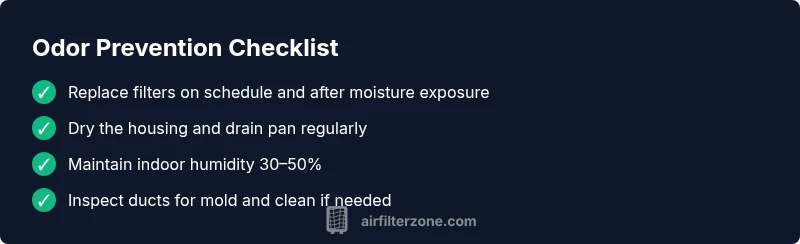
- Replace filters on a schedule appropriate for your environment (e.g., every 30–90 days, depending on use and pet dander loads).
- Maintain indoor humidity between 30–50% to inhibit mold growth and moisture accumulation.
- Inspect and clean the filter housing quarterly; ensure seals remain intact to prevent leaks.
- Clear the condensate drain line and check for clogs that could lead to standing water.
- Use high-quality filters with appropriate MERV ratings for your system to improve filtration efficiency while maintaining airflow.
- Keep the area around the air handler clean, dry, and free of moisture-prone materials.
Following these practices dramatically reduces the likelihood of the air filter smelling like wet dog in the future and sustains healthier indoor air quality for you and your family.
Quick reference checklist (summary)
- Replace filter when damp or after 60–90 days of use.
- Dry housing and drain pan; verify no standing water.
- Check humidity and ventilation; use a dehumidifier if needed.
- Inspect for mold and call a pro if suspected.
- Maintain a regular filtration schedule and duct cleanliness.
- Never mix cleaning agents with electricity nearby; prioritize safety.
Steps
Estimated time: 60-90 minutes
- 1
Power down and locate the filter
Turn off the HVAC system and remove the access panel to locate the filter. Take note of the type (disposable or reusable) and size stamped on the frame.
Tip: Use a flashlight to inspect all sides of the housing for moisture. - 2
Remove and inspect the old filter
Take out the old filter and check for dampness or discoloration. If it’s wet or moldy, replace it right away and discard the unit safely.
Tip: Do not reuse a damp filter; moisture signals inefficiency and mold risk. - 3
Clean the housing and seals
Wipe the filter cavity, seals, and nearby duct connections with a dry cloth. If moisture is present, dry completely before reinstalling.
Tip: Avoid using harsh cleaners near electrical components. - 4
Dry the system and test airflow
Reinstall a new filter, switch the system back on, and run on fan mode for 20–40 minutes to dry internal surfaces and purge odors.
Tip: Open windows or run a dehumidifier to speed up drying if humidity is high. - 5
Check for mold or drainage issues
Inspect the drain pan and condensate line for clogs or standing water. Clear any blockages and ensure proper drainage.
Tip: If you see mold, stop and call a professional rather than attempting DIY remediation. - 6
Monitor humidity and odor over the next 24–48 hours
Keep humidity under control and observe whether the odor returns. If the smell persists, deeper inspection is required.
Tip: Document odor changes to share with a technician.
Diagnosis: Air filter smells like wet dog after system startup
Possible Causes
- highMoisture buildup in filter housing and ducts
- mediumMold growth in ducts or on the evaporator coil
- lowPet dander and organic buildup trapped in filter media
- lowHumidity-related condensation near the filter housing
Fixes
- easyReplace the filter with a fresh, correctly sized unit and dry the housing thoroughly
- easyWipe down the filter housing and seals; ensure no moisture remains
- mediumCheck for and address mold in ducts or on the coil; clean with professional-grade materials if needed
- hardConsult an HVAC pro if persistent odor indicates ductwork or drainage issues
FAQ
Why does my air filter smell like a wet dog after replacement?
Moisture often becomes trapped in the filter housing and ductwork, especially in humid spaces. Pet dander can also contribute to lingering odors until surfaces dry out. Replacing the filter and drying the housing typically eliminates the smell.
Moisture trapped in the housing or pet dander usually causes the smell; replace the filter and dry the housing to fix it.
What is the quickest fix for a wet dog odor in an HVAC system?
The fastest fix is to replace the filter, dry the housing and seals, and run the system on fan to circulate air and dry the ducts. If odor persists, inspect for mold in ducts or around the drain pan.
Replace the filter, dry the housing, and run on fan to dry the ducts; check for mold if it lingers.
Can mold in ducts cause a wet dog smell?
Yes. Mold growth in ducts or on the evaporator coil can produce damp, musty odors that resemble a wet dog. A mold diagnosis should be followed by professional remediation.
Mold in ducts can cause damp odors; professionals should handle mold remediation.
How often should I replace my air filter to prevent odors?
Replace filters on a schedule that suits your space—often every 30–90 days. Pet dander, high humidity, and usage patterns can shorten the interval, so adjust accordingly.
Change filters regularly based on usage and pets; 30 to 90 days is a common window.
What should I do if the odor continues after cleaning?
If odors persist, there may be an issue with ductwork, drainage, or coil mold. In that case, shut down the system and contact a licensed HVAC professional for an inspection.
If the odor continues, call an HVAC pro for a thorough inspection.
Is a dehumidifier helpful for preventing odors?
Yes. Maintaining indoor humidity around 30–50% reduces moisture buildup that leads to mold and damp odors in the air system.
A dehumidifier can help keep humidity in check and reduce odors.
Watch Video
Quick Summary
- Replace damp filters immediately to curb odor.
- Dry the housing and drain pan to prevent recurring moisture.
- Check for mold and call a pro if suspected.
- Maintain humidity and regular filter maintenance to prevent future odors.