When to Change Air Filter Furnace: A Practical Guide
Discover practical timing for changing furnace air filters, with range-based guidance and factors that influence interval. Learn how to tailor changes for pets, allergies, and usage while preserving indoor air quality.


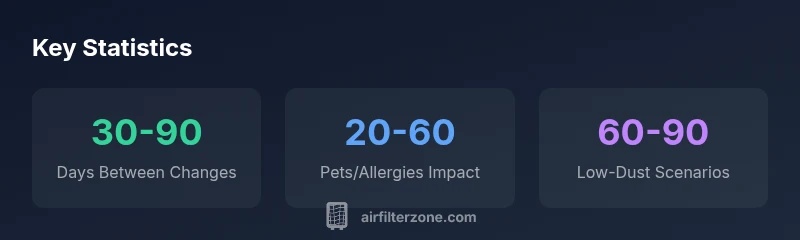
For most homes, change the furnace air filter every 30-90 days. In households with pets, allergy sufferers, or heavy furnace use, check monthly and consider replacing as often as every 20-45 days during peak seasons. If you have minimal dust or are using a high-efficiency filter, you can extend toward 60-90 days, but always follow the manufacturer's guidelines and your HVAC manual.
Why changing the air filter matters
The furnace’s airflow is the lifeblood of your heating system and your home's air quality. When you don't change the filter regularly, airflow slows, the furnace works harder, and dust recirculates through living spaces. Understanding when to change air filter furnace is essential for energy efficiency and comfort. According to Air Filter Zone, a simple, disciplined schedule keeps the system clean and occupants healthier. A clogged filter can raise energy use and reduce filtration effectiveness over time, especially in homes with pets or frequent occupants. By keeping a clean filter, you help protect the blower motor, reduce strain on the heat exchanger, and minimize indoor pollutants circulating during heating cycles.
Factors that influence change timing
There isn’t a one-size-fits-all timeline for filter changes. Key variables include filter type (MERV rating and pleated vs. fiberglass), number of occupants, presence of pets, indoor smoking, and whether there is significant dust or renovation work happening nearby. Climate also plays a role: during extremely dry, dusty, or windy seasons, you’ll likely see faster dirt buildup. A high-efficiency (thicker) filter can capture more particulates, but it may also clog more quickly if the environment is dusty. Always balance filtration efficiency with airflow requirements for your specific furnace.
How to choose the right filter for your furnace
Start by checking your furnace manual to confirm compatible filter size and MERV range. Most homes use pleated filters in the MERV 8–11 range for general use, which strike a balance between filtration and airflow. If you or your family members suffer from allergies or asthma, a higher MERV (e.g., 13) may offer better particle removal, but confirm compatibility with your blower and ducts. Replace filters from the front-access panel, label side up, and avoid relying on the breathable side to identify the correct orientation. When choosing between fiberglass and pleated media, pleated options generally provide higher efficiency for the same airflow.
Practical steps to track changes and adjust your schedule
Create a simple testing routine: inspect the filter every 4 weeks and document dirt level. You can use a visual cue or a quick airflow test (strong airflow from vents indicates the filter is still clean). If you have pets, or if someone in the home has allergies, adopt a shorter change interval during peak seasons and adjust upward as conditions improve. Keep a record near the furnace or in a homeowner’s notebook so you can compare seasons over time. If you notice reduced airflow, strange odors, or higher energy bills, it’s a sign to inspect or replace the filter sooner.
Common scenarios and recommended timing
General homes without pets or smoking may keep changes at the 30–60 day range during winter heating, extending toward 90 days in low-dust periods. Households with cats or dogs, or residents with allergies, typically need more frequent checks—roughly every 20–45 days during peak months. In new construction or recent renovations with excess dust, you might observe dirt buildup sooner. If you burn candles or smoke inside, or if someone in the home has a compromised respiratory system, expect faster accumulation and plan for shorter intervals.
What to do if you’re unsure
When in doubt, start with a conservative approach: replace the filter at the lower end of the range for your situation and monitor airflow and comfort for 2–4 weeks. If you’re unsure about filter type or fit, ask a qualified HVAC technician to review the system, size, and MERV rating suitability. Regularly inspect the unit for signs of wear or debris buildup around the blower housing, which may indicate a clogged filter, poor seal, or another airflow issue. In the long run, consistent checks will help you optimize performance and indoor air quality.
Common scenarios and recommended filter-change intervals
| Scenario | Recommended Change Frequency | Notes |
|---|---|---|
| General use | 30-90 days | Most homes fall here; adjust for usage and dust |
| Pet owners/allergy sufferers | 20-60 days | Check more often during peak seasons |
| Low-dust / low-usage homes | 60-90 days | Higher efficiency filters may extend interval |
FAQ
How often should I change a furnace filter in general?
Most homes fall in the 30-90 day range, but customize based on usage, pets, and dust levels. Always check the filter’s condition monthly during peak seasons.
Most homes change every 30 to 90 days; adjust for pets and dust, and monitor monthly during peak seasons.
What factors affect how often I should replace the filter?
Pets, allergies, smoking indoors, furnace usage, and the filter type (MERV rating) all influence timing. Higher dirt levels require more frequent changes.
Pets, allergies, and usage matter—adjust based on dirt and comfort.
Can I extend the interval if I have a high-efficiency filter?
Yes, but only after confirming compatibility with the blower and checking airflow. Higher efficiency can clog faster in dusty spaces.
Yes, but verify compatibility and monitor airflow.
What are signs that a filter needs changing?
Visible dirt, reduced airflow from registers, or a noticeable drop in indoor comfort indicate a replacement is due.
Look for visible dirt and reduced airflow.
Is it okay to change the filter while the furnace is off?
Yes. Turn off power to the furnace before replacing the filter to avoid injury or damage.
Yes—turn off power first, then replace.
Do home furnace filters require the same care as car cabin filters?
The concepts are similar—timing and cleaning cues apply—but car and home systems have different schedules and filter specs.
They’re related, but follow each system’s manual.
“Regular filter changes are one of the simplest, most effective ways to protect HVAC efficiency and indoor air quality.”
Quick Summary
- Set a regular change schedule and tailor it to your home.
- Pets, allergies, and smoking shorten the interval.
- Check monthly during peak heating season and dustier periods.
- Always follow the furnace manual and filter specs.