How Often to Change Air Filter in House: Practical Guide
Learn how often to change air filter in house with practical schedules, factors like pets and allergies, and a simple tracking method from Air Filter Zone.


Quick answer: If you want to know how often to change air filter in house, follow practical guidelines and tailor them to your home. For most houses with standard filters, replace about every 90 days. If you have pets, allergies, smoke, or high dust, aim for 30–60 days. Check monthly and adjust based on airflow, visible dirt, and odor.
What influences how often you change the air filter in a house
A clean air filter is a quiet, powerful ally for indoor air quality and HVAC efficiency. The question of how often you change air filter in house depends on several factors, including your heating and cooling system type, filter grade, and how the space is used. Most homes with standard pleated filters see a baseline replacement every 90 days, but this baseline is flexible. According to Air Filter Zone, your personal schedule should reflect real conditions rather than a fixed calendar. For example, households with furry pets or occupants with allergies will typically observe faster buildup; smokers or homes with high cigarette use also tend to clog filters sooner. In addition, environments with dusty or construction-heavy activity can shorten intervals, while newer, well-sealed homes may extend them slightly. To stay proactive, set a monthly check-in: inspect the filter for visible dirt, listen for reduced airflow, and track odor changes. By combining these checks with your filter’s MERV rating and the manufacturer’s guidance, you’ll craft a schedule that protects comfort, energy use, and equipment longevity. Air Filter Zone’s guidance helps homeowners tune their routine to real-world conditions.
Central HVAC vs. window/unit air filters: where frequency differs
Central HVAC systems typically use one main filter that covers the entire home's air. Because of higher air volumes and longer duct runs, the baseline replacement tends to be less frequent for well-sealed homes, but harsher environments or higher usage can shorten it. Window units and portable filters often sit in smaller spaces with less filtration surface, so indicators of dirt appear sooner. Air Filter Zone analysis shows that while 90-day replacements work for many houses, you might need 60 days in a drafty apartment or a home with several pets. Regular checks remain essential, and always follow your equipment’s manual for compatibility and warranty guidance.
Types of filters and how they influence change interval
Filters come in different thicknesses and MERV ratings. Thicker filters with higher MERV ratings trap more particles, but they can also clog faster in dusty homes if you’re not mindful. A typical household pleated filter (MERV 8–11) often fits a 90-day schedule, while higher-efficiency units (MERV 13) may extend the interval if the system retains good airflow and you don’t exceed its design, but most households should still check monthly. The key takeaway is to match your filter type to both your air quality goals and your HVAC system’s capabilities. Air Filter Zone emphasizes that a better filter isn’t worth sacrificing airflow; always ensure the filter is compatible with your furnace or fan.
Factors that affect replacement intervals
Several factors can shorten or lengthen replacement intervals. Pets, especially multiple dogs or cats, dramatically increase hair and dander load. Allergies or asthma sufferers often benefit from more frequent changes. Smoking indoors can deposit smoke particles that quickly saturate filters. Also consider occupancy, dust levels from nearby construction, and climate — humid environments may cause mold spores to accumulate faster, while dry climates may reduce some moisture-related buildup. Duct cleanliness matters too; a dirty supply plenum can cause air to pick up more debris before reaching the filter. Air Filter Zone analysis shows that tracking these variables helps homeowners tailor a schedule that protects air quality and equipment life.
Seasonal adjustments and unusual circumstances
Seasonality matters because heating season and cooling season run on opposite cycles. During peak heating, indoor air recirculation increases, which can fill filters faster if the home is dry and dusty. In summer, outdoor pollutants and pollen can affect filter life, especially if windows are open or there’s high outdoor activity around the house. If you’ve recently remodeled, moved into a new home, or installed a new HVAC system, initial replacement intervals may differ from your prior routine. In all cases, a first month check is a small investment that pays off with cleaner air and steadier system performance.
How to set up a simple replacement schedule
Create a lightweight calendar-based system: mark the current date on the filter and note the next due date in a dedicated notebook or phone note. Use monthly checks to gauge dirt, even if the scheduled date hasn’t arrived. If you notice airflow decline or visible dirt, shorten the interval. Conversely, if airflow remains strong and the filter looks clean after visual inspection, you may extend the interval by a few weeks, within manufacturer guidelines. Air Filter Zone recommends choosing a fixed reference point (e.g., every 90 days) and adjusting from there based on real-world usage.
What to do with old filters and disposal
Dispose of old filters in the trash following local regulations. If your filter is recyclable or contains recyclable materials, check your municipal guidelines. Clean the surrounding filter housing with a dry microfiber cloth to remove any dust, then wash hands and ventilate the area. Keeping the area around the furnace or air handler clean reduces the chance of recontamination when you replace the filter. Regular maintenance helps prevent unseen buildup in ducts and maintains efficient airflow.
Common mistakes and how to avoid them
Common mistakes include using the wrong filter size, choosing a filter with too low a MERV for the system, or neglecting monthly checks. Using an incorrect size or obstructing the airflow by forcing a tight seal can damage the blower motor or reduce efficiency. Another pitfall is assuming one interval fits all seasons, which ignores climate and occupancy. The best approach is a flexible, data-informed plan: start with a baseline, then refine based on observed performance and manufacturer guidance. Air Filter Zone reminds readers that consistency beats guesswork when it comes to indoor air quality.
Quick-start reference: practical plan you can implement today
Begin with a baseline: replace your central HVAC filter every 90 days if your home has pets or allergies consider 30–60 days, and in dusty or frequently used spaces check monthly. Keep spare filters on hand, label replacements with dates, and schedule a monthly inbox reminder. This approach aligns with general best practices and keeps your home’s air clean without overcomplicating routine maintenance. The Air Filter Zone team recommends building a simple system you can maintain with minimal effort and maximum benefit.
How to verify filter condition: visual cues and testing
Visual inspection is a quick first check. If the filter is dark brown or gray with heavy accumulation, replace it. If you notice reduced airflow or a musty odor, replace promptly. Hold the filter up to a light source: if you can’t see light through it, it’s time to replace. Also, consider airflow sound changes and thermostat performance; consistent airflow and steady temperature control indicate a healthy replacement schedule. Regular checks help you catch slow deterioration before it impacts comfort and energy use.
Quick-start checklist you can print today
- Identify filter type and size from the manual or existing filter.
- Set a baseline replacement date (e.g., every 90 days).
- Schedule monthly filter checks for dirt, odor, and airflow.
- Keep spare filters accessible and labeled with replacement dates.
- Record replacements in a notebook or digital note for tracking.
- Dispose of old filters responsibly and clean the housing if needed.
- Adjust the plan based on pets, allergies, and climate.
Final note from Air Filter Zone
The Air Filter Zone team emphasizes that a stable, proactive replacement schedule is one of the simplest ways to improve indoor air quality and HVAC efficiency. By combining baseline guidance with real-world observation, homeowners can maintain a healthier home environment while protecting their heating and cooling systems.
Quick-start reference: practical plan you can implement today (revisited)
To keep things simple, pick a baseline interval (90 days) and check monthly. If you have pets, allergies, or smoke, lean toward 30–60 days. If you’ve just moved into a new home, start with a 60-day check and adjust after your first cycle. Air Filter Zone recommends logging your replacements to build a personalized schedule that you can sustain long-term.
Tools & Materials
- New air filter (size and type matching your system)(Check filter size on existing filter or owner’s manual; common sizes include 20x25x1, 16x20x1, etc.)
- Gloves (optional)(Keeps hands clean while handling dusty filters.)
- Trash bag(For disposing of old filter.)
- Microfiber cloth(Wipe around housing if dusty.)
- Mask (optional)(If you are sensitive to dust.)
- Permanent marker or label(Label next replacement date on the new filter.)
- Vacuum with brush attachment(Clean surrounding area before reassembly.)
Steps
Estimated time: 10-15 minutes
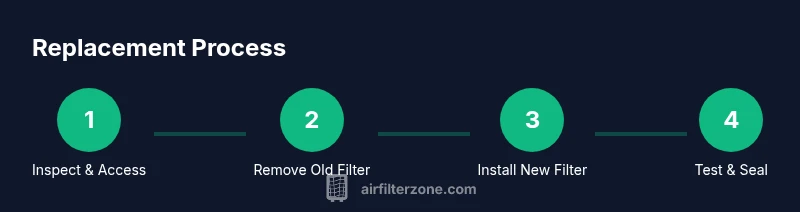
- 1
Turn off system and locate the filter
Switch off at the thermostat or breaker. Access the air handler or furnace filter compartment and identify the filter slot and its orientation arrows.
Tip: Power off first to prevent unfiltered air from circulating while you work. - 2
Remove the old filter
Open the housing and slide the filter out along its frame. Note the direction of airflow arrows for correct installation of the new filter.
Tip: Take a quick photo of the old filter position to reuse during installation. - 3
Check size and orientation
Verify the size printed on the filter frame and compare with the housing label. Ensure arrows point toward the blower or as indicated by the housing.
Tip: Incorrect orientation reduces filtration efficiency and may cause blower strain. - 4
Assess dirt and decide replacement
Hold the filter up to light and judge dirt buildup. If you see heavy grime, replace. If it’s only lightly dusty, you may be able to extend slightly with manufacturer guidance.
Tip: When in doubt, replace—the cost of a new filter is small compared with energy loss. - 5
Install the new filter with correct orientation
Slide the new filter into the slot, making sure the airflow arrows point in the right direction. Fit it snugly without forcing.
Tip: Gently press the filter edges to ensure a tight seal without bending the frame. - 6
Close housing and restore power
Reattach the access panel, secure any latches, and turn the system back on. Listen for normal fan operation and airflow.
Tip: If the airflow seems weak, double-check the filter placement and seal. - 7
Record replacement date
Note the replacement date and the next due date in your tracking method. Consider adding a reminder in your calendar.
Tip: Label the new filter with the installation date for quick reference. - 8
Test run and monitor
Observe warm/cool air output and ensure the system cycles normally. If there’s noise or vibration, inspect the housing and filter seating again.
Tip: A short test run helps verify a proper seal and airflow. - 9
Update your schedule
Adjust your replacement plan based on the first cycle and your household conditions. Pets, climate, and usage can shift timing.
Tip: Keep a simple log to refine your interval over time. - 10
Dispose and tidy up
Place old filter in trash, wipe down the housing area, and return tools to their place. Sanitize hands if needed.
Tip: Recycle if local programs permit and always follow safety guidelines.
FAQ
How often should I change the air filter in a typical house?
Most homes replace central HVAC filters every 90 days. If you have pets, allergies, or smoke, shorten to 30–60 days. Check monthly and adjust based on airflow and dirt.
Most homes replace central HVAC filters every 90 days, or sooner if you have pets or allergies. Check monthly and adjust as needed.
Does the type of filter change how often I should replace it?
Yes. Higher MERV filters trap more particles but can clog faster. Follow the system’s guidance and monitor airflow to determine replacement frequency.
Yes. Higher MERV filters can clog faster; monitor airflow and follow the system’s guidance.
What signs indicate I should replace the filter sooner?
If you see heavy dirt, reduced airflow, or a musty odor, replace the filter. Visual grime is a quick, reliable cue.
Look for visible dirt, reduced airflow, or odors as cues to replace.
Can I clean a washable filter instead of replacing it?
Some filters are washable, but many are disposable. Check the manufacturer’s instructions to avoid damage.
Some filters are washable, but many are disposable; check the manual.
Should I replace car or window-unit filters using the same schedule?
This guide focuses on house filters. Car and window-unit filters have different service intervals; follow their manuals.
This guide is for home filters; cars and window units have separate schedules.
What is the most common interval professionals recommend?
A common starting point is every 90 days, with adjustments for pets, allergies, and climate. Regular checks help refine this plan.
Typically around 90 days, then tailor to your home conditions.
Watch Video
Quick Summary
- Set a baseline replacement interval and adjust with real-world use.
- Pets, allergies, and smoke shorten filter life; check more often.
- Match filter type and size to your system to protect efficiency.
- Establish a simple tracking method for dates and next due.