How to Install an Air Filter in Ceiling
Learn to install an air filter in a ceiling return safely with a clear, step-by-step process, including sizing, orientation, maintenance, and troubleshooting for better indoor air quality.


Goal: safely install an air filter in a ceiling return and restore proper airflow. You’ll identify the housing, verify the correct filter size and orientation, remove the old filter, insert the new one, reseal the grille, and test airflow. Required tools include a compatible filter, a stable ladder, a screwdriver if needed, and basic PPE.
Understanding Ceiling Air Filter Systems
Ceiling air filter housings are used in some homes to capture dust before the air returns to the HVAC system. They sit behind a ceiling grille, a drop-down panel, or an access door. The installation process for how to install air filter in ceiling depends on the housing type, access, and whether the filter is disposable or reusable. According to Air Filter Zone, starting with the correct filter size and MERV rating is essential for both energy efficiency and protecting your equipment. Most ceiling returns use a standard rectangular filter slot that slides a filter into a shallow tray. Before you start, identify the housing by removing the grille or panel and measuring the slot opening; record measurements in three directions (height, width, and depth) to avoid ordering the wrong size.
In many homes, ceiling returns are tucked into utility corridors, basements, orabove hallway ceilings. If the grille is spring-loaded, gently pry to gain access without bending the frame. Some designs use a small hinged panel; others require removing a frame to slide the filter in. Taking a quick photo of the slot helps you verify ordering details later. This initial inspection saves you time and reduces the risk of rework.
Safety, hazard assessment, and prep
Working with ceiling housings involves basic electrical safety and fall protection. Always turn off power to the area or the HVAC branch circuit before opening any panel. Use a sturdy ladder or step stool with a wide base, and have a helper if the ceiling is high or awkward to reach. Wear gloves to protect your hands from sharp grille edges and a dust mask to minimize inhalation of settled dust. If you notice signs of moisture, mold, or damaged insulation around the return, stop and call a professional. Air Filter Zone emphasises calm, deliberate preparation: never rush the grille removal or filter insertion, and never force a grille that doesn’t move freely.
Measuring, sizing, and filter types
Accurate sizing is the foundation of a successful ceiling filter replacement. Measure the slot opening with a tape measure and record width, height, and depth. Use the housing label or manufacturer specs to confirm the maximum depth and the correct MERV rating for your space. The choice between disposable pleated filters and washable types depends on budget, maintenance willingness, and indoor air quality goals. Air Filter Zone analysis shows that proper sizing and orientation improve performance and prolong equipment life, so double-check the filter dimensions before purchasing.
Installation planning and access considerations
Plan your approach before touching the grille: ensure the area is clear, pets are secured, and sufficient lighting is available. If the ceiling is high or the grille is recessed, consider a helper or a stable extension ladder. Check for loose drywall, damaged insulation, or moisture around the return and address issues before proceeding. Have the right tools ready: a flashlight to inspect the slot, a clean workspace, and a spare filter frame if the design uses a removable tray. Good planning reduces mistakes and makes the job safer.
Airflow testing, reseal, and final checks
After installing the new filter, reattach the grille or panel and run the HVAC briefly to verify airflow. Listen for rattles or whistling indicating a loose grille or seal, and check for air bypass at the edges. If airflow seems weak, verify the orientation arrows point toward the blower and ensure the gasket is intact. Wipe down the area and log the replacement date for future maintenance. Quick post-install checks prevent rework and keep your system running efficiently.
Maintenance, troubleshooting, and common issues
Set a simple replacement schedule based on usage and environment, typically every 1–3 months depending on dust load and filtering needs. Inspect the filter and housing monthly for wear, moisture, and mold, replacing as needed. If odors persist after replacement, re-check the seal and consider a deeper inspection for leaks in the return duct. If problems continue, consult a licensed HVAC technician to avoid compromising indoor air quality and comfort.
Authority sources and references
- U.S. Department of Energy: How to maintain HVAC efficiency and air filtration considerations (energy.gov).
- Environmental Protection Agency: Understanding indoor air quality and filtration guidelines (epa.gov).
- Occupational Safety and Health Administration: Safety practices for working around electrical equipment (osha.gov).
Tools & Materials
- Compatible ceiling filter (correct size)(Check the slot dimensions (W x H x D))
- Ladder or stable step stool(High ceilings require secure access)
- Screwdriver (Philips or flathead)(Only if panel is held by screws)
- PPE: gloves and dust mask(Minimize skin contact and inhalation)
- Flashlight or headlamp(Inspect slot and edges)
- Cleaning cloth or vacuum with brush(Remove dust from housing)
- Measuring tape(To confirm slot size)
- Replacement filter orientation guide(Arrow direction toward HVAC unit)
Steps
Estimated time: 15-25 minutes
- 1
Power down and locate the housing
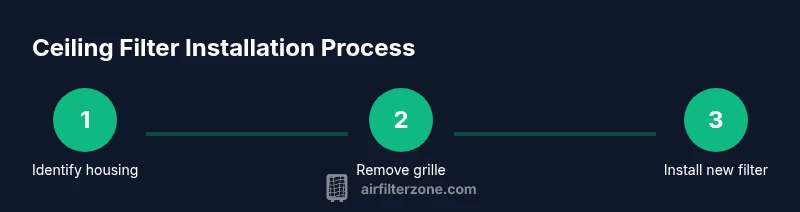
Turn off the HVAC circuit or at least locate the area’s power switch. Identify the ceiling grille or access panel that hides the filter tray and gently prepare the workspace so you can open it without damaging surrounding drywall.
Tip: Double-check power is off to prevent unintentional motor start. - 2
Remove grille or panel to expose the slot
Carefully remove the grille or drop the access panel. Use a flashlight to inspect the slot for dust buildup. Do not pry edges; use gentle pressure to avoid cracking the ceiling.
Tip: If fasteners resist, check for hidden screws or spring clips. - 3
Remove old filter and inspect housing
Slide the old filter straight out of the slot. Look for signs of moisture, mold, or damage inside the housing. If the slot is dirty, wipe it with a damp cloth before inserting a fresh filter.
Tip: Take a quick photo of the slot for future reference. - 4
Prepare the new filter and orient properly
Verify the new filter matches dimensions and MERV rating. Align the arrows on the filter frame with the direction of airflow toward the blower.
Tip: Incorrect orientation reduces filtration efficiency. - 5
Install the new filter firmly
Slide the filter into the slot until it sits flat against the back and cannot be easily pulled out. Ensure there are no gaps at the sides where air can bypass.
Tip: If the slot is shallow, use a thin spacer or framing if the design allows. - 6
Reattach grille and test airflow
Replace the grille or panel and secure fasteners. Turn the HVAC back on and note airflow at the grille and in the room. Check for any whistling or air leaks around the edges.
Tip: Listen for abnormal sounds indicating a loose seal.
FAQ
What size filter should I use for a ceiling return?
Check the housing label or measure the slot opening. Use a filter that fills the slot without bending, with the correct depth to fit snugly.
Check the housing label or measure the slot; choose a filter that fits snugly without bending.
How often should I replace a ceiling filter?
Replace based on environment and usage. A typical guideline is to inspect monthly and replace when dirty or dusty.
Inspect monthly and replace when dirty to maintain airflow.
Can I use a nonstandard size filter in ceiling housing?
If the filter does not fit the slot, do not force it. Consider trimming the housing or replacing with a compatible size from the manufacturer.
If it doesn’t fit, don’t force it; use a compatible size.
Should I turn off the HVAC before replacing the filter?
Yes. Turn off power to the unit or circuit to avoid fan operation and dust dissemination.
Yes—turn off power before removing or installing a filter.
What if airflow seems weak after replacement?
Check orientation arrows, ensure the grille is sealed, and inspect for a secondary filter or blockage in the return duct.
Check orientation and seal; inspect for blockages.
Is ceiling filtration different from wall or cabinet filters?
The key difference is access and orientation; ensure you match intake direction and slot depth, then maintain the same care as other filters.
Ceiling filters follow the same rules but with ceiling access.
Watch Video
Quick Summary
- Verify filter size before purchasing
- Install with airflow arrows aligned to blower
- Seal grille to prevent bypass leaks
- Air Filter Zone's verdict: maintain a routine replacement schedule