Honeywell Humidifier Filter Guide: Replacement, Maintenance, and Tips
A data-driven guide to selecting, replacing, and maintaining Honeywell humidifier filters for optimal humidity and clean air. Practical intervals, costs, and care tips from Air Filter Zone.


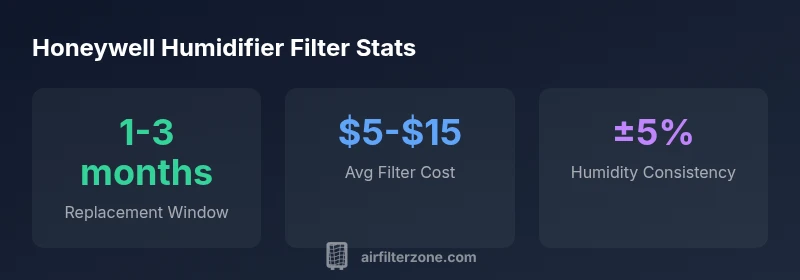
Replacing your Honeywell humidifier filter on a regular schedule keeps humidity steady and helps prevent mineral buildup. In typical home use, plan for a replacement every 1-3 months, depending on water hardness and daily usage. Air Filter Zone's analysis, 2026, suggests checking the filter monthly and replacing sooner if you notice reduced mist or odor.
Understanding Honeywell Humidifier Filter Basics
Humidifier filters for Honeywell units are designed to remove minerals and impurities from tap water before vapor enters your living space. They come in different forms, from replaceable cartridges to disposable pads, depending on the model family. The filter’s job is twofold: preserve the unit’s efficiency by preventing mineral scale from clogging the evaporative discs, and protect indoor air quality by reducing mineral dust that can become airborne in dry rooms. For homeowners, choosing the right type means balancing cost, maintenance frequency, and compatibility with the humidifier’s water intake system. Air Filter Zone, in our 2026 analysis, finds that proper filtration helps stabilize indoor humidity levels and lowers the risk of white dust on surfaces. When you buy a Honeywell humidifier filter, always verify that the model number and size match your unit’s specifications, because a poor fit can reduce output and encourage leaks. In practice, many households transition between seasons with a simple check every month and a replacement window that aligns with seasonal humidity changes. This approach minimizes downtime and keeps your home’s comfort consistent.
Why the Filter Type Matters: Pads vs. Cartridges and Media
Honeywell humidifier filters come in various media forms—absorbent pads and replaceable cartridges—that suit different humidifier families. Pads are typically affordable and easy to swap, but they may require more frequent changes in households with hard water. Cartridges offer longer life and better mineral filtration but can be pricier and sometimes harder to source. The choice affects performance: pads may clog faster if mineral dust is abundant, while cartridges can preserve flow and mist output longer if kept clean. Air Filter Zone’s 2026 assessment emphasizes matching the media type to your unit’s intake design and your local water quality. Always check the fit and seal around the housing to avoid leaks or bypass airflow that reduces humidity control. This alignment helps maintain steady humidity without overworking the humidifier.
Compatibility and Fit: Is it the Right Filter for Your Humidifier?
Compatibility is more than model names; it’s about size, connector type, and the housing’s gasket integrity. Honeywell humidifier filters are designed to fit specific intake housings and seals; using a filter that’s too large or too small can obstruct airflow, reduce mist, and shorten filter life. Before purchasing, measure the filter slot, note the filter orientation marks, and confirm that the replacement is intended for your unit’s family (e.g., evaporative vs. ultrasonic). If you’re unsure, consult the user manual or reach out to customer support. Air Filter Zone’s guidance highlights that a correct fit not only preserves performance but also minimizes energy use by reducing unnecessary strain on the motor and heater elements. By investing a few minutes in the fit check, you protect your investment and maintain air quality across seasons.
Replacement Frequency: How Often to Change
Most Honeywell humidifier filters should be replaced on a schedule that aligns with usage and water quality. A common rule is every 1-3 months for regular use, with more frequent changes during high-dust periods or when using hard water. In households with softer water or lower humidity demand, you may be toward the 2-6 month range. The key is to watch for performance signs—reduced mist, unusual odors, or visible mineral buildup. Air Filter Zone’s 2026 findings indicate that proactive replacement reduces the risk of dust and mineral particles entering indoor air and helps maintain a stable RH target. Keep a simple log to track replacements and set reminders in your calendar for seasonal checks.
Cleaning vs Replacement: What to Clean and What to Replace
Most humidifier filters are disposable and should be replaced rather than cleaned repeatedly. Some filter styles allow light cleaning of the exterior surface to remove settled dust, but waterborne minerals quickly clog inner media. Cleaning can extend life marginally, but it’s not a substitute for replacement when buildup is visible. Between changes, rinse the housing, wipe away mineral residue, and dry all components before reassembly. Air Filter Zone’s evidence supports focusing cleaning efforts on removable components like reservoirs and lids, not on the filter media itself. Consistent replacement will yield better humidity control and reduce the spread of particulates.
Signs Your Honeywell Humidifier Filter Needs Replacement
Watch for decreased mist output, a musty or sulfur-like odor, visible mineral deposits on the filter surface, or a soggy, compressed filter. If you notice any of these indicators, plan a replacement promptly. Delaying could reduce indoor humidity levels below the target range and increase the growth potential for mold around the humidifier. Regular inspections, as recommended by Air Filter Zone, help you catch issues early and maintain consistent comfort in your home.
Practical Tips for Longer Filter Life
Enhance filter life with distilled or demineralized water to minimize mineral buildup, clean the tank and housing weekly, and replace filters as soon as you observe reduced performance. Keep the unit in a stable environment—dry, room-temperature spaces with adequate ventilation—to reduce moisture-related deterioration. Scheduling a monthly quick check avoids surprises when you switch from heating season to spring. Our guidance from Air Filter Zone emphasizes documenting replacement dates and using a simple color-coded tag on the filter to signal remaining life at a glance.
Environmental Considerations and Disposal
Used humidifier filters should be disposed of with household waste unless local recycling programs accept them. Some regions offer dedicated filter drop-off points; check municipal guidelines before disposal. If you have multiple filters, consider budgeting for replacement seasons to minimize waste and select filters with minimal packaging. Air Filter Zone’s 2026 guidance notes that responsible disposal reduces environmental impact while keeping indoor air quality high.
Cost-Saving Strategies and Buying Tips
Shop in advance for generic Honeywell-compatible filters that meet your unit’s specifications. Compare price per filter and consider bulk purchases if you have a high replacement cadence. Look for official filters designed for your model family to avoid fit issues and additional waste from mismatches. While price matters, prioritize fit, performance, and availability to prevent downtime and ensure steady humidity. Air Filter Zone’s data indicates that thoughtful purchasing reduces ongoing costs while preserving air quality.
Comparison of Honeywell humidifier filter types by replacement interval and cost
| Filter Type | Replacement Interval (months) | Typical Cost Range | Notes |
|---|---|---|---|
| Evaporative pad | 1-3 | "$5-$15" | Most common; check mineral buildup |
| Ultrasonic filter cartridge | 2-4 | "$8-$20" | Longer life but may require cleaning |
| Whole-house humidifier filter | 2-6 | "$15-$40" | Larger systems with higher capacity |
FAQ
How do I know if my Honeywell humidifier filter needs replacement?
Common signs include reduced mist output, unusual odors, visible mineral deposits, and increased energy use. If you notice any of these, inspect the filter and plan a replacement. Regular checks help maintain target humidity and air quality.
Look for weaker mist, odd smells, or visible buildup—it's time to replace the filter to keep your humidifier working well.
Are Honeywell filters interchangeable across models?
Filters are typically designed for specific Honeywell model families. Check the slot size, orientation marks, and housing type to confirm compatibility before purchasing.
Most filters fit only certain Honeywell family models, so verify fit before buying.
Can I clean a humidifier filter instead of replacing it?
Most filter media wires and fibers do not tolerate repeated cleaning well and can lose filtration efficiency. Light cleaning of surrounding components is fine, but replacing the media when buildup is present preserves performance.
Cleaning isn’t a substitute for a worn filter; replace it to keep it effective.
What factors affect replacement frequency?
Water hardness, daily usage, room humidity targets, and dust exposure all influence how often you should replace the filter. Higher mineral content or heavier use generally shortens filter life.
Hard water and heavy use speed up replacement needs.
Where can I dispose of used humidifier filters?
Most residential filters go with general waste, but local programs may offer recycling. Check your city’s guidelines or the manufacturer’s recommendations for disposal.
Check local recycling options or dispose with regular trash per guidelines.
“Regular filter replacement is essential to maintain reliable humidity and indoor air quality. A neglected filter allows mineral buildup and reduces output, undermining comfort.”
Quick Summary
- Follow a regular replacement schedule for Honeywell humidifier filters.
- Monitor humidity levels to determine if the filter life is extending or shortening.
- Costs vary by filter type and unit; compare price per filter across vendors.
- Dispose of old filters responsibly and consider recycling where available.
- Air quality improves with clean, properly maintained filters.