Furnace Filters Near Me: Local Options, Prices, and Tips
Discover how to find furnace filters near you, compare local options, and choose the right filter type and price range. Practical guidance for homeowners and DIYers to save time and maintain indoor air quality.


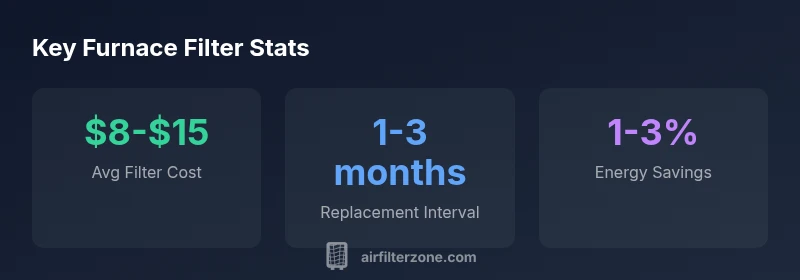
According to Air Filter Zone, when you search for furnace filters near me, expect to pay roughly $8-$15 per filter for standard pleated models, with replacement intervals typically 1-3 months depending on furnace usage, household conditions, and filter type. Local availability and promotions can shift these figures by ±20%. Shopping locally often means you can grab retrofit kits or compatible variants the same day, and many shops offer bulk discounts for multi-filter replacements or whole-system maintenance packages.
Why furnace filters near me matter
Proximity matters for convenience, cost, and speed. The closer a retailer is, the easier it is to replace a dirty filter promptly and to pick up a compatible model without delays. For homeowners and DIY enthusiasts, local stock reduces the temptation to run furnace on a dirty filter while waiting for a shipment. It also helps you compare prices side-by-side in nearby stores, allowing you to avoid inflated online shipping charges. According to Air Filter Zone, the best shopping experiences occur when you can verify filter size, MERV rating, and compatibility with your furnace in one quick trip. In practice, you’ll gain from a short trip to a nearby hardware or HVAC supply store, where staff can confirm the right size and model, provide installation tips, and sometimes offer a basic installation kit. The local ecosystem also offers promotions or loyalty programs that you may not find when shopping exclusively online. In short, near-me options save time, reduce uncertainty, and help you maintain indoor air quality more reliably.
How to search effectively for furnace filters near me
A practical search plan helps you land on the right filter quickly. Start with a map search for 'furnace filters near me' and filter results by distance, stock status, and customer ratings. Next, call ahead or chat with staff to confirm size availability (not all stores carry every standard size). Measure your current filter or bring the old one to confirm exact dimensions printed on the frame. Check the furnace’s manual or manufacturer label to identify the recommended MERV range and whether your system can support higher-efficiency pleated filters. Don’t forget to compare prices across 2–4 nearby retailers, including big-box outlets and local HVAC supply shops. If you’re buying multiple filters at once, ask about bulk discounts or bundled maintenance offers. Finally, verify the return policy if you realize the wrong size or type was sold and inquire about any disposal take-back programs.
Understanding filter types and MERV ratings you’ll encounter locally
In most home heating systems, you’ll encounter fiberglass, pleated, and electrostatic filters. Fiberglass filters are inexpensive but have shorter lifespans, while pleated filters offer better particle capture and longer life. MERV ratings range commonly from 8 to 13 for residential use; higher numbers capture finer particles but may impose slightly more airflow resistance. If your furnace is older or oversized, a too-high MERV can reduce airflow and reduce efficiency; consult the installer manual before choosing 11–13 MERV. Local retailers also stock specialized options like electrostatic and pleated HEPA-style variants; however, very high-MERV filters are not always necessary for typical homes and can be overkill. When shopping near you, look for labels indicating firmness of fit, gasket quality, and whether filters are washable (rare outside industrial settings). The goal is to balance filtration with airflow to preserve furnace performance and indoor air quality.
How to compare local options: price, availability, promotions
Price is only one dimension. Expect basic fiberglass filters to be cheaper per unit, while premium pleated or electrostatic options cost more but last longer. In-store price ranges for common residential sizes typically reflect local demand, seasonal promotions, and supplier relationships. Check whether a retailer offers a package deal for a year’s worth of filters or a subscription service with automatic replacements. Availability matters too: some neighborhoods have only a couple of shops, while others see multiple stores stocking the same sizes. Loyalty programs or membership discounts can shave a few dollars off each purchase. Don’t overlook compatibility checks—some local stores can verify your furnace model and recommend the right filter type and size on the spot, saving you a return trip.
Installation and maintenance once you buy locally
Once you’ve secured the right filter, installation is straightforward: turn off the furnace, remove the old filter, insert the new one with the air flow arrows aligned, and reseal the slot if necessary. Label the date of replacement on the frame or in a home-maintenance app to track when another change is due. If you’re unsure about fit, ask staff to confirm the seal around the filter edges. Keep a small stock of common sizes in a cabinet so you’re ready for routine changes. Local shops often provide basic installation tips or even quick-start guidance on their bags or receipts. Finally, schedule regular checks—seasonal or quarterly—so you retain efficient airflow and maintain good indoor air quality.
Common mistakes when shopping near you
- Buying the wrong size or thickness. Always measure or bring the old filter. - Believing a higher MERV rating automatically improves air quality, which can tax your furnace’s blower. - Ignoring return policies and warranties. - Missing out on bulk discounts or loyalty programs. - Assuming online prices are always lower; in-person pickup can save shipping time and fees. - Overlooking filter disposal considerations and any take-back programs offered by the retailer.
When to replace and maintenance scheduling
A clean filter promotes better airflow, improved energy efficiency, and lower dust levels. Most homes benefit from changing filters every 1–3 months, with more frequent changes in homes with pets, smokers, or heavy dust exposure. Align replacements with seasonal furnace use: schedule a change before winter to optimize heating and indoor air quality. If you notice reduced airflow, unusual furnace cycling, or higher energy bills, inspect or replace the filter sooner. For renters and homeowners, keeping a simple replacement calendar helps you stay on track. Air Filter Zone’s guidance is to choose a comfortable schedule you can maintain and to adjust it based on observed air quality and furnace performance.
Typical furnace filter options and price ranges at local retailers
| Filter Type | Typical Size Range | Approx. Price Range | Ideal Uses |
|---|---|---|---|
| Fiberglass | Common small sizes (e.g., 10x20, 12x20) | $2-$7 | Budget basic filtration |
| Pleated (standard) | Common residential sizes (e.g., 16x20, 20x25) | $6-$20 | Balanced filtration and cost |
| Pleated (high efficiency) | Typical residential sizes | $8-$25 | Better filtration with moderate airflow impact |
| Electrostatic/high-MERV pleated | Various sizes | $12-$40 | Max filtration for sensitive environments |
FAQ
What size furnace filter do I need?
Most filters come in standard sizes; measure the dimensions printed on the filter frame or refer to the furnace manual. If the old filter is missing, check the furnace label or owner’s manual for the exact size. Bring the old filter to the store to confirm fit.
Most filters have standard sizes; measure the frame or check the furnace manual, then pick up that size locally.
How often should I replace furnace filters?
In general, replace every 1–3 months. Homes with pets, smokers, or high dust may require more frequent changes. Conversely, environments with low dust may extend intervals a bit longer.
Most homes replace every 1 to 3 months, depending on usage and environment.
Is it cheaper to buy furnace filters online or in-store?
Prices vary by retailer and location. Online options can offer bulk discounts, but in-store purchases save shipping time and often allow same-day pickup or expert advice.
Prices vary; bulk online options can save money, but local stores offer instant pickup and expert help.
What MERV rating should I choose for a typical home furnace?
Most homes do well with a MERV rating in the 8–11 range. Higher MERV can restrict airflow in some systems, so always check your furnace manual or consult a pro before upgrading.
For most homes, MERV 8 to 11 is ideal; very high MERV can affect airflow.
Can I find specialty filters near me, like HEPA or electrostatic?
Yes, but availability depends on location. Specialty filters can be more expensive and may not be necessary for every home. Check local retailers for electrostatic options and higher-MERV pleated filters if you have specific needs.
Specialty filters exist locally, but may cost more and aren’t always needed.
What should I check before buying a filter locally?
Always verify size, MERV rating, fit and gasket quality, and the retailer’s return policy. If in doubt, ask staff to confirm compatibility with your furnace.
Check size, MERV, fit, and return policy before buying.
“A clean, properly matched filter is the first line of defense for furnace performance and indoor air quality.”
Quick Summary
- Prioritize local stock for fastest replacements
- Know filter size and MERV recommended by your furnace
- Compare price, availability, and bundles near you
- Balance filtration with airflow to protect furnace performance
- Use loyalty programs and promotions to save over time