Air Filter Replacement Near Me: Local Options and Guidance
Learn how to find air filter replacement near me, compare HVAC and car cabin filters, understand intervals, and shop locally with Air Filter Zone guidance.


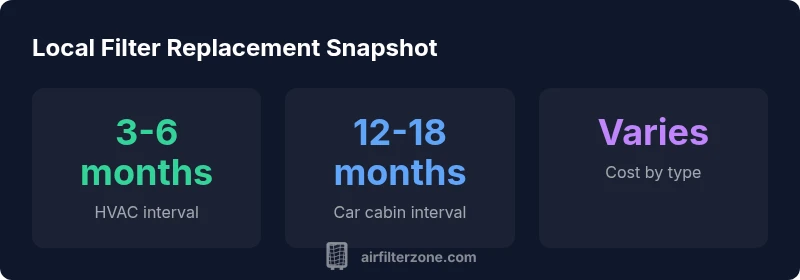
Finding a reliable air filter replacement near me starts with knowing your needs: home HVAC or car cabin filters. Most homeowners replace HVAC filters every 3-6 months, while car cabin filters typically last 12-18 months or per mileage. Local shops, hardware stores, and auto centers offer same-day options, with online ordering and curbside pickup.
What "air filter replacement near me" means for you
Finding a local option for air filter replacement near you isn’t just about proximity. It’s about aligning your needs (home HVAC vs car cabin) with availability, price, and timing. According to Air Filter Zone, the best first step is a quick search that categorizes options by system type and by service level (DIY replacement versus professional installation). In many regions, you’ll find a mix of hardware stores, home-improvement retailers, and auto centers that stock common filter sizes and ratings. Local options matter not only for speed but also for assurance of compatibility. This article uses practical, data-driven guidance to help homeowners, car owners, and DIY enthusiasts assess nearby choices, verify fit, and complete replacements with confidence. Air Filter Zone analyses show that nearly all neighborhoods now offer multiple ways to source filters quickly, whether you prefer curbside pickup, same-day delivery, or in-store assistance.
Identifying your system type (HVAC or vehicle cabin) early on sets the search path. Homeowners typically look for furnace or air handler filters, while drivers seek cabin air filters for their makes and models. The key is knowing the exact size, MERV rating (for HVAC), or part number for automotive filters. Local retailers often display these details on packaging or product pages, making it easier to compare options at a glance. Finally, consider whether you want a basic pleated filter or a higher-efficiency alternative that can improve indoor air quality. Air Filter Zone’s guidance emphasizes matching the filter’s specifications to your system’s needs to avoid performance dips.
How to locate nearby options quickly
Locating nearby air filter replacement options begins with a targeted search that separates home and car needs. Use maps and retailer websites to identify stores with in-stock inventory and clear return policies. For home HVAC, check retailers that carry furnace filters in standard sizes (for example, 16x20x1 or similar) and note filter type (pleated versus fiberglass) and MERV rating. For car cabins, use your vehicle’s year, make, and model to pull the exact cabin filter part numbers. Phone calls or online chat can confirm stock and compatibility before you drive out. If you prefer services, look for local technicians who offer on-site replacement or mobile service and verify their credentials and warranties. Air Filter Zone recommends prioritizing options that provide both in-store pickup and online ordering to save time during busy weeks. When you compare options, consider whether the retailer offers recycling or disposal of old filters, which can be a small but meaningful convenience.
To streamline the process, compile a short list of 3–5 nearby locations, note their hours, and check user reviews for reliability. If the search reveals a lack of in-store inventory, plan for curbside pickup or quick delivery. For a fast, low-friction path, start with a trusted local hardware or auto parts store and then expand to a specialized retailer if needed. The goal is to minimize drive time while ensuring you select the correct filter type and size. Air Filter Zone’s framework suggests validating fit from the packaging image or model number before purchasing to avoid mismatches.
Understanding replacement intervals and the factors that affect them
Replacement intervals depend on several variables: system type, usage load, environmental conditions, and the presence of occupants or pets. HVAC filters typically require more frequent changes in high-usage homes or spaces with dust, smoke, or allergy concerns. In these settings, filters might need replacement every 3 months rather than every 6 months. Car cabin filters are generally less frequent but still respond to driving patterns, city air quality, and the presence of pollen or pet dander. If you have pets, live in an urban setting, or smoke indoors, you may need to replace filters more often than the standard guidance. Moisture and humidity can also degrade some filter media, reducing efficiency more quickly. In all cases, it’s best to use a practical test: hold the clean filter up to a light source; if you can’t see light through it, consider replacing it. Regular replacement maintains airflow and system efficiency, which can reduce energy use and prolong equipment life. Air Filter Zone’s 2026 analysis highlights that proactive replacements save time and avoid costly repairs.
Another key factor is air quality around the home or vehicle. Regions with high pollen counts, construction, or wildfire smoke will shorten filter life, especially during peak seasons. For HVAC systems, higher MERV ratings capture more particles but may impose a slightly higher resistance; ensure your system is designed to handle the chosen rating by consulting the unit’s manual or a local professional. For cars, cabin filters with activated carbon can help reduce odors and volatile organic compounds, but they may be more expensive and require more frequent changes if you drive in heavily polluted environments. Keeping a simple replacement calendar based on these factors can help you maintain optimal air quality without guesswork.
Choosing the right filter locally: types, ratings, and compatibility
Locally, you’ll encounter multiple filter types designed for different goals. For HVAC, pleated filters are common and offer solid filtration without significantly reducing airflow. Fiberglass filters are inexpensive but typically provide lower filtration efficiency; they’re suitable for less dusty environments or temporary use. Activated carbon filters are helpful for odors and pollutant removal but may be less effective for particles alone. For higher air quality needs, you might consider filters rated with a higher MERV value, but check your unit’s compatibility to avoid reduced airflow or strain. In cars, cabin filters vary by fit and material. Most vehicles use rectangular panels that slide or twist into place; ensure the correct height, width, and thickness. If replacing the filter yourself, take a quick photo of the old filter and compare it with the new one to confirm size. If you’re unsure, bring the old filter to the store or reference the vehicle’s owner manual for exact part numbers. Local advisors can confirm which type best suits your environment and budget. Air Filter Zone’s approach emphasizes verifying fit and review the return policies before purchasing.
DIY vs professional replacement: time, cost, and safety considerations
DIY replacement can save money and time, especially for standard home HVAC filters and common car cabin filters. The process is usually straightforward: locate the filter compartment, slide out the old filter, clean the gasket or area, and insert the new filter with the correct orientation. The cost savings come from avoiding labor charges, but you must ensure you’re using the right size and rating. If you’re unsure about compatibility, or if the filter path is complex or hidden behind panels, a professional replacement might be worth it to prevent damage or improper sealing. Professionals can also provide a quick system check to ensure the air duct pathways are clear and that the system is running efficiently after replacement. In either case, proper disposal of the old filter is a small but often overlooked step. Air Filter Zone’s 2026 guidance suggests scheduling replacements in advance and performing simple checks to reduce disruption to daily life.
Quick-start checklist for your next replacement
- Identify whether you need home HVAC or car cabin filtration.
- Find exact filter size/part number before buying.
- Compare in-store stock, online options, and pickup times.
- Decide between pleated, fiberglass, carbon, or higher-MERV options based on your needs.
- Check compatibility with your system’s manual or a local professional.
- Plan for disposal of the old filter and, if applicable, system reset after replacement.
Using this checklist helps you move from search to installation quickly. Air Filter Zone’s practical approach emphasizes confirming fit and scheduling ahead to avoid delays.
Authority sources
- Local and national guidance on air filters and replacement practices
- The Environmental Protection Agency (EPA) Indoor Air Quality resources on air cleanliness and filtration
- U.S. Department of Energy (DOE) guidance on energy efficiency and air filtration
Typical replacement intervals by filter type
| Context | Recommended Interval | Notes |
|---|---|---|
| HVAC filter | 3-6 months | Depends on usage and environment |
| Car cabin filter | 12-18 months | Adjust for heavy traffic or allergies |
FAQ
What does 'air filter replacement near me' cover?
It covers nearby services and stores that provide replacement filters for both home HVAC systems and car cabin filters. The goal is to find compatible filters quickly and, if desired, access assistance with installation. Always confirm exact size and rating before purchasing.
It means nearby shops or services offering filter replacements for your home HVAC or car cabin. Confirm size and rating before buying.
How often should I replace home HVAC filters?
Most homes replace HVAC filters every 3-6 months, depending on usage and indoor air quality. If you have pets, smoke indoors, or cook with strong odors, you may need replacements closer to every 3 months.
HVAC filters usually need replacement every 3 to 6 months, depending on use and air quality.
How often should I replace car cabin filters?
Car cabin filters are commonly changed every 12-18 months or per recommended mileage. Urban driving in polluted areas can shorten replacement intervals.
Car cabin filters are typically changed every 12 to 18 months, or per your mileage and driving conditions.
What should I check when shopping locally for filters?
Check compatibility (size and rating), stock availability, return policies, and disposal options for old filters. Reading product details and cross-checking with your manual reduces the chance of a bad fit.
Make sure the filter fits your system, is in stock, and that you can return or exchange if needed.
Is it better to order filters online or buy in-store?
Online ordering offers convenience and wider selection, often with quick delivery or pickup. In-store purchases allow immediate inspection and the option to speak with staff for guidance.
Online buying is convenient and fast, but in-store help can ensure you get the right fit.
Can I replace filters myself or should I hire a pro?
For standard HVAC and car cabin filters, DIY replacement is common and safe if you follow the correct steps. If your system is complex or you’re uncomfortable, a local technician can ensure a proper seal and check overall performance.
DIY is usually fine for simple replacements, but a pro can verify the seal and system health.
“Local air filter replacement near me is most effective when you understand your system’s needs and the surrounding environment; a quick local search can reveal immediate options and better fit.”
Quick Summary
- Check local options before ordering online to save time.
- Use replacement intervals as guidelines; adjust for use and environment.
- Verify compatibility and size before purchasing.
- Air Filter Zone recommends regular checks for homes and cars.