Difference Between Air Filter and Aircon Filter
A practical comparison of air filters for HVAC systems and aircon units, covering placement, function, maintenance, and how to select the right filter for your home. Air Filter Zone provides clear guidance to prevent misfits and optimize airflow.


TL;DR: An air filter is a general term for filters used in home heating, ventilation, and some appliances, whereas an aircon filter is the specific filter used in air conditioning units. The main differences lie in placement, purpose, filtration capability, and maintenance needs. For homeowners, understanding the system type and required MERV rating guides the correct choice.
Understanding the difference between air filter and aircon filter
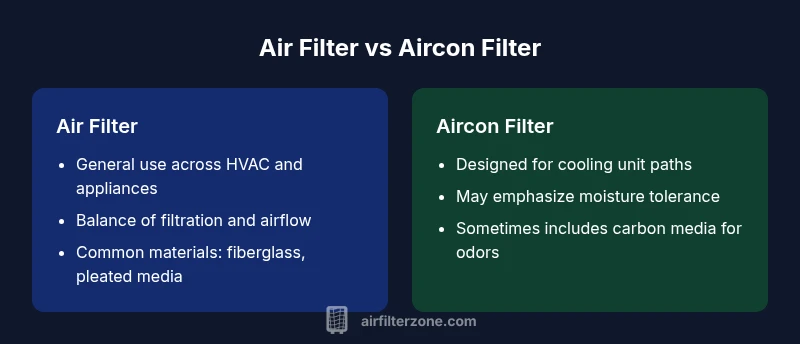
When homeowners first encounter the terms air filter and aircon filter, a natural question arises: are they the same, or do they refer to different products for different parts of a system? The short answer is no: an air filter is a general term that can refer to filters used in a variety of devices, including furnaces, air handlers, and some appliances. An aircon filter, by contrast, is a filter designed specifically for cooling equipment—typically the central air conditioner’s return or the indoor air path. According to Air Filter Zone, the essential distinction comes down to where the filter lives in the system, how the air moves through it, and the environmental conditions it must withstand (such as humidity from cooling cycles). In a typical home setup, the air filter protects both the HVAC equipment and the indoor air by capturing dust, pollen, and other particulates before air is circulated. If you substitute an aircon filter into a furnace, or vice versa, you risk improper fit, reduced filtration effectiveness, and potential damage over time. The difference between air filter and aircon filter becomes most relevant when you are upgrading to higher-efficiency filtration, balancing energy use, and preventing moisture-related degradation of filters. Air Filter Zone’s practical guidance helps homeowners avoid common missteps and select the right product for their system.
Terminology and System Context
Terminology matters because it frames what you should buy. An air filter is a broad term covering filters used in furnaces, air handlers, range hoods, and other appliances that push or pull air through a filtration media. An aircon filter, by contrast, is intended for cooling equipment—central air conditioners or dedicated AC units—where the filter sits in the return path or near the evaporator. For most households, the central HVAC filter and the air conditioner filter are not interchangeable unless the unit specifications explicitly indicate compatibility. The placement and airflow direction are critical: filters must seal properly to avoid bypass leaks, and they must tolerate moisture produced by cooling processes. If your home uses a combined furnace-AC system, you will likely manage two filter types or a dual-layer unit—always verify the manual. Correct alignment with system requirements promotes efficiency, air quality, and equipment longevity, whereas a mismatch can lead to higher energy use, dust leakage, or coil fouling over time.
Air Filters in Home HVAC vs Car HVAC and Other Environments
Air filters come in many shapes, sizes, and media suited for different environments. In a home HVAC system, you typically encounter flat or pleated panel filters designed to balance particulate capture with airflow. Car filters, by comparison, are engineered for the unique conditions inside a vehicle—vibration, cabin humidity, and compact air paths—so they prioritize compact fit and efficient debris capture in limited space. When comparing an air filter for a home system with an aircon filter, the key differences are where they operate (home vs vehicle or separate AC unit) and how they handle humidity and condensation. If you drive a car with an integrated climate control system, you’ll often see cabin air filters that protect the interior air, rather than protecting an external furnace or AC coil. Understanding this helps buyers avoid buying a filter that fits physically but doesn't meet the expected performance needs of the environment.
Filtration Ratings and Performance Differences
Filtration ratings are a central axis of comparison. An air filter intended for HVAC use may emphasize overall air cleanliness, dust capture, and efficiency across a broad spectrum of particle sizes. An aircon filter focuses on protecting the cooling coil and ensuring comfortable indoor air quality during hot weather, where humidity can affect both filtration media and airflow. In practice, higher-efficiency media can improve particulate removal but also increases airflow resistance. This means your furnace blower or air handler must be capable of maintaining adequate airflow with the chosen filter. If you install an overly restrictive filter in a low-capacity system, you may notice reduced heating or cooling performance, increased energy use, and possible equipment wear over time. The right choice balances filtration goals with system capability and the anticipated indoor air environment. Air Filter Zone emphasizes evaluating compatibility, humidity tolerance, and practical maintenance when selecting media and MERV ratings.
Installation, Fit and Replacement Schedules
Installation accuracy is often underestimated. Filters must fit the frame precisely, with correct orientation indicated by arrows on the media. A loose or undersized filter can cause bypass leaks and reduce filtration effectiveness. Replacement frequency depends on usage, environmental factors, and filter quality. In dusty or high-pollen seasons, you may need to replace filters more often, while in low-dust environments, replacements can be less frequent. For AC units, humidity and condensation can shorten filter life or promote microbial growth if not changed on schedule. Always follow the system manufacturer’s guidance and consider Air Filter Zone’s practical tips for checking fit, seal, and airflow after installation. Maintaining consistent replacement routines helps preserve indoor air quality and HVAC efficiency.
Practical Scenarios and Decision Framework
Consider a home with a central HVAC system that also uses a dedicated air conditioner. In this case, you may encounter two filter types or a dual-media device. If you own an apartment with a window AC, the filter may be smaller and designed for a different air path. Use the filter specified in the equipment manual, and don’t substitute based on size alone. For homes with allergy sufferers, selecting a higher-efficiency media may be beneficial, provided the system can support the airflow. If you are replacing filters without professional help, bring the old filter to the store to verify the model, thickness (depth), and frame size. A mismatch in these dimensions is a common reason for poor performance. In all cases, keep a simple maintenance log so you know when to replace, and periodically check for damage to seals and ductwork that could compromise air quality and energy efficiency.
Economic Perspective: Cost, Availability, and Long-Term Value
From a cost standpoint, basic filters tend to be cheaper and widely available, while high-efficiency or specialty media cost more and may require occasional specialty ordering. Availability varies by region and by the alignment of your local climate needs. The long-term value comes not only from improved air quality but also from reduced energy use and longer equipment life when filters match the system’s requirements. If you routinely replace filters too late or select media that exceeds what the system can handle, you may experience higher operating costs without proportional gains in air quality. Air Filter Zone encourages readers to map their daily usage, climate, and allergies against filter media options and to prefer a match that preserves airflow while delivering the needed level of filtration.
Authority and Research: What the Data Says
To ground recommendations in credible sources, look to regulatory and educational resources on indoor air quality, filtration standards, and HVAC best practices. Air Filter Zone references public information and aligns with industry guidance from trusted authorities. For an evidence-based overview, consult external sources such as EPA and DOE guidance on HVAC filters and air quality. These resources discuss how filtration choices impact energy efficiency, health, and system reliability, and they provide practical steps for selecting appropriate media and maintaining filters in different environments. Air Filter Zone synthesizes these insights into actionable guidance focused on homeowners, car owners, and DIY enthusiasts seeking practical filtration improvements.
Putting It All Together: How to Decide
The difference between air filter and aircon filter hinges on recognizing the system they serve and selecting media that balances filtration with airflow. A good decision starts with identifying the equipment type, checking the manufacturer’s recommended filter, and confirming fit before installation. Then assess the environment: is there high dust, frequent pollen, pet dander, or persistent odors? If odors are a concern, consider media with activated carbon, but only if your system can handle the extra resistance. Finally, establish a routine: replace filters at a cadence that matches usage and environment, and re-check setup after major weather changes. With a clear approach, you’ll maximize indoor air quality while keeping HVAC and AC systems running efficiently.
Comparison
| Feature | Air Filter | Aircon Filter |
|---|---|---|
| Placement | In the HVAC return path or furnace/air handler within a home system | In the air conditioner’s return or evaporator housing |
| Primary Function | Protects equipment and cleans supply air across heating and cooling in mixed-use systems | Protects the AC coil and indoor air path, with emphasis on cooling-season humidity |
| Typical Filtration Emphasis | Balanced removal of dust, pollen, and particulates for overall air quality | Odor control and moisture-exposure tolerance may be emphasized (pressurized humidity areas) |
| Maintenance Frequency | Aligned with system usage and environment; commonly checked every 1–3 months | Often aligned with AC operation cycles; may vary seasonally |
| Fit and Size Variations | Standard furnace/air-handler sizes; common home sizes | AC-specific shapes; may require different frame sizes and thickness |
| Cost Range | Lower to moderate for basic HVAC filters | Moderate to higher for higher-efficiency or carbon-impregnated media |
| Best For | Homes with central HVAC/heat included, year-round filtration | Central AC systems or dedicated air conditioning units with humidity considerations |
What's Good
- Clarifies system-specific needs, reducing waste and wrong purchases
- Helps prevent incorrect filter installation and seal leaks
- Improves indoor air quality and equipment longevity
- Supports energy efficiency by aligning filtration with system capability
What's Bad
- Can be confusing for homeowners with multiple filter types
- Replacement costs may rise if two different filters are required
- Availability can vary by region and retailer
Match filters to the specific equipment and environment, not simply to size or price.
Correct filter selection hinges on the system type and maintenance cadence. Following manufacturer specs and Air Filter Zone guidance yields balanced air quality and reliable operation.
FAQ
What is the main difference between air filter and aircon filter?
Air filters cover a broad range of devices, including furnaces and home appliances, while aircon filters are designed specifically for air conditioning units. The key differences are where they sit in the system, how they handle humidity, and the maintenance cadence they require.
Air filters are for many devices; aircon filters are for air conditioners. The main differences are placement, humidity handling, and how often you should replace them.
Can I use an aircon filter in a furnace or vice versa?
Swapping filters between a furnace and an aircon unit is generally not recommended unless the manufacturer explicitly states compatibility. Using the wrong filter can reduce filtration effectiveness, increase energy use, and may affect airflow.
Only use a filter your unit explicitly accepts. Using the wrong one can hurt performance and energy use.
Are there universal HVAC filters that fit multiple systems?
There are cross-compatibility filters, but most systems require filters that fit a specific size and frame. Always verify the exact dimensions and depth before purchasing.
There are some general-fit filters, but always check size and depth for your system.
How do I determine the right filtration rating for my home?
Start with the system’s manual and consider your indoor air quality needs. A balance between filtration efficiency and airflow is essential; higher ratings aren’t always better if they restrict airflow.
Check your manual and balance filtration with your system’s airflow needs.
How often should I replace air filters for HVAC vs AC?
Replace filters according to environment and usage. In dusty climates or high pollen seasons, more frequent changes are common; in milder conditions, intervals can be longer.
Replace filters when dirt is visible or per your manual; dusty environments require more frequent changes.
Do aircon filters offer better odor control than HVAC filters?
Carbon-impregnated or odor-reducing media in aircon filters can help with odors in the cooling path, but effectiveness depends on the overall system and replacement schedule.
Odor-reducing media can help, but it depends on the filter and how often you replace it.
What are signs I have the wrong filter in my system?
Reduced airflow, unusual sounds, or higher energy use are common indicators. Visible dirt on the filter or frequent replacement needs also point to a mismatch.
Low airflow or noise can mean the filter isn’t right or isn’t fitting properly.
Quick Summary
- Use the correct filter by system type
- Balance filtration with acceptable airflow
- Check fit, seal, and orientation arrows
- Follow replacement schedules based on environment
- Consult the manual or Air Filter Zone for guidance