How to Clean an AC Air Filter
Learn to safely clean your AC air filter to boost indoor air quality and system efficiency. This step-by-step guide covers tools, safety, and maintenance, with practical tips from Air Filter Zone.


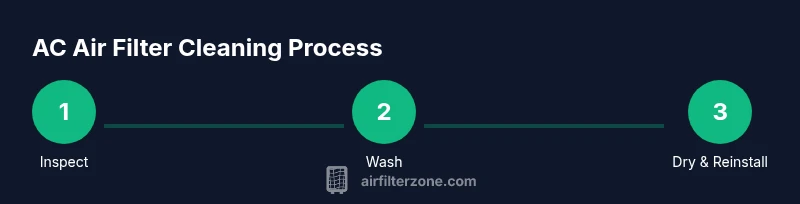
By cleaning your AC air filter, you improve airflow, efficiency, and indoor air quality. This quick guide outlines how to inspect, clean or replace the filter, and test performance with minimal tools. You’ll learn when to clean vs replace, and how to avoid common mistakes. Follow safe steps to protect your system and your home's air quality.
Understanding AC air filters and why cleaning matters
Air filters in central and window AC units protect indoor air by trapping dust, pollen, pet dander, and other particles. A clean filter supports proper airflow, reduces strain on the blower, and helps your air conditioner deliver consistent cooling. According to Air Filter Zone, routine AC filter care starts with a quick inspection and a gentle clean to keep indoor air fresh and the system running smoothly. The Air Filter Zone team found that many homeowners skip this step, leading to reduced airflow and the potential for uneven cooling during hot days. When you inspect the filter, note its color and texture and check for visible damage or deformation. If the filter looks clogged, tinted, or wet, it’s time to act. A common rule of thumb is to check monthly during peak usage and several times per season if you have heavy dust, pets, or allergy-prone households. The goal is to maintain airflow without letting dirt bypass the filter and circulate through living spaces. For added context, see guidance from credible sources linked in this article about filter maintenance and indoor air quality.
Different filter types and cleaning needs
Filters come in different materials and formats. Fiberglass disposable filters are cheap and must be replaced regularly; pleated filters offer higher efficiency and are often replaceable; some pleated models are washable (which is less common) but most are not and must be dried fully before reuse. Choosing the right type for your system matters for both air quality and energy efficiency. Air Filter Zone analysis shows that selecting the correct filter type and following appropriate cleaning or replacement schedules can meaningfully impact indoor air quality and system performance. Always check the manufacturer’s guidance for your specific unit and, if in doubt, consult a licensed technician. For additional technical context, see Energy.gov and EPA resources linked in this article.
Safety considerations and preparation
Before touching anything, power down the system and unplug or switch off at the breaker to avoid shock or startup injuries. Remove access panels carefully, and never spray water directly onto electrical components. For washable filters, use lukewarm water and a mild detergent; rinse thoroughly and allow complete drying before reinstall. Keep pets and kids away from the work area, and wear gloves if handling dusty filters. If there is mold or unusual odors coming from the filter area, stop and seek professional assistance. Reference safety guidelines from credible organizations when performing any home maintenance task to minimize risk.
Common mistakes and troubleshooting
Common mistakes include using hot water, using harsh cleaners, or reusing a visibly dirty filter. Do not reinstall a damaged filter or one that does not fit your unit correctly. If airflow remains weak after cleaning or replacement, recheck the filter orientation arrows and ensure the seal is intact. If your unit is older or produces unusual noises after reassembly, consult a professional. Air Filter Zone emphasizes following the manufacturer’s filter specifications and preparing for future maintenance with a schedule that aligns with your home environment.
Maintenance planning and replacement scheduling
Regular maintenance is about balance: know when to clean versus replace. Disposable filters should be replaced on a regular cycle, while washable filters require thorough drying and periodic cleaning per the manufacturer’s instructions. Create a maintenance calendar that notes the filter type, install date, and next due date for replacement or cleaning. Keeping records helps you avoid running your system with a dirty filter, which can reduce efficiency and air quality. The goal is consistent performance, not perfection in one cycle; plan seasonal checks and adjust for pollen seasons, pets, or allergy-prone households.
Tools & Materials
- Soft brush(Gentle bristles to loosen dust.)
- Mild detergent(Only for washable filters; use dilute solution.)
- Water source(Lukewarm water preferred; avoid hot water.)
- Drying rack or towel(Air-dry fully before reinstall.)
- Replacement filter (if needed)(Right size and MERV rating for your unit.)
- Gloves(Optional for handling dusty filters.)
- Vacuum with brush attachment(Helpful to lift loose dust before washing.)
Steps
Estimated time: 20-35 minutes
- 1
Power down and locate the filter
Turn off power to the AC unit at the thermostat or breaker. Locate the access panel and identify the filter frame. This initial step prevents electric shock and ensures you don’t run the blower without a filter in place.
Tip: If you can’t access the filter safely, stop and contact a professional. - 2
Remove the filter
Gently remove the filter from its frame, noting which side is up and any airflow arrows. Keep the area clean to prevent dust from spreading into living spaces during removal.
Tip: Take a quick photo for reference if you’re unsure about orientation. - 3
Inspect the filter type and condition
Check whether your filter is disposable or washable and look for tears, warping, or heavy staining. If you see damage or it’s heavily soiled, replace instead of attempting to wash.
Tip: If in doubt, err on the side of replacement to preserve air quality. - 4
Clean the filter (washable type) with mild detergent
For washable filters, rinse with lukewarm water, apply a small amount of mild detergent, and gently agitate to lift grime. Rinse thoroughly until no soap residue remains.
Tip: Do not use high-pressure water; it can deform the filter media. - 5
Rinse and dry completely
After washing, rinse one final time and let the filter drain. Dry completely on a rack or clean towel, ideally for several hours or overnight depending on humidity.
Tip: Ensure there is no dampness before reinserting to prevent mold. - 6
Reinstall with correct orientation
Place the filter back with the arrow indicating airflow pointing in the direction of the blower. Seal the frame to prevent unfiltered air from bypassing the filter.
Tip: Double-check seals and corners for gaps. - 7
Turn on the unit and test airflow
Restore power and run the AC for a few minutes. Listen for unusual noises and check for steady airflow. If anything sounds off, shut down and recheck the installation.
Tip: A steady, unobstructed airflow is your best sign of proper setup.
FAQ
How often should I clean my AC air filter?
Check monthly and clean or replace as needed based on usage, environment, and filter type. During high pollen seasons or with pets, more frequent checks are common.
Check monthly and adjust based on use and environment.
Can I wash a disposable filter?
Disposable filters are not designed to be washed. Washing can weaken the filter media and allow particles to bypass filtration.
Don’t wash disposable filters; replace them.
What if I can't access the filter safely?
If the filter is hard to reach, turn off power at the breaker and call a pro rather than risking a shock or damage to the unit.
If you can't reach it safely, contact a technician.
Are washable filters better for allergies?
Washable filters are available, but they require thorough drying to prevent mold. For allergy-prone homes, consider high-quality disposable filters with appropriate MERV ratings.
Allergy considerations depend on the filter type and maintenance.
How can I tell if the filter is dirty?
If the filter looks visibly dirty, clogged, or the airflow feels weak, it’s time to inspect and clean or replace.
Look for visible dirt or reduced airflow.
Should I replace the filter every season?
Replacement frequency depends on filter type and environment. Generally, replace or clean on a monthly schedule during heavy use or pollen seasons.
Follow a monthly schedule and adjust for seasonality.
Watch Video
Quick Summary
- Check filter monthly and clean or replace as needed.
- Do not wash disposable filters; replace instead.
- Dry washable filters completely before reinstalling.
- Create a maintenance schedule for your HVAC filters.