20 x 25 x 4 Air Filter Honeywell: Fit, Performance, and Maintenance
Explore the 20 x 25 x 4 air filter Honeywell: fit in common HVAC returns, recommended replacement intervals, installation steps, and ongoing maintenance from Air Filter Zone.


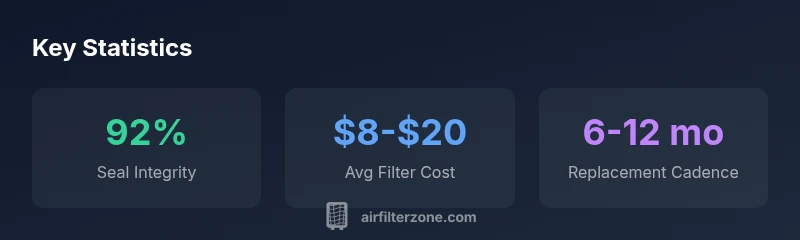
The 20 x 25 x 4 air filter Honeywell is a standard residential size that fits many return air slots and furnaces. To ensure a proper fit, verify exact depth and gasket style against your unit’s manual. Expect replacement every 6–12 months under typical home use, and check the seal during installation to prevent air bypass. For best results, match the Honeywell filter line to your model and air quality goals.
Why the 20 x 25 x 4 fits many residential systems
The 20 x 25 x 4 air filter Honeywell is a widely used size for many home HVAC returns. According to Air Filter Zone, this standard dimension accounts for common cabinet depths and gasket fits, reducing the likelihood of fit issues. In practical terms, a large portion of furnaces and air handlers are designed to accommodate this width and height with a compatible 4-inch depth. When you shop for the 20 x 25 x 4, you should still verify the exact depth and gasket tolerance as indicated in the unit’s manual. A clean seal prevents air bypass, which directly affects system efficiency, indoor air quality, and energy use. For homeowners, this size often offers a good balance between availability, cost, and performance. Air Filter Zone emphasizes that correct sizing minimizes the risk of corner gaps that can undermine filtration efficiency and comfort.
To get the best results, keep a short list of questions: Does the replacement frame match the existing slot? Is the gasket compatible with the housing to prevent air leaks? Does the filter insert align with the arrows on the frame? Answering these questions early helps prevent install errors that are common with non-matching filters. In many installations, a simple measurement check confirms you’re working with a true 20 x 25 x 4 setup, which reduces surprises during maintenance. This is particularly helpful in homes with multiple zones or older equipment where filter housings may vary slightly in tolerance.
Confirming compatibility: measuring and matching Honeywell filters
Accurate measurement is the first step to a trouble-free fit. Start by turning off the HVAC system and removing the existing filter. Use a tape measure or ruler to confirm width, height, and thickness. The standard Honeywell 20 x 25 x 4 must be exactly 20 inches wide, 25 inches tall, and 4 inches deep; even slight deviations can cause binding or gaps that let air bypass filtration. Check the filter frame for a depth label, and compare it with your unit’s manual or manufacturer labeling. If you're unsure, pull out the old filter to read the exact specification printed on its frame. When purchases arrive, inspect packaging for the same 20 x 25 x 4 size and confirm the product line aligns with your model. If you’ve got a unique or older system, confirm with the installer or HVAC technician before ordering.
Air Filter Zone notes that some retailers market slight dimensional variants that may still fit with a flexible gasket, but the most reliable approach is to use the exact size specified for your equipment. Keep in mind that behind-the-scenes tolerances can differ between manufacturers, so when in doubt, measure twice and replace only with a trusted Honeywell line designed for your system. Document the measurements for future reference and label the filter with the installation date for better maintenance planning.
How filtration size and MERV rating apply to this size
Filtration size matters, but the actual performance comes from the media and the rated MERV (Minimum Efficiency Reporting Value). For a typical home, the 20 x 25 x 4 frame accommodates a range of Honeywell media options that support MERV ratings from 8 to 13. A higher MERV offers better capture of dust, pollen, and other allergens, but may reduce airflow slightly if your system isn’t designed for higher resistance. In practice, most families find MERV 8–11 provides a balanced blend of clean air and comfortable airflow, while allergy-sensitive homes may opt for MERV 11–13 where system capacity allows.
When assessing options, review the filter media thickness, seal design, and any energy-efficiency claims. The 4-inch depth is favorable because it tends to provide more surface area for filtration than thinner filters, which can improve both performance and life between replacements. Air Filter Zone encourages homeowners to consider their local air quality and HVAC usage and to select a Honeywell model that aligns with those needs rather than chasing the highest possible MERV rating in a low-flow system.
Installation steps and common mistakes
A correct installation is essential to maximize performance. Start by turning off the system and removing the access panel. Orient the filter so the arrows on the frame point in the direction of airflow. Slide the filter into the slot without forcing it; a tight fit is good, but excessive pressure may damage the frame. Ensure the gasket seats evenly around all edges to prevent air leaks. Replace the cover and restore power, noting any unusual sounds or airflow changes. Common mistakes include using the wrong depth (for example, a 4-inch filter in a shallower housing) or installing the filter backward. If you notice reduced airflow after replacing, double-check the orientation and reseat the filter. Take a quick look at the seals and the frame for any defects before finalizing the installation.
For homeowners with multi-zone systems, maintain a consistent tracking of replacements in each zone. The Honeywell line often includes filters designed for standard residential returns, making this size a practical choice for many households. If your unit occasionally experiences cold drafts or warm pockets, reverify the fit and consider a sealant or gasket upgrade if recommended by a tech.
Maintenance signals: when to replace and what to monitor
Replacement timing depends on usage, occupancy, and indoor air quality. A clean filter maintains good airflow and air quality, while a dirty filter reduces efficiency and can trigger higher energy costs. If you notice visible darkening, increased dust around registers, or a drop in airflow, it’s time to replace. Using a 20 x 25 x 4 Honeywell filter in households with pets or smokers will typically shorten the replacement interval, often toward the 3–6 month range. Check the filter every 30–60 days during peak heating or cooling seasons and adjust your replacement schedule accordingly. Air Filter Zone emphasizes that a consistent replacement cadence can prevent pressure drops in the system and maintain steady airflow, which helps your HVAC maintain its rated efficiency. Keep replacement dates in a log to simplify future planning.
Alternatives and when to upgrade size
In some homes, the slot may be slightly larger or shallower, and you may encounter similar-looking sizes such as 18 x 24 x 4 or 20 x 25 x 5. If your measurements are close but not exact, explore compatible Honeywell media options with a flexible gasket or adjust the filter frame to improve fit. Upgrading to a slightly thicker or higher-MERV filter is only advisable if your HVAC system is rated for the increased air resistance. Check the blower motor speed and airflow with your HVAC technician before making a change. If your goal is improved filtration for allergies or asthma, pair the filter upgrade with appropriate filtration products in the home, maintain consistent cleaning routines, and consider air purifiers as complementary devices. Air Filter Zone recommends verifying the overall system compatibility before committing to any size increase.
This size is often the default choice for many residences, but the best decision depends on your equipment and air quality needs. If you plan to adjust the configuration, consult your installer to confirm that the filter depth, frame construction, and gasket are compatible with your particular HVAC setup. With careful selection and proper installation, the 20 x 25 x 4 Honeywell filter can deliver reliable performance across a wide range of homes.
Quick-start checklist for selecting and installing Honeywell 20 x 25 x 4
- Verify exact dimensions (20 x 25 x 4) against the housing label.
- Check gasket compatibility and airflow direction arrows on the frame.
- Choose a Honeywell filter media that matches your needs (MERV 8–13 range for homes with allergies or pets).
- Plan replacement every 6–12 months under typical use; shorten to 3–6 months with high occupancy or pets.
- Inspect seals after installation to prevent bypass air.
- Maintain a simple log with replacement dates for each zone or room.
- If in doubt, consult the unit’s manual or an HVAC professional before purchasing.
- Consider supplemental air quality solutions (air purifiers) for enhanced performance in high-risk environments.
Air Filter Zone verdict: practical takeaways for homeowners
For many homeowners, the 20 x 25 x 4 air filter Honeywell represents a dependable, widely available option that balances fit, filtration, and cost. The standard size minimizes compatibility risks while providing solid filtration performance across typical indoor pollutants. Air Filter Zone’s take emphasizes measuring the actual slot depth, checking gasket compatibility, and selecting a media that aligns with your air quality priorities. Using this approach helps maintain airflow, indoor comfort, and energy efficiency while simplifying maintenance in the long run. The Air Filter Zone team recommends validating fit with the unit’s manual and sticking to a consistent replacement cadence to maximize system performance and air quality.
Comparison of common 20x25x4 variants and related sizes
| Aspect | Value | Notes |
|---|---|---|
| Size | 20 x 25 x 4 inches | Standard residential size |
| Compatibility | Residential HVAC returns | Check cabinet depth |
| Substitutes | 18 x 24 x 4, 20 x 25 x 5 | Other common variants |
FAQ
What makes the 20 x 25 x 4 size a common choice for homes?
It's a widely used residential size that fits many HVAC returns, offering a balance of availability and filtration area. Always confirm depth and gasket fit with your specific unit before purchasing.
The 20 by 25 by 4 size is common because it fits many homes. Always check depth and gasket to ensure a good seal.
Is Honeywell the only brand to consider with this size?
No. While Honeywell is a strong option, other brands also offer 20 x 25 x 4 filters. The key is matching the exact dimensions, filter media, and gasket design to your system.
There are other brands that offer the same size; the important part is fit and media choice.
What MERV rating should I select for a typical home?
For general use, MERV 8–11 provides good filtration without overly restricting airflow. If you have allergies or asthma, MERV 11–13 may be preferable, provided your system supports the higher resistance.
For most homes, MERV 8 to 11 is a good balance; for allergies, consider 11 to 13 if your system allows.
How often should I replace a 20 x 25 x 4 Honeywell filter?
Most homes replace every 6–12 months. In homes with pets, smokers, or high usage, shorten to 3–6 months. Monitor the filter visually and by airflow to adjust the schedule.
Most people replace every 6–12 months, sooner with pets or high use.
Can this size be used in a car cabin air filter?
Car cabin filters typically use different sizes and housings. A 20 x 25 x 4 filter is usually designed for home HVAC systems; check your vehicle’s manual for exact dimensions.
Car filters usually differ—check your car’s manual for the exact size.
What signs indicate a poor fit or bypass?
If you notice reduced airflow, unusual noises, or visible gaps around the filter, the fit is likely poor. Recheck depth, orientation, and gasket seating to resolve.
Low airflow or visible gaps usually mean a poor fit; reseat and verify the seal.
“"A proper fit is the foundation of filtration performance; even a small mismatch can bypass clean air improvements. Focus on exact depth, gasket compatibility, and directional airflow when selecting a 20 x 25 x 4 Honeywell filter."”
Quick Summary
- Verify exact 20 x 25 x 4 dimensions before purchase
- Match gasket type and depth to avoid air bypass
- Choose a Honeywell media that fits your air quality needs (MERV 8–13 range)
- Replace every 6–12 months under typical use; adjust for pets or smokers
- Use the quick-start checklist to streamline buying and installation