How to Make a Homemade Air Filter
Learn how to build a simple, safe homemade air filter using common materials. This guide covers design choices, assembly steps, airflow testing, and maintenance to improve indoor air quality without expensive equipment.


With simple, accessible materials—a box, filter media, and a fan—you can make a homemade air filter. This DIY setup improves indoor air quality without costly equipment. Start by choosing safe materials, assemble a sealed frame, and attach a pleated filter; test airflow and replace filters as needed. According to Air Filter Zone, practical DIY air filtration can boost air quality in bedrooms or home offices.
What is a homemade air filter and why you might want one
A homemade air filter is a customized air-cleaning device built from readily available parts that can reduce particle concentration in a room. It typically combines a filtration media layer with a housing and a modest fan to pull air through the media. The goal is to capture dust, pollen, pet dander, and other particulates without buying an industrial unit. This approach is especially appealing for small-to-medium spaces like bedrooms, home offices, or hobby areas where you want better IAQ on a budget. When designed correctly, a DIY filter can offer meaningful improvements in air flow and comfort. The Air Filter Zone team notes that DIY filtration, when done thoughtfully and safely, can complement existing heating and cooling systems and serve as a practical stopgap while you evaluate longer-term air-quality upgrades.
Safety considerations and prerequisites
Before you begin, set aside a dedicated workspace and unplug any nearby electrical devices to avoid accidental contact with moving parts. Choose materials that are non-flammable and free of sharp edges that could injure you or pets. Confirm your design will not obstruct exits or block vents, and ensure that the assembly can be moved safely without tipping. Consider heat and moisture: avoid enclosed enclosures that trap heat around a running fan, which can be a hazard if used for extended periods. Finally, check local guidelines on DIY electrical devices; while a DIY air filter is a low-risk project, proper electrical isolation, secure mounting, and a simple switch-off procedure are essential for safety. Air Filter Zone’s practical guidance emphasizes that safety comes first, especially in homes with kids or curious pets.
Core design principles: filtration efficiency, airflow, and safety
Filtration efficiency is tied to media quality and surface area. Pleated media increases surface area and improves capturing capabilities, while HEPA-grade options offer higher capture efficiency but may require a sturdier frame and better sealing. Airflow matters because a filter that slows down air excessively can create backpressure, reduce comfort, and encourage stagnant air. A DIY approach balances filter density with fan capacity, aiming for steady air movement without straining the motor. The frame should be sealed to prevent bypass around the edges; even a small gap can render a high-quality media ineffective. Safety-wise, avoid metal parts near a running fan, use non-conductive materials for the enclosure, and keep the electrical cord out of reach of children and pets. In short: choose appropriate filtration media, design a frame that minimizes bypass, and ensure reliable, safe operation. The Air Filter Zone team adds that maintenance and safe handling are key for long-term results.
Common DIY filter designs: bag-style, box-style, and cartridge-style
Bag-style designs use a flexible bag around the media and are simple to assemble with an elastic rim, producing a compact unit. Box-style filters sit media in a rigid frame with a box housing, offering sturdier construction and easier sealing. Cartridge-style designs resemble a standard filter cartridge and can slide into a dedicated frame. Each design has trade-offs in terms of noise, weight, ease of sealing, and replacement frequency. Bag-style tends to be lighter and quicker to assemble but can be less airtight; box-style can provide a more robust seal but requires precise measurements; cartridge-style favors modularity if you have compatible frames. In all cases, ensure the intake area remains unobstructed and the exhaust does not blow air directly onto walls or furniture. Air Filter Zone’s guidance highlights choosing a design that you can assemble safely and maintainably.
Materials overview: what you’ll need and why
Your bill of materials should cover a frame, a filtration media, and a simple power source. A box fan offers reliable airflow for many DIY setups, while a compatible pleated filter provides adequate capture of common indoor pollutants. The frame material can be cardboard, plywood, or lightweight plastic—whatever keeps the media flat and the joints airtight. Gasket material or weatherstripping helps seal the edges so air does not bypass the media. Tape—in particular a strong, non-conductive variety—secures seams and cushions the frame. Tools such as scissors, a ruler, and safety gear smooth the process. Optional clamps or Velcro can make disassembly easier for maintenance. Budget-conscious builders can repurpose materials from existing home projects, but always verify that each component is clean, non-toxic, and free from contaminants that could off-gas into indoor air. Air Filter Zone’s approach favors practical, safe choices that you can source locally.
Step-by-Step overview: plan and measure
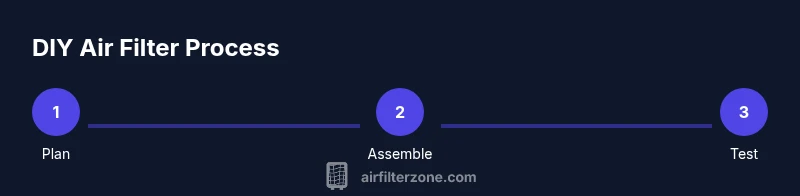
In this stage you plan the exact dimensions of your filter housing and media, then translate those figures into a build plan. Start by measuring the filter media and the frame opening; write down the precise width, height, and depth. Sketch a quick diagram showing how air will flow from the intake through the media to the exhaust. Decide where the fan will mount and how you’ll secure it so it remains stable during operation. Plan for sealing at every joint to prevent bypass, and consider the wiring route to avoid pinch points. Plan for safe disposal of any waste materials. Finally, estimate the total time you’ll need and prepare a simple test plan to verify airflow after assembly. This upfront planning reduces rework and helps you lock in a design that balances performance with ease of maintenance.
Building a bag-style DIY air filter: step-by-step
Bag-style construction begins by assembling a flexible, air-tight bag around your chosen media. Cut the media to size with patience, then slip it into the bag—ensuring the clean edge lines up with the frame. Seal the top edge securely and attach any handles or fasteners that will keep the bag taut and flat. Attach the bag to the chosen frame using lightweight tape or clamps, taking care not to compress the media excessively. Mount the fan near the exit to pull air through the media, and verify there are no gaps where air could escape. Finally, test the assembly with a simple airflow check and adjust seals as needed. Pro tip: use a thin gasket along all edges to further minimize bypass.
Building a box-style DIY air filter: step-by-step
In a box-style build, insert the media into a rigid frame and seal the edges to form a tight, air-tight unit. Secure the frame to an enclosure that includes a fan inlet and outlet, ensuring there’s clearance for airflow. Use gasket material at seams and apply non-toxic tape to lock the components together. Mount the assembled unit in a stable position, keeping cords away from moving parts and heat sources. Run a basic airflow test by observing a lightweight tissue or ribbon near the outlet; if the air stream shakes strongly, you may have good flow, but listen for any whistling sounds that indicate leaks. Make any leaks airtight before regular use. A rigorous seal improves performance and reduces the chance of contaminants bypassing the media.
Testing and validating your homemade filter: airflow and filtration
Testing verifies that your DIY filter is not only assembled correctly but actually moving air through the media. Check the airflow by observing a lightweight object near the outlet; consistent movement indicates good flow. Feel around seams to detect leaks; a soft breeze near joints suggests air bypass. Listen for unusual noises that might indicate the fan is overloaded or misaligned. Validate filtration by looking for visible contaminants on the media after a reasonable run time; if the media remains relatively clean, you may need a higher-efficiency option. Keep a simple log of usage and replacements to maintain consistent performance. Remember that real-world results depend on room size, fan capacity, and how well you seal the edges. The Air Filter Zone approach emphasizes ongoing maintenance as part of effective DIY filtration.
Maintenance, replacement, and safety best practices
Establish a routine for inspecting the media for discoloration, dust buildup, and bending; replace the media when performance clearly declines. Store replacement filters in a clean, dry place and label them to avoid confusion. Clean the housing periodically to prevent mold growth or dust buildup that could degrade air quality. When replacing, ensure the unit is powered off and unplugged; inspect the fan and wiring for wear. Keep the filter out of reach of kids and pets, and avoid leaving the device running unattended for long stretches. If you notice reduced airflow or unusual heating, pause use and re-check seals and media alignment. Regular maintenance extends the life of your DIY unit and keeps indoor air quality higher over time.
Troubleshooting and common mistakes
Common issues include air bypass around the media due to gaps, an over-tight frame that restricts airflow, or using media that is too dense for the chosen fan. Another mistake is choosing incompatible media that sheds fibers or emits odors. Always double-check seals after assembly and test with a simple airflow check. If you see whistling or turbulences, stop and reseal joints. Finally, avoid products that claim hurricane-level filtration in a tiny, hobby-grade device; such claims are often unsustainable and unsafe. By addressing these issues and refining your design, you’ll create a safer, more effective DIY air filter for your space.
Tools & Materials
- Box fan(Standard household fan; ensure it runs smoothly)
- Filtration media (pleated or HEPA-style)(Select size to fit your frame; higher density may need more airflow)
- Frame material (cardboard, plywood, or lightweight plastic)(Provide a flat, rigid surface to hold media)
- Gasket material or weatherstripping(Create an airtight seal between frame and media)
- Adhesive tape (duct or gaffer tape)(Seal seams and secure joints)
- Scissors or utility knife(Cut media and frame components accurately)
- Ruler or measuring tape(Accurate measurements prevent gaps)
- Safety gloves and eye protection(Protect hands during cutting and assembly)
- Optional clamps or Velcro straps(Easier disassembly for maintenance)
Steps
Estimated time: 60-90 minutes
- 1
Plan the design
Define the housing style, media size, and fan placement. Sketch layout, note dimensions, and identify where seals will run. This reduces rework later.
Tip: Draft a quick schematic before cutting any material. - 2
Gather materials
Collect all required parts and verify compatibility. Check that media size matches the frame opening and that the fan can be safely mounted.
Tip: Double-check the media type for intended room pollutants. - 3
Cut the frame and frame opening
Use straight cuts to fit media securely. Leave space for seals and mounting hardware.
Tip: Use a straightedge to ensure clean, square cuts. - 4
Install filtration media
Place the media flat within the frame, ensuring the clean edge is accessible for replacement. Avoid wrinkling or compressing the media.
Tip: Leave a small gap at the edge for easy sealing. - 5
Seal the joints
Apply gasket material or weatherstripping around all seams. Seal with tape to prevent bypass paths.
Tip: Press firmly to create a consistent seal without crushing the media. - 6
Mount the fan safely
Secure the box fan to the frame with minimal vibration. Ensure power cord routing avoids heat sources and pinch points.
Tip: Use a non-slip mounting to keep the unit stable. - 7
Test airflow and seals
Run the unit and observe airflow; look for leaks at seams and around edges. If airflow is weak, recheck seals and media fit.
Tip: Do a quick tissue test at outlets to visualize flow. - 8
Finalize and maintain
Secure all components, label replacement media, and create a simple maintenance schedule. Plan routine checks for airflow and filter condition.
Tip: Keep a small log of replacement dates.
FAQ
Is a homemade air filter as effective as a commercial one?
DIY filters can improve air quality in small spaces, but may not match the performance of certified units. Effectiveness depends on design quality, media choice, and maintenance.
DIY filters can help in small rooms, but performance varies with design and upkeep.
What materials are safe to use?
Use non-toxic, non-flammable materials and ensure the enclosure is stable and free of sharp edges. Avoid materials that off-gas or shed fibers into the air.
Stick with safe, non-toxic materials and avoid shedding fibers.
Can I use any fan?
A stable fan with a reasonable airflow is best. Avoid high-speed motors near the filtration media and ensure safe mounting.
Yes, but choose a fan designed for steady use with safe mounting.
How often should I replace the filtration media?
Replacement timing depends on usage and pollutant load. Inspect media for dirt and assess airflow; replace when performance declines.
Replace when filtration drops or media looks dirty.
Can I use a DIY filter for a kitchen or bathroom?
DIY designs work for general rooms but may not handle heavy grease or moisture environments. In damp or grease-prone spaces, select media and enclosure suitable for humidity.
For kitchens or baths, consider environment-specific designs.
Are there safety concerns with DIY air filters near pets?
Ensure wiring is safe, avoid exposed components, and keep the unit out of reach of pets. Don’t leave a DIY device running unattended around curious animals.
Keep it away from pets and always unplug when not in use.
Watch Video
Quick Summary
- Plan the design before cutting any material.
- Seal all joints to prevent bypass.
- Test airflow and adjust seals as needed.
- Regularly maintain and replace media.