How Many Air Filters Does Your House Have? A Practical Guide
Discover how many air filters your home needs, where to locate them, and how to inventory them for better indoor air quality. A data-driven, practical guide from Air Filter Zone.


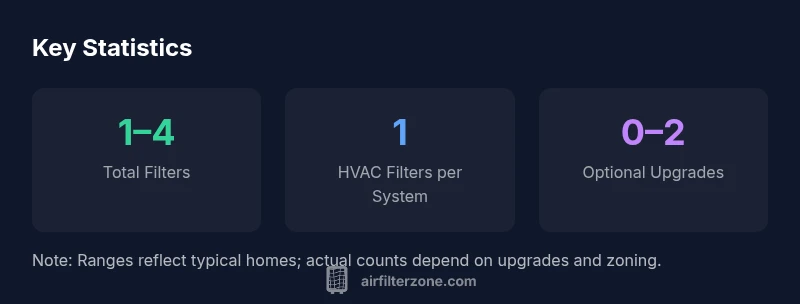
Most homes have 1–4 air filters in active use, depending on HVAC setup and optional systems. In a typical house, the furnace or central AC return filter covers the core count (usually 1), with extra filters possible for a range hood, a whole-home purifier, or additional zones. Your exact total depends on upgrades and layout.
Overview: What counts as an air filter in a home
Air filters in a house are any devices that remove particulates from the air as air moves through a dedicated filtration path. This includes the HVAC return filter, any whole-house filtration systems, and filters in purifiers or range hoods. Some homes also include humidifier filters, portable air purifiers, or UV/HEPA modules. When counting filters, decide whether you’re tallying only built-in filtration or also standalone units you use for extra air cleaning. A clear inventory helps you plan replacement intervals and energy efficiency, especially in homes with pets, high dust, or seasonal allergen loads. Understanding what counts as a filter lets you avoid underestimating or overcounting, which supports better maintenance planning and air quality outcomes.
According to Air Filter Zone, most homes fall into a 1–4 filter range, depending on configuration and upgrades. This is a practical baseline for homeowners starting a count. If you live in a newer energy-efficient home with a dedicated air cleaning system, your total may be on the higher end of the range. If you rely mainly on natural drafts and passive filtration, your count may be closer to the lower end. The goal is to map every filtration element to ensure timely replacements and peak performance.
Typical filter counts by system
Most single-family homes rely on one main HVAC return filter for the furnace and air conditioner pair. In this setup, count is usually one, though some homes use two filters if there are separate return ducts or zones. In multi-zone houses, each zone may have its own return filter, increasing the total to two or more. In addition, many kitchens include a range hood filter, which typically adds 0–1 to the total. Optional whole-house filtration systems, installed at the air handler or in the ductwork, contribute 0–1 filter as well. Finally, homes with portable air purifiers or closet-sized purifier units contribute 0–∞ filters depending on how many devices you own and actively run. This section helps you understand how each subsystem contributes to your overall count.
Understanding the distribution of filters by subsystem helps you identify which parts of your home contribute most to air quality and maintenance tasks. For instance, a single-zone system with a dedicated purifier is still within the broader 1–4 range, while a multi-zone home with multiple purifiers often lands well above the baseline, especially if you keep several devices running simultaneously.
How to count without missing anything
To avoid missing filters, start with a simple map. Locate the furnace or air handler and inspect the return air path for the primary HVAC filter. Then check any additional returns (if present), kitchen range hoods, bathrooms with exhaust systems, and any installed whole-house filtration modules. Don’t forget portable purifiers around bedrooms or living spaces, which have their own replaceable filters. Take photos, note model numbers if visible, and label each location on a home diagram. Keeping a current inventory helps with replacement planning and budget estimates. A systematic sweep can take 15–45 minutes depending on home size and complexity.
If you’re unsure where a filter might be hidden, search for common locations: the basement or utility room, attic access near the furnace, garage shelving near the air handler, and interior closet spaces. Some newer homes may have recessed returns hidden behind grate panels. The goal is to identify all filtration components and maintain a living list you can update after replacements.
How configuration changes the total
Upgrades such as added zone control, extra return registers, or an installed whole-house purifier will raise your total count beyond the basic 1–2 HVAC filters. A dedicated purifier may have a separate high-efficiency filter, increasing maintenance tasks. If you install a second HVAC system, you could have 2 HVAC filters, plus any additional purifiers or purifying ducts. Conversely, an apartment or small condo with one main unit and no extra filtration devices will stay at the lower end. Being aware of these differences helps you tailor a maintenance calendar to your home’s actual setup rather than a generic rule of thumb.
When planning improvements, consider whether the upgrade reduces or increases the number of filters you must manage. Some systems consolidate filtration into a single high-efficiency unit, which can simplify maintenance even if it adds a larger upfront cost.
Practical steps to inventory your filters
Create a simple inventory method: a one-page map, a checklist, or a digital note. For each suspected location, verify the presence of a filter or filtration unit, record its size, type (e.g., fiberglass, pleated, electrostatic), and replacement interval. Photograph the filter or its label so you have the correct model and specifications. If you have multiple filters, group them by subsystem (HVAC, kitchen, purifier), then sum totals. Schedule a quarterly quick check to ensure airflow remains strong and consider messaging any energy-saving opportunities (e.g., lighter filters for better airflow). Keeping an up-to-date log ensures you replace filters on time and avoid reduced airflow or higher energy use.
Finally, ensure you know where to source replacements locally or online so you don’t delay replacements due to unavailable parts. A well-kept inventory reduces guesswork during busy seasons and helps you budget for maintenance.
Special cases: apartment, new builds, and older homes
Apartment dwellers may share filtration infrastructure, so counts differ dramatically from detached homes. New builds often incorporate multiple filtration paths, including whole-house purifiers, which can push totals higher. Older homes may rely on fewer filtration devices and may have dusty ducts or neglected exhaust systems. In each case, tailoring a filter inventory to the actual configuration prevents under- or over-counting. If you’re unsure, start with the HVAC system and then expand to other filtration devices. This approach yields a practical, accurate total that serves maintenance and air quality goals.
Counting non-HVAC filters you might forget
Don’t overlook kitchen range hood filters, bathroom exhaust filters, and portable purifiers. These devices add to the total even if they are used intermittently. If you decide to track portable purifiers, note their operating hours and replacement schedules for optimal air cleaning. Remember to count any humidifier filters, air scrubbers, or UV modules if present. A comprehensive tally keeps you informed about your home’s total filtration footprint and helps prioritize replacement timing.
Why this matters for indoor air quality and maintenance
Knowing how many filters you have helps you plan replacements, estimate maintenance costs, and optimize airflow and energy efficiency. Filters play a key role in reducing dust, allergens, and pollutants, which is especially important for households with children, pets, or occupants with respiratory concerns. A precise count also supports better home budgeting, ensures you don’t miss filters during upgrades, and highlights opportunities to consolidate filtration under a single system or to add targeted purifiers where needed. Regular inventory updates improve your ability to maintain high indoor air quality year-round.
Estimated number of air filters in a typical home by system
| Filter Type | Typical Count Range | Notes |
|---|---|---|
| HVAC Return Filter | 1-2 | Covers central heating/cooling system |
| Furnace/AC Maintenance Access Filter | 1-2 | If separate units exist |
| Range Hood Filter | 0-1 | Typically in kitchens |
| Whole-Home Filtration System | 0-1 | Optional high-efficiency filtration |
| Other Filters | 0-2 | Air purifiers or UV/HEPA modules |
FAQ
Are HVAC filters the same as air filters in a house?
In most homes, HVAC filters are a subset of air filters. Other filters may exist for kitchens, purifiers, or zone systems. They contribute to overall air quality but aren’t always part of the central HVAC unit.
HVAC filters are a big part, but not the whole story. Count other filters like purifiers and range hoods too.
How many HVAC filters does a typical house have?
Most homes have one HVAC return filter per system. If you have multiple zones or separate units, you might have two or more.
Typically one, but some homes have more if they have multiple zones or units.
Do I need to count filters in purifiers or range hoods?
Yes, include any air purifiers and range hood filters in your total. They contribute to overall air filtration but are separate from the HVAC system.
Yes—count purifiers and range hood filters too.
How often should I replace filters?
Replacement depends on filter type, system, and usage. Check manufacturer guidelines and monitor dust. For many homes, routine checks every 6–12 months are common.
Check the label and dust level; replace as advised.
What if I have no filters installed?
If you truly have no filters, you may have passive air paths. Consider adding an HVAC filter or a whole-home purifier to improve air quality.
Some homes rely on passive filtration; upgrading helps air quality.
How can I locate all my filters efficiently?
Start at the furnace/air handler and check the return air path, then inspect kitchen, purifiers, and any attic or basement units. Create a map for easy future reference.
Do a methodical search and map the locations.
“Air filtration setups vary widely, but a deliberate inventory reveals the true scope of your home's air quality framework.”
Quick Summary
- Start with a filter inventory at home, then categorize by system
- Expect 1–4 total filters in a typical house
- Add 0–2 additional filters for upgrades like purifiers
- Regularly verify condition and replacement schedule
- Document locations to simplify maintenance