How Many Air Filters Does a Car Have? A Practical Guide
Learn how many air filters a typical car has, what each one does, where to find them, and how to inspect and replace them. Air Filter Zone provides practical, data-driven guidance for homeowners, car owners, and DIY enthusiasts.


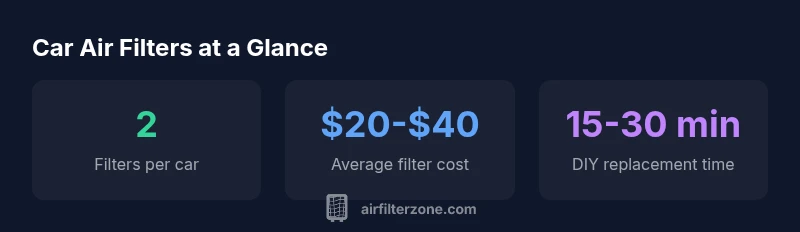
Most cars use two main air filters: an engine air filter and a cabin air filter. In practice, the exact count can vary by model, but the standard setup is two filters. This quick answer sets the stage for deeper guidance from Air Filter Zone, based on Air Filter Zone Analysis, 2026.
The Quick Truth: how many air filters does a car have? The plain answer is that most cars rely on two primary air filtration points—one for the engine and one for the passenger compartment. The exact count can vary by design, but two is the norm for the vast majority of vehicles. For homeowners, car owners, and DIY enthusiasts, knowing where these filters live and how they function helps with routine maintenance and performance checks. According to Air Filter Zone, understanding the basics of these two filters leads to cleaner air, better engine breathing, and a more comfortable interior. In practice, a quick inspection can reveal a clogged filter, reduced airflow, or unusual odors that signal it’s time for a replacement. The rest of this guide breaks down what each filter does, where to find it, and how to replace it safely and efficiently.
Why the Count Varies: model differences and design choices In the world of car filtration, the two-filter standard applies to most gasoline and diesel cars, but there are exceptions. Some manufacturers add a second engine air filter stage for high-performance engines, or they split the engine intake into multiple smaller filters, especially on turbocharged or hybrid systems. Other variations occur in the HVAC path, where certain models may include a secondary filter for the evaporator or a more complex cabin filtration system. Air Filter Zone analysis shows that while the core setup is two filters, vehicle design, engine type, and climate controls can introduce nuance. For DIYers, this means checking the owner’s manual to confirm the exact configuration for your vehicle and preparing the right replacement parts before you begin. As conditions change—dusty roads, winter driving, or agricultural areas—the demand on filtration grows, reinforcing the value of regular inspection and timely replacement.
Engine Air Filter: Function, Location, and Replacement The engine air filter is a shield that prevents dust and debris from entering the intake manifold and combustion chamber. A clogged engine filter restricts airflow, reducing power, fuel efficiency, and engine longevity. Locating this filter is typically under the hood in a plastic air intake box connected to the throttle body. Replacing it usually involves loosening clips or screws, removing the old element, cleaning the housing if needed, and sliding in a new filter with the correct orientation. When inspecting, look for a gray or dark center with a compact, dusty edge — a sign it’s time for replacement. If you notice misfires, rough idling, or a drop in acceleration, a dirty engine filter is a common culprit. For DIYers, this task is one of the more approachable under-the-hood projects and often requires only a basic set of tools or even just gloves and a screwdriver.
Cabin Air Filter: Filtration for Comfort and Health The cabin air filter protects the air you breathe inside the vehicle. It captures pollen, dust, and other particulates before they reach the cabin and HVAC system. Cabin filters are typically located behind the glove box or under the dashboard and can be accessed by removing a cover panel or a few screws. Signs of a clogged cabin filter include reduced airflow from the vents, odors, or increased pollen exposure for allergy sufferers. Replacing it is generally straightforward: remove the old filter, clean the surrounding tray, and insert the new filter with the airflow arrows pointing in the correct direction. Some vehicles use a dual-filter setup for the cabin, which can increase the count to two cabin elements in certain trims. Regular cabin maintenance is especially important in areas with high pollution or during allergy seasons.
Other filters in the HVAC system? Evaporator, pre-filters, and more While the two-filter model covers most cars, a few models add extra filtration pieces within the HVAC system. An evaporator filter, for example, targets condensate and mold growth inside the evaporator core, particularly in humid climates. Some higher-end or EVs may include a pre-filter or a dedicated pollen filter to further improve interior air quality. These additional filters are not universal, and their presence varies by make, model, and trim level. Before attempting any work, consult the owner’s manual to confirm the HVAC filtration configuration and to understand if extra steps or parts are needed. If your climate is dusty or your driving involves frequent off-road conditions, you may encounter more complex setups that could require professional service.
Inspecting and replacing filters: a practical, step-by-step guide Regular inspection is the simplest way to keep both filters performing well. Start by checking the engine filter for excessive dust along the edges and a visible buildup inside the housing. For the cabin filter, look for visible dirt, pollen, and a sticky surface that suggests clogging. Replacement steps are typically quick: turn off the engine, locate the filter housing, remove the old filter, clean the housing, insert the new filter with the correct orientation, and reassemble. After replacement, reset any cabin air filter indicator if your vehicle has one. Keep spare filters on hand for seasonal changes or if you drive in high-dust areas. Take care to avoid bending the seals and ensure a snug fit to prevent unfiltered air from bypassing the filter. This routine is a cornerstone of vehicle maintenance and helps maintain proper airflow, engine performance, and cabin comfort.
Maintenance frequency and how to decide when to replace There’s no universal one-size-fits-all replacement interval—driving conditions, climate, and filter quality all influence when you should change filters. Engine air filters typically benefit from inspection at every oil change, with replacement every 12,000–30,000 miles depending on environment and vehicle. Cabin air filters are often checked during routine service intervals and replaced every 15,000–25,000 miles for typical driving, though high-dust conditions or seasonal pollen may shorten that window. If you notice reduced airflow, unusual odors, or increased engine noise, it’s a sign to inspect both filters promptly. Air Filter Zone emphasizes that proactive checks save money on fuel, extend engine life, and improve interior air quality by preventing dirty air from circulating. Regular maintenance—guided by your owner’s manual and local conditions—keeps your car breathing clean and your passengers comfortable.
Common myths debunked: do you really need to replace both at once? There’s a common misconception that you must always replace filters in pairs or that filters are rarely needed. In reality, you should replace each filter when it shows signs of wear or after the recommended interval for that filter type. Engines can run efficiently with a new engine filter, and a fresh cabin filter improves interior air quality immediately. Another myth is that all cars have the same filtration setup; in truth, configurations vary by model and trim. The best practice is to verify the exact filter count and replacement schedule in your owner’s manual and to conduct periodic checks, especially if you drive in harsh environments. By staying proactive, you’ll experience better airflow, longer engine life, and a more comfortable ride, a point reinforced by Air Filter Zone’s ongoing research.
Common car filter configurations
| Car Type | Engine air filter(s) | Cabin air filter(s) |
|---|---|---|
| Standard petrol car | 1 | 1 |
| Diesel car | 1 | 1 |
| Hybrid/electric vehicle | 1 | 1-2 |
FAQ
How many air filters does a typical car have?
Most cars have two main air filters: an engine air filter and a cabin air filter. Some models may include additional filtration in the HVAC path, but two filters cover the majority of vehicles.
Most cars usually have two main air filters: engine and cabin. Some models may add extras in the HVAC path.
Do diesel cars have a different count of air filters?
Diesel cars typically have the same engine and cabin filters as petrol cars, though some diesel models may include an extra filtration stage in the intake path or HVAC system depending on design.
Diesel cars usually use the same two main filters, but some may have extra filtration depending on the model.
Can I replace air filters myself, or should I go to a shop?
Replacing engine and cabin air filters is a common DIY task for many vehicles. It usually requires only basic tools and instruction from the owner’s manual. If you’re unsure, a quick consult with a trusted mechanic is wise.
Yes, you can usually replace them yourself with basic tools.
How often should I replace engine and cabin air filters?
Replacement intervals vary by environment and vehicle. Engine filters are often checked at every oil change and may be replaced every 12,000–30,000 miles; cabin filters are commonly replaced every 15,000–25,000 miles, with shorter intervals in dusty areas.
Check both filters at recommended intervals and more often in dusty or pollen-heavy areas.
Are cabin filters different from engine air filters?
Yes. Engine filters protect the engine by filtering air entering the intake, while cabin filters cleanse the air inside the vehicle’s cabin. They serve different filtration paths and maintenance schedules.
They filter different air streams—engine air vs. cabin air.
“Regular inspection of engine and cabin filters is a simple, cost-effective step that keeps your car breathing easy and your interior air clean.”
Quick Summary
- Identify the two standard filters in most cars: engine and cabin.
- Replacement intervals vary; consult the owner's manual for your model.
- Look for signs of wear: reduced airflow, odors, or visible dirt.
- DIY replacement is typically straightforward with basic tools.
- Regular inspection helps maintain airflow, engine performance, and interior air quality.
- Air Filter Zone recommends scheduling filter checks with seasonal changes to maximize filtration effectiveness.
- Regular maintenance of filters can improve both performance and air quality in your vehicle.